
 |
 |


HCIG4


All During WW2 Cannibal Jokes by Cannibal Nazis
+++++++++++++++++++++++++++++++++++++++++++++++++++++++++++++++++++++++++++++++++++++++++++++++++++++++++
I guess you could call these guys neo Zionist
+++++++++++++++++++++++++++++++++++++++++++++++++++++++++++++++++++++++++++++++++++++++++++++++++++++++++
Welcome to The Church of True Israel We do not necessarily agree with every point of view found in the
links listed on this page. Please read and then do the study to
prove what is true and accurate.
A Lot Of Interesting "Clicks"
"Edgar J. Steele" Conspiracy Pen Pal Follow this link to Noah Webster, Patrick Henry,
Louis Beam, Martin Luther, and MUCH more The Thirteenth Tribe by Arthur Koestler
Redfeairn's Corner Bertrand L. Comparet William P Gale The Harold Wallace Rosenthal
Interview 1976 Part 1 The Harold Wallace Rosenthal Interview 1976 Part 2 Adolf Hitler
Dr. Wesley A. Swift
| VERBOTEN Adam is translated from the Hebrew word "AWDAWM" and means White Man. The basic derivative means: "Ruddy complexion, show blood in the face, transparent white skin. " The skin of the black and yellow races is not transparent nor is it with mongrels.
Even the ability to blush (show blood in the face) is confined to the White Race. This is caused by your sub-conscious which only God controls,
as He breathed His Living Spirit into Adam who passed it on to you, his
White descendants.
You are an infinitesimal projection of your Creator, so when you do or say something embarrassing, your sub-conscious rushes excess blood to your face.
The colored races, not having been. endowed with God's Spirit, have no abstract sense of right or wrong, consequently are never embarrassed.
|
George Lincoln Rockwell Two Books (and more) Sheldon Emry TAKE YOUR CHOICE Separation or Mongrelization By Theodore G. Bilbo , Julius Streicher The Poisonous Mushroom,The Rising Tide of
Color By Lothrop Stoddard, A.M., Ph.D.Clifton A. Emahiser The Protocols Of The Learned Elders Of Zion
Henry Ford ( Slave master if the Jews In Germany durring WW2) The International Jew Plus the
Complete Unabridged Dearborne Press, Rudyard Kipling, The Passing of the Great Race By Madison
Grant, [See some excerpts below ED.] Jewish Ritual Murder by Arnold Leese Lt. Col. Gordon "Jack"
Mohr, A.U.S.Ret.(Two Books) THIS TIME BOMB Earnest Sevier Cox,White America:The American
Racial Problem as Seen in a Worldwide Perspective, A Jewish Defector Warns America by Benjamin H.Freedman(1961) The Anti-Humans by Dumitru Bacu STUDENT RE-EDUCATION IN ROMANIAN
PRISONS , Lost Israel Found (In the Anglo-Saxon Race) By E. P. Ingersol 1886 THIS AGE OF CONFLICT
By Ivor Benson Short Prayers, Humor, A Little Everything Links Page CALLED ZIONISM The GOG-MAGOG
ALLIANCE Neuman Britton "THE ORDER"
For God, Race and Country Identity Information Center
+++++++++++++++++++++++++++++++++++++++++++++++++++++++++++++++++++++++++ 
We do not necessarily agree with any point of view found in the links listed on this page, or any of the texts excerpted , please read and
& review do the study to prove what is true and accurate. Don't stop with a partisan view find some that may be contrary to your beliefs and discuss and read whatever you can find use a library wisely
request they supply the books you request so others can share.
|
If you have comments contact the source this material is for educational use sorry if you find this material ofensive it is
a part of the web and not ment as an indorcment sufice to say our views are perhaps at an opposit polarity and although it
is covered as to rights of free speach and so on I feal it is nessarry to see what others think.
It is the mark of an educated mind to be able to entertain a thought without accepting it.~ Aristotle
"He who rest on his or her laurels wears them in the wrong place."~Anon
" Lay down with Bears Expect some Hairs".~Anon
"Work is worship" ~A Shaker saying
"Breath is prayer"~A Sufi saying
"If you can think it, you can say it, if say it you do it.~"Advice from the Marquis DeSad
"Your Race is what good YOU achieveYOUR Philosophy IS what you do (just) before
you die." Anon
"Humor is the only test of gravity, and gravity of humor; for a subject which will not bear raillery is suspicious, and a jest which will not bear serious examination is false wit. Aristotle
It is the mark of an educated mind to be able to entertain a thought without accepting it. Aristotle
The gods too are fond of a joke. Aristotle
It is unbecoming for young men to utter maxims. Aristotle
Men acquire a particular quality by constantly acting a particular way...you become just by performing
just actions, temperate by performing temperate actions, brave by performing brave actions. Aristotle
We are what we repeatedly do. Aristotle
All paid jobs absorb and degrade the mind. Aristotle
Pleasure in the job put perfection in the work. Aristotle
Dignity consists not in possessing honors, but in the consciousness that we deserve them. Aristotle
++++++++++++++++++++++++++++++++++++++++++++++++++
Black Innovation?by V.S. Herrell
Recently, it has become popular to spread yet even more misinformation, this time regarding
black inventions. While history has proven that blacks have failed to contribute anything
significant to the building of civilization, campaigns are spreading across America attempting to
credit black ?inventors? with certain inventions. One such campaign is promoted by IBM who
offers a poster of Famous Black Inventions Included on this poster are pictures of blacks and
their supposed inventions including the traffic light.
While the black Garrett A. Morgan did submit and receive a patent for a traffic signal in
1923, he did not invent the traffic light.
The first traffic light was created in London in 1868, used to control the traffic of pedestrians
and buggies.
It was illuminated by gas using green and red colors, and was manually operated by policemen
who turned a lever to reveal the appropriate color to the appropriate lane of traffic. Railroads were
already using a lighting system as well. It was a police officer, William Potts, who first improved
on the gas-light invention, which required a police officer to operate.
William Potts recognized the need for something better when he observed that police officers
were spending much of their time directing traffic after the invention of the automobile.
He created an electric lighting system using red, amber, and green to control automobile traffic
in Detroit. It was first used in 1920 and was the herald of the modern traffic light.
William Potts was not black.
Garrett A. Morgan's traffic light of 1923 did not contribute significantly to the traffic light of today,
but resembled train switching lights already in use.
When reading these lists of so-called inventions, which are especially prevalent on the
Internet, it becomes painfully obvious the lies contained within those lists. These lists are
especially popular on college campuses. Afrocentrism is the term used to describe the attempts
to cover-up the truth of history by spreading lies which claim that the blacks of Africa actually
created civilization. This ridiculous theory is being taught in many schools and even
universities. Many college graduates think they are being intelligent when they state that without
H. A. Jackson, we wouldn?t have a kitchen table, which he ?invented? on October 6, 1896. This
is how ridiculous these lists have become. I am sure that the kitchen table was invented centuries
ago, although I don?t believe the blacks in Africa were furnishing their mud huts with kitchen
tables. H.A. Jackson may have submitted an idea for a patent which was a special modification
of the kitchen table, but he certainly did not invent it, and neither did his patent have any
significance on the civilization of the world. This is also true for W. R. Davis, Jr., who is
credited with inventing the library table? in 1878!
What many are doing is obtaining patent lists of blacks and then attempting to pass them off
as inventions. Most of what these people are doing is taking a certain invention, modifying it in
some way, and then patenting that modification. In other words, they are not patenting original
creations. Many are just outright lying. One list credits Sarah Boone, a female black, with the
invention of the ironing board in 1892. White people were ironing clothes on ironing boards
long before 1892.
J. Standard, another black, is credited with inventing the refrigerator in 1891. Yet, the truth
of history reveals this is another lie. William Cullen demonstrated the first known artificial.
refrigeration at the University of Glasgow in 1748. In 1805, Oliver Evans, an American,
designed the first refrigeration machine, and in 1844, John Gorrie used this design to build a
refrigerator which he used to cool the air for his patients suffering from yellow fever. This all
happened well before J. Standard ever submitted his patent. Furthermore, the concept of
refrigeration was known by whites long before the first artificial devices were ever created.
The lists go on and on. One credits the invention of the two-stroke gasoline engine in 1950
and the internal combustion engine in 1958 to a black, Frederick M. Jones. The truth is that
thermal engines were created as long ago as the 1600?s by whites. Almost one hundred years
before Frederick M. Jones, N. Otto developed the first successful four-stroke spark ignition
gasoline engine in the 1870?s. The same year, Dougald Clerk built the first successful two-stroke
engine, which remains in use today. The first person to actually experiment with the
internal combustion engine was a Dutchman, Christian Huygens, who did so in 1680. Most of
the modern gasoline engines are descendants of Gottlieb Daimler?s creation of 1885. For those
who don?t know this, Daimler was a German. Frederick M. Jones is also credited with the
invention of the starter generator in 1949; however, electric ignitions had already been
introduced in 1924. On the same note, another black, Andrew J. Beard, is credited with
inventing the rotary engine in 1892. This is completely unfounded. The first practical rotary
engine was created by a German, Felix Wankel, in 1927.
On a lighter note, Lydia O. Newman, a black, is credited with inventing the hairbrush in the
late 1800?s, despite the fact that white women have been brushing their hair for centuries.
Burridge and Marshman supposedly invented the typewriter in 1885, despite the fact that
Remington and Sons had already been selling the typewriter since 1874, and the original
machine was created in 1868 by Christopher Latham Sholes. The initial typewriter did not have
lowercase letters, but the shift key of the Number 2 typewriter, manufactured by Remington in
1878, allowed for lowercase letters. Other claims include riding saddles, which were supposedly
invented by W. D. Davis in 1895. Again, this is claimed despite the fact that riding saddles were
in use long before 1895, primarily by whites.
Another famous claim is that a black, Paul Williams, invented the helicopter. Again, a little
research will prove this to be false. The fact is that no one person ?invented? the helicopter.
However, Leonardo da Vinci did pen down his own version of a helicopter long before Paul E.
Williams was born. Furthermore, the first successful lift-off of a helicopter was accomplished in
1907 by a Frenchman, Paul Cornu, and Etienne Oehmichen, another Frenchman, was able to fly
a helicopter 1 kilometer in 1924. This flight lasted 7 minutes and 40 seconds. From that
moment, white engineers advanced and perfected the helicopter, and in 1937 the first practical
helicopter was introduced. Not surprisingly, this first practical helicopter was a German
creation? the Focke-Wulf Fw 61. Igor Sigorsky, a Russian, is credited with many innovations
and record setting flights after this time which greatly enhanced helicopter engineering.
Perhaps one of the most ridiculous claims is that a black, W. A. Lavallette, invented the
printing press, which he had patented in America. This was undoubtedly news to Gutenberg,
who had already invented the printing press in 1445, long before America was even a country
and almost fifty years before Columbus even landed.
The list goes on and on, and each and every so-called ?invention? can be refuted in a similar
manner, from the biscuit cutter (A. P. Ashbourne, 1875) to the portable shield for infantry?
(H. Spears, 1870). Anyone familiar with history should be aware that whites have been using
devices to cut out biscuits long before A. P. Ashbourne, and I am sure that Roman soldiers
from the first century never went into battle without a portable shield for infantry. Michael Harney,
another black, is credited with inventing the lantern. Why not credit him with inventing light or
fire? Again, these claims are so ridiculous as to boggle the mind, yet many Americans blindly
accept what they are being told as truth - white or black.
What is worse, children are being taught these lies in schools supported by our tax money.
There are also federally funded black history museums throughout the country spreading such lies.
Even the claim that the mulatto George Washington Carver invented peanut butter is false.
The truth is that early civilizations often crushed peanuts into paste and Civil War soldiers ate
peanut porridge.
As far as modern peanut butter is concerned, a St. Louis physician encouraged a food company
owner to produce and sell peanut butter in 1890 to individuals who had difficulty chewing food.
The physician had experimented with grinding peanuts and recognized peanut paste to be
highly nutritious. Bayle, the owner of the food company, sol peanut butter for 6 cents per pound.
Additionally, the first patent for peanut butter was obtained by John Harvey Kellogg, another physician experimenting with sources of protein for his patients. George Washington Carver didn't even begin
his peanut research until 1903.
Most of the so-called black inventors are mulattos like George Washington Carver, and do not deserve
to be called black anyway.
Lies such as these are harmful not only to whites, but to blacks as well.
Black children are armed with such flimsy lies which are easily torn down, and white children
are taught to appreciate so-called black culture as being better than white culture.
White children are no longer allowed to be proud of their heritage, which is full of white
men and women who have built nations, constructed civilizations, and who have contributed
to a full history of art and science.
While many of the claims stated above are almost comedic in their absurdity, it is no
laughing matter when lies such as these are spread. Some promoters of so-called black
inventions go so far as to claim that blacks created, among other things, civilization, chess,
medicine, paper and the alphabet. Liars use the fact that early white civilizations created
some of these things on the continent of Africa. Thus, they state that Africans invented all of these.
While the geological identification may be correct in some instances, the race is certainly not.
It is a well-known fact of history that Egyptians, Romans, Greeks, and so on were white people
who created their respective civilizations.
Cleopatra was not black, and neither was Marc Antony. Both were very clearly white people who
bore no resemblance to the blacks or mongrels we see in America today. Alexander the Great
was a white man, though he may have visited the continent of Africa.
The builders of the pyramids were certainly not kin to the mud-hut builders of the desert.
Socrates, Hippocrates, Plato, and so on were also certainly not blacks.
Even Ethiopia was once a nation of white people, ruled by white kings and queens, until only
recently when the blacks took over.
These are all facts of history and easily verifiable, especially when one has the ability to read
the historians of the time, who were, once again, also white.
Unfortunately, most of these great nations toppled in the wake of the plague of mongrelization,
a story which has been repeated in every great nation founded by white men throughout history.
All of these attempts to change history and discredit white culture are merely the beginning
when it comes to the deviousness of the mongrel mind.
Martin Bernal of Cornell University
attempted to rewrite history over a decade ago with his books:
Black Athena The Afroasiatic Roots of Classical Civilization 1:
The Fabrication of Ancient Greece 1785-1985 (London: Free Association Books.
and New Brunswick: Rutgers University: 1987)
and Black Athena 2: The.Archaeological and Documentary Evidence
(London, Free Association Books; New Brunswick:Rutgers University:1991).
Bernal?s works attempted to credit black Africans with the creation of the Greek
Civilization and therefore western civilization in general.
The works were easily refuted by leading Classicists and experts, yet Bernals work
continues to garner unwarranted attention.
Bernals work consists of trying to prove an Egyptian-Phoenician influence on Greek
Classical culture. Even if his interpretation of history were correct, which it is not, it is
certainly not correct to state that the ancient Egyptian and Phoenician civilizations were
created by Negroes.
Bernals books are simply extensions of an earlier work and an on-gong attempt to change
the truth of history.
In 1954, George G.M. James published a book entitled Stolen Legacy, which offers no proof for
his claims of African influence on Greek philosophy.
In one argument, he states: [The Greeks] did not possess the native ability essential to the
development of philosophy ... the Greeks were not the authors of Greek philosophy,
but the Black people of North Africa, the Egyptians.
Again, his claims that the Hellenists stole their philosophical ideas from the Africans are
unfounded. Even more unfounded, however, is that the Black people of North Africa were the
same creators of the Egyptian civilization. The builders of the pyramids and Egyptian rulers
were most certainly white. Even Cleopatra was a Macedonian Greek, whose family went to
extreme lengths to preserve their Greek racial line, even to the point of incest.
Two other works have been written refuting Bernal's claims. The first, Not Out of Africa by
Mary R. Lefkowitz easily discredits Black Athena. More recently, Black Athena Revisited,
Edited by Mary R. Lefkowitz and Guy MacLean Rogers, offers over 500 pages of proof written
by numerous scholars against ?Afrocentrist? claims of the black creation of civilization. One
popular claim is that Aristotle and Alexander raided the library at Alexandria (which is in Egypt)
and that was where they stole their ideas from the Egyptian civilization and that Aristotle was
black. This, of course, is utterly ridiculous for several reasons.
First of all, the library at Alexandria was not built until at least 25 years after Aristotle's death.
Secondly, this library was assembled by a Greek student of Aristotle, Demetrius, and contained
books written almost entirely in Greek. Thirdly, the city of Alexandria, though located in Egypt,
was by no means an Egyptian city. It was the ruling center of the Ptolemies, the Macedonian
Greek family of which Cleopatra was a member. It was even designed by a Greek architect.
The name of the city was, of course, taken from the Greek ruler, Alexander the Great.
Even the colony of white Judeans living in Alexandria, which numbered over 1,000,000,
were a Greek-speaking people, as recorded in Philo. The Bible says, ?No lie is of the truth ...
no liar has eternal life? and ?the lake of fire was created for all liars and all who help make a lie.?
Like there are no lies in the bible...
+++++++++++++++++++++++++++++++++++++++++++++++++++++++++++++++++++++
Thanks to Elvis Aaron Presley...
This book was quoted by both Sen. Bilbo in Take Your Choice: Seperation or Mongrelization
and by Earnest Cox in White America.
While some of Grant's material has been amended and updated in the years since 1916,
it still serves as an important work in the study of racial origins.
The Passing of the Great RaceBy Madison Grant
TABLE OF CONTENTS
Part I - Race, Language, And Nationality
Introduction
I. Race And Democracy
II. The Physical Basis Of Race
III. Race And Habitat
IV. The Competition Of Races
V. Race, Language, And Nationality
VI. Race And Language
VII. The European Races In Colonies
Part II - European Races In History
I. Eolithic Man
II. Paleolithic Man
III. The Neolithic And Bronze Ages
IV. The Alpine Race
V. The Mediterranean Race
VI. The Nordic Race
VII. Teutonic Europe.VIII. The Expansion Of The Nordics
IX. The Nordic Fatherland
X. Nordic Race Outside Of Europe
XI. The Racial Aptitudes
XII. Arya
XIII. The Origin Of The Aryan Languages
XIV. The Aryan Language In Asia
XV. Bibliography.Introduction
THE following pages are devoted to an attempt to elucidate the meaning of history in terms of
race; that is, by the physical and psychical characters of the inhabitants of Europe instead of by
their political grouping, or by their spoken language. Practically all historians, while using the
word race, have relied on tribal or national names as its sole definition. The ancients, like the
moderns, in determining ethnical origin, did not look beyond a man's name, language, or
country, and the actual information furnished by classic literature on the subject of physical
characters is limited to a few scattered and often obscure remarks.
Modern anthropology has demonstrated that racial lines are not only absolutely independent of
both national and linguistic groupings, but that in many cases these racial lines cut through them
at sharp angles and correspond closely with the divisions of social cleavage. The great lesson of
the science of race is the immutability of somatological or bodily characters, with which is
closely associated the immutability of psychical predispositions and impulses. This continuity
of inheritance has a most important bearing on the theory of democracy and still more upon that
of socialism, and those, engaged in social uplift and in revolutionary movements are
consequently usually very intolerant of the limitations imposed by heredity.
Democratic theories of government in their modern form are based on dogmas of equality
formulated some hundred and fifty years ago, and rest upon the assumption that environment
and not heredity is the controlling factor in human development. Philanthropy and noble
purpose dictated the doctrine expressed in the Declaration of Independence, the document
which to-day constitutes the actual basis of American institutions. The men who wrote the
words, "we hold these truths to be self-evident, that all men are created equal," were themselves
the owners of slaves, and despised Indians as something less than human. Equality in their
minds meant merely that they were just as good Englishmen as their brothers across the sea..
The words "that all men are created equal" have since been subtly falsified by adding the word
"free," although no such expression is found in the original document, and the teachings based
on these altered words in the American public schools of to-day would startle and amaze the
men who formulated the Declaration.
The laws of nature operate with the same relentless and unchanging force in human affairs as in
the phenomena of inanimate nature, and the basis of the government of man is now and always
has been, and always will be, force and not sentiment, a truth demonstrated anew by the present
world conflagration.
It will be necessary for the reader to strip his mind of all preconceptions as to race, since
modern anthropology, when applied to history, involves an entire change of definition. We
must, first of all, realize that race pure and simple, the physical and psychical structure of man,
is something entirely distinct from either nationality or language, and that race lies to-day at the
base of all the phenomena of modern society, just as it has done throughout the unrecorded eons
of the past.
The antiquity of existing European populations, viewed in the light thrown upon their origins by
the discoveries of the last few decades, enables us to carry back history and prehistory into
periods so remote that the classic world is but of yesterday. The living peoples of Europe
consist of layer after layer of diverse racial elements in varying proportions, and historians and
anthropologists, while studying these populations, have been concerned chiefly with the recent
strata, and have neglected the more ancient and submerged types.
Aboriginal populations from time immemorial have been again and again swamped under
floods of newcomers and have disappeared for a time from historic view. In the course of
centuries, however, these primitive elements have slowly reasserted their physical type and
have gradually bred out their conquerors, so that the racial history of Europe has been in the
past, and is to-day a story of the repression and resurgence of ancient races.
Invasions of new races have ordinarily arrived in successive waves, the earlier ones being
quickly absorbed by the conquered, while the later arrivals usually maintain longer the purity of
their type. Consequently the more recent elements are found in a less mixed state than the older,
and the more primitive strata of the population always contain physical traits derived from still
more ancient predecessors.
Man has inhabited Europe in some form or other for hundreds of thousands of years, and during
all this lapse of time the population has been as dense as the food supply permitted. Tribes in
the hunting stage are necessarily of small size, no matter how abundant the game, and in the
Paleolithic period man probably existed only in specially favorable localities, and in relatively
small communities.
In the Neolithic and Bronze periods domesticated animals and the knowledge of agriculture,
although of primitive character, afforded an enlarged food supply, and the population in
consequence greatly increased. The lake dwellers of the Neolithic were, for example, relatively
numerous. With the clearing of the forests and the draining of the swamps during the Middle
Ages and, above all, with the industrial expansion of the last century, the population multiplied
with great rapidity. We can, of course, form little or no estimate of the numbers of the
Paleolithic population of Europe, and not much more of those of Neolithic times, but even the
latter must have been very small in comparison with the census of to-day.
Some conception of the growth of population in recent times may be based on the increase in
England. It has been computed that Saxon England at the time of the Conquest contained about
1,500,000 inhabitants; at the time of Queen Elizabeth the population was about 4,000,000,
while in 1911 the census gave for the same area some 35,000,000.
The immense range of the subject of race in connection with history from its nebulous dawn,
and the limitations of space, require that generalizations must often be stated without mention
of exceptions. These sweeping statements may even appear to be too bold, but they rest, to the
best of the writer's belief, upon solid foundations of facts, or else are legitimate conclusions
from evidence now in hand. In a science as recent as modern anthropology, new facts are
constantly revealed and require the modification of existing hypotheses. The more the subject is
studied the more provisional even the best-sustained theory appears, but modern research opens
a vista of vast interest and significance to man, now that we have discarded the shackles of
former false view-points and are able to discern, even though dimly, the solution of many of the
problems of race. New data will in the future inevitably expand, and perhaps change our ideas,
but such facts as are now in hand, and the conclusions based thereupon, are provisionally set
forth in the following chapters, and necessarily often in a dogmatic form.
The statements relating to time have presented the greatest difficulty, as the authorities differ
widely, but the dates have been fixed with extreme conservatism and the writer believes that
whatever changes in them are hereafter required by further investigation and study, will result
in pushing them back and not forward in prehistory. The dates given in the chapter of
"Paleolithic Man" are frankly taken from the most recent authority on this subject, "The Men of
the Old Stone Age," by Professor Henry Fairfield Osborn, and the writer desires to take this
opportunity to acknowledge his great indebtedness to this source of information, as well as to
Mr. M. Taylor Pyne and to Mr. Charles Stewart Davison for their assistance and many helpful
suggestions.
The author also wishes to acknowledge a debt of gratitude to Professor William Z. Ripley's
great work on "The Races of Europe," which contains a vast array of anthropological data,
maps, and type portraits, providing a mine of information upon which the author has drawn
freely, for the present distribution of the three primary races of Europe.
The American Geographical Society and its staff, particularly Mr. Leon Dominian, have also
been of great assistance in the preparation of the maps contained herein, and this occasion is
taken by the writer to express his deep appreciation for their assistance..
Continue on to Chapter 1 - Race and Democracy.The Passing of the
Great Race
By Madison Grant
Part I - Race, Language, And Nationality
Chapter 1
Race and Democracy
FAILURE to recognize the clear distinction between race and nationality and the still greater
distinction between race and language, the easy assumption that the one is indicative of the
other, has been in the past a serious impediment to an understanding of racial values. Historians
and philologists have approached the subject from the view-point of linguistics, and as a result
we have been burdened with a group of mythical races, such as the Latin, the Aryan, the
Caucasian, and, perhaps, most inconsistent of all, the "Celtic" race.
Man is an animal differing from his fellow inhabitants of the globe, not in kind but only in
degree of development, and an intelligent study of the human species must be preceded by an
extended knowledge of other mammals, especially the primates. Instead of such essential
training, anthropologists often seek to qualify by research in linguistics, religion, or marriage
customs, or in designs of pottery or blanket weaving, all of which relate to ethnology alone.
The question of race has been further complicated by the effort of old-fashioned theologians to
cramp all mankind into the scant six thousand years of Hebrew chronology, as expounded by
Archbishop Ussher. Religious teachers have also maintained the proposition not only that man
is something fundamentally distinct from other living creatures, but that there are no inherited
differences in humanity that cannot be obliterated by education and environment.
It is, therefore, necessary at the outset for the reader to thoroughly appreciate that race,
language, and nationality are three separate and distinct things, and that in Europe these three
elements are only occasionally found persisting in combination, as in the Scandinavian nations.
To realize the transitory nature of political boundaries, one has only to consider the changes of
the past century, to say nothing of those which may occur at the end of the present war. As to
language, here in America we daily hear the English language spoken by many men who
possess not one drop of English blood, and who, a few years since, knew not one word of Saxon
speech.
As a result of certain religious and social doctrines, now happily becoming obsolete, race
consciousness has been greatly impaired among civilized nations, but in the beginning all
differences of class, of caste, and of color, marked actual lines of race cleavage.
In many countries the existing classes represent races that were once distinct. In the city of New
York, and elsewhere in the United States, there is a native American aristocracy resting upon
layer after layer of immigrants of lower races, and the native American, while, of course,
disclaiming the distinction of a patrician class, nevertheless has, up to this time, supplied the
leaders of thought and the control of capital, of education, and of the religious ideals and
altruistic bias of the community.
In the democratic forms of government the operation of universal suffrage tends toward the
selection of the average man for public office rather than the man qualified by birth, education,
and integrity. How this scheme of administration will ultimately work out remains to be seen,
but from a racial point of view, it will inevitably increase the preponderance of the lower types
and cause a corresponding loss of efficiency in the community as a whole.
The tendency in a democracy is toward a standardization of type and a diminution of the
influence of genius. A majority must of necessity be inferior to a picked minority, and it always
resents specializations in which it cannot share. In the French Revolution the majority, calling
itself "the People," deliberately endeavored to destroy the higher type, and something of the
same sort was, in a measure, done after the American Revolution by the expulsion of the
Loyalists and the confiscation of their lands.
In America we have nearly succeeded in destroying the privilege of birth; that is, the intellectual
and moral advantage a man of good stock brings into the world with him. We are now engaged
in destroying the privilege of wealth; that is, the reward of successful intelligence and industry,
and in some quarters there is developing a tendency to attack the privilege of intellect and to
deprive a man of the advantages of an early and thorough education. Simplified spelling is a
step in this direction. Ignorance of English grammar or classic learning must not be held up as a
reproach to the political and social aspirant.
Mankind emerged from savagery and barbarism under the leadership of selected individuals
whose personal prowess, capacity, or wisdom gave them the right to lead and the power to
compel obedience. Such leaders have always been a minute fraction of the whole, but as long as
the tradition of their predominance persisted they were able to use the brute strength of the
unthinking herd as part of their own force, and were able to direct at will the blind dynamic
impulse of the slaves, peasants, or lower classes. Such a despot had an enormous power at his
disposal which, if he were benevolent or even intelligent, could be used, and most frequently
was used, for the general uplift of the race. Even those rulers who most abused this power put
down with merciless rigor the antisocial elements, such as pirates, brigands, or anarchists,
which impair the progress of a community, as disease or wounds cripple an individual.
True aristocracy is government by the wisest and best, always a small minority in any
population. Human society is like a serpent dragging its long body on the ground, but with the
head always thrust a little in advance and a little elevated above the earth. The serpent's tail, in
human society represented by the antisocial forces, was in the past dragged by sheer force along
the path of progress. Such has been the organization of mankind from the beginning, and such it
still is in older communities than ours. What progress humanity can make under the control of
universal suffrage, or the rule of the average, may find a further analogy in the habits of certain
snakes which wiggle sideways and disregard the head with its brains and eyes. Such serpents,
however, are not noted for their ability to make rapid progress.
To use another simile, in an aristocratic as distinguished from a plutocratic, or democratic
organization, the intellectual and talented classes form the point of the lance, while the massive
shaft represents the body of the population and adds by its bulk and weight to the penetrative
impact of the tip. In a democratic system this concentrated force at the top is dispersed
throughout the mass, supplying, to be sure, a certain amount of leaven, but in the long run the
force and genius of the small minority is dissipated, if not wholly lost. Vox populi, so far from
being Vox Dei, thus becomes an unending wail for rights, and never a chant of duty.
Where a conquering race is imposed on another race the institution of slavery often arises to
compel the servient race to work, and to introduce it forcibly to a higher form of civilization. As
soon as men can be induced to labor to supply their own needs slavery becomes wasteful and
tends to vanish. Slaves are often more fortunate than freemen when treated with reasonable
humanity, and when their elemental wants of food, clothing, and shelter are supplied.
The Indians around the fur posts in northern Canada were formerly the virtual bond slaves of
the Hudson Bay Company, each Indian and his squaw and pappoose being adequately supplied
with simple food and equipment. He was protected as well against the white man's rum as the
red man's scalping parties, and in return gave the Company all his peltries-the whole product of
his year's work. From an Indian's point of view this was nearly an ideal condition, but was to all
in- tents serfdom or slavery. When, through the opening up of the country, the continuance of
such an archaic system became an impossibility, the Indian sold his furs to the highest bidder,
received a large price in cash, and then wasted the proceeds in trinkets instead of blankets, and
in rum instead of flour, with the result that he is now gloriously free, but is on the highroad to
becoming a diseased outcast. In this case of the Hudson Bay Indian the advantages of the
upward step from serfdom to freedom are not altogether clear. A very similar condition of
vassalage existed until recently among the peons of Mexico, but without the compensation of an
intelligent and provident ruling class.
In the same way serfdom in mediaeval Europe apparently was a device through which the
landowners overcame the nomadic instincts of their tenantry. Years are required to bring land to
its highest productivity, and agriculture cannot be successfully practised even in well-watered
and fertile districts by farmers who continually drift from one locality to another. The serf or
villein was, therefore, tied by law to the land, and could not leave except with his master's
consent. As soon as these nomadic instincts ceased to exist serfdom vanished.
One has only to read the severe laws against vagrancy in England, just before the Reformation,
to realize how widespread and serious was this nomadic instinct.
Here in America we have not yet forgotten the wandering instincts of our Western pioneers,
which in that case proved to be beneficial to every one except the migrants.
Continue on to Chapter 2 - The Physical Basis Of Race.The Passing of the
Great Race
By Madison Grant
Part I - Race, Language, And Nationality
Chapter 2
The Physical Basis of Race
In the modern and scientific study of race we have long discarded the Adamic theory that man
is descended from a single pair, created a few thousand years ago in a mythical Garden of Eden
somewhere in Asia, to spread later over the earth in successive waves.
Many of the races of Europe, both living and extinct, did come from the East through Asia
Minor or by way of the African littoral, but most of the direct ancestors of existing populations
have inhabited Europe for many thousands of years. During that time numerous races of men
have passed over the scene. Some undoubtedly have utterly vanished, and some have left their
blood behind them in the Europeans of to-day.
It is a fact, however, that Asia was the chief area of evolution and differentiation of man, and
that the various groups had their main development there, and not on the peninsula we call
Europe.
We now know, since the elaboration of the Mendelian Laws of Inheritance, that certain bodily
characters, the so-called unit characters, such as skull shape, stature, eye color, hair color, and
nose form, are transmitted in accordance with fixed mathematical laws, and, further, that
various unit characters which are normally correlated, or belong together, may, after prolonged
admixture with another race, pass down separately, and form what is known as disharmonic
combinations. Such disharmonic combinations are, for example, a tall brunet, or a short blond;
blue eyes associated with brunet hair, or brown eyes with blond hair. In modern science the
meaning of the word "character" is now limited to physical instead of mental and spiritual traits
as in popular usage.
The process of intermixture of unit characters has gone far in existing populations, and with the
ease of modern methods of transportation this process is going much further in Europe, and in
America. The immediate results of such mixture are not blends, or intermediate types, but rather
mosaics of contrasted characters. Such blends, if any, as ultimately occur, are too remote to
concern us here. The first result of the crossing of a pure: brunet with a pure blond is to produce
either pure blonds or pure brunets in certain known proportions, instead of offspring of an
intermediate type; or else a third group which may be either blond or brunet, but which
possesses latent characters of the contrasted type. Such latent or recessive characters often
reappear in remote descendants.
In defining race in Europe it is necessary not only to consider pure groups or pure types, but
also the distribution of unit characters belonging to each particular subspecies of man found
there. The interbreeding of these populations has progressed to such an extent that in many
cases such an analysis of physical characters is necessary to reconstruct the elements which
have entered into their ethnic composition.
Sometimes we find a unit character appearing here and there as the sole remnant of a once
numerous race, for example, the occasional appearance in European populations of a skull of
the Neanderthal type, a race widely spread over Europe 40,000 years ago, or of the Cro-Magnon
type, the predominant race I6,000 years ago. Before the fossil remains of the Neanderthal and
Cro-Magnon races were studied and understood such reversional specimens were considered
pathological, instead of being recognized as the reappearance of an ancient and submerged type.
Unit characters are to all intents and purposes immutable, and they do not change during the
lifetime of a language or an empire. The skull shape of the Egyptian fellaheen, in the
unchanging environment of the Nile Valley, is absolutely identical in measurements,
proportions and capacity with skulls found in the predynastic tombs dating back more than six
thousand years.
There exists to-day a widespread and fatuous belief in the power of environment, as well as of
education and opportunity to alter heredity, which arises from the dogma of the brotherhood of
man, derived in turn from the loose thinkers of the French Revolution and their American
mimics. Such beliefs have done much damage in the past, and if allowed to go uncontradicted,
may do much more serious damage in the future. Thus the view that the negro slave was an
unfortunate cousin of the white man, deeply tanned by the tropic sun, and denied the blessings
of Christianity and civilization, played no small part with the sentimentalists of the Civil War
period, and it has taken us fifty years to learn that speaking English, wearing good clothes, and
going to school and to church, does not transform a negro into a white man. Nor was a Syrian or
Egyptian freedman transformed into a Roman by wearing a toga, and applauding his favorite
gladiator in the amphitheatre. We shall have a similar experience with the Polish Jew, whose
dwarf stature, peculiar mentality, and ruthless concentration on self-interest are being engrafted
upon the stock of the nation.
Recent attempts have been made in the interest of inferior races among our immigrants to show
that the shape of the skull does change, not merely in a century, but in a single generation.
In 191O, the report of the anthropological expert of the Congressional Immigration
Commission, gravely declared that a round skull Jew on his way across the Atlantic might and
did have a round skull child, but that a few years later, in response to the subtle elixir of
American institutions, as exemplified in an East Side tenement, might and did have a child.
whose skull was appreciably longer; and that a long skull south Italian, breeding freely, would
have precisely the same experience in the reverse direction. In other words, the Melting Pot was
acting instantly under the influence of a changed environment.
What the Melting Pot actually does in practice, can be seen in Mexico, where the absorption of
the blood of the original Spanish conquerors by the native Indian population has produced the
racial mixture which we call Mexican, and which is now engaged in demonstrating its
incapacity for self-government. The world has seen many such mixtures of races, and the
character of a mongrel race is only just beginning to be understood at its true value.
It must be borne in mind that the specializations which characterize the higher races are of
relatively recent development, are highly unstable and when mixed with generalized or
primitive characters, tend to disappear. Whether we like to admit it or not, the result of the
mixture of two races, in the long run, gives us a race reverting to the more ancient, generalized
and lower type. The cross between a white man and an Indian is an Indian; the cross between a
white man and a negro is a negro; the cross between a white man and a Hindu is a Hindu; and
the cross between any of the three European races and a Jew is a Jew.
In the crossing of the blond and brunet elements of a population, the more deeply rooted and
ancient dark traits are prepotent or dominant. This is matter of everyday observation, and the
working of this law of nature is not influenced or affected by democratic institutions or by
religious beliefs.
As measured in terms of centuries, unit characters are immutable, and the only benefit to be
derived from a changed environment and better food conditions, is the opportunity afforded a
race which has lived under adverse conditions, to achieve its maximum development, but the
limits of that development are fixed for it by heredity and not by environment.
In dealing with European populations the best method of determining race has been found to lie
in a comparison of proportions of the skull, the so-called cephalic index. This is the ratio of
maximum length to maximum width taken at the widest part of the skull above the ears. Skulls
with an index of 75 or less, that is, when the width is three-fourths or less than the length, are
considered dolichocephalic, or long skulls. Skulls of an index of 80 or over are round skulls, or
brachycephalic. Intermediate indices, between 75 and 80, are considered mesocephalic. These
are cranial indices. To allow for the flesh on living specimens, about two per cent is to be added
to the index, and the result is the cephalic index. In the following pages only long and round
skulls are considered and the intermediate forms, or mesocephs, are assigned to the
dolichocephalic group.
This cephalic index, though an extremely important if not the controlling unit character, is,
nevertheless, but a single character and must be checked up with other somatological traits.
Normally, a long skull is associated with a long face, and a round skull with a round face..
The use of this test, the cephalic index, enables us to divide the great bulk of the European
populations into three distinct subspecies of man, one northern and one southern, both
dolichocephalic or characterized by a long skull, and a central subspecies which is
brachycephalic, or characterized by a round skull.
The first is the Nordic or Baltic subspecies. This race is long skulled, very tall, fair skinned,
with blond or brown hair and light colored eyes. The Nordics inhabit the countries around the
North and Baltic Seas, and include not only the great Scandinavian and Teutonic groups, but
also other early peoples who first appear in southern Europe and in Asia as representatives of
Aryan language and culture.
The second is the dark Mediterranean or Iberian subspecies, occupying the shores of the inland
sea, and extending along the Atlantic coast until it reaches the Nordic species. It also spreads far
east into southern Asia. It is long skulled like the Nordic race, but the absolute size of the skull
is less. The eyes and hair are very dark or black, and the skin more or less swarthy. The stature
is stunted in comparison to that of the Nordic race and the musculature and bony framework
weak.
The third is the Alpine subspecies occupying all central and eastern Europe, and extending
through Asia Minor to the Hindu Kush and the Pamirs. The Armenoids constitute an Alpine
subdivision and represent the ancestral type of this race which remained in the mountains and
high plateaux of Anatolia and western Asia. The Alpines are round skulled, of medium height
and sturdy build, both as to skeleton and muscles. The coloration of both hair and eyes was
originally very dark and still tends strongly in that direction, but many light colored eyes,
especially gray, are now found in the Alpine populations of western Europe.
While the inhabitants of Europe betray as a whole their mixed origin, nevertheless the three
main subspecies are each found in large numbers and in great purity, as well as sparse remnants
of still more ancient races represented by small groups or by individuals, and even by unit
characters.
These three main groups have bodily characters which constitute them distinct subspecies of
Homo sapiens. Each has several varieties, but for the sake of clearness the word race and not
the word species or subspecies will hereafter be used nearly, but not quite, exclusively. In
zoology the term species implies the existence of a certain definite amount of divergence from
the most closely related type, but race does not require a similar amount of difference. In man,
where all groups are more or less fertile when crossed, so many intermediate or mixed types
occur that the word species has too limited a meaning for wide use. Related species when
grouped together constitute subgenera and genera.
The old idea that fertility or infertility of races of animals was the measure of species, is now
abandoned. One of the greatest difficulties in classifying man is his perverse predisposition to
mismate. This is a matter of daily observation, especially among the women of the better.classes,
probably because of their wider range of choice.
The cephalic index is of less value in the classification of Asiatic populations, but the
distribution of round and long skulls is similar to that in Europe. The vast central plateau of that
continent is inhabited by round skulls. In fact, Thibet and the western Himalayas were probably
the centre of radiation of all the round skulls of the world. In India and Persia south of this
central area occurs a long skull race related to Mediterranean man in Europe.
Both skull types occur, much intermixed, among the American Indians, and the cephalic index
is of little value in classifying the Amerinds. No satisfactory explanation of the variability of the
skull shape of this species has as yet been found, but the total range of variation of physical
characters from northern Canada to southern Patagonia is less than the range of such variation
from Normandy to Provence in France.
In Africa the cephalic index is also of small classification value because all of the populations
are characterized by a long skull.
The distinction between a long skull and a round skull in mankind probably goes back at least
to early Paleolithic times, if not to a period still more remote. It is of such great antiquity that
when new species or races appear in Europe at the close of the Paleolithic, between IO,OOO
and 7,000 years B.C., the skull characters among them are as clearly defined as they are to-day.
The fact that two distinct species of mankind both have long skulls, as have the north European
and the African negro, is no necessary indication of relationship, and in that instance is merely a
case of parallel specialization. The fact, however, that the Swede has a long skull and the
Savoyard a round skull does prove them to be descendants of distinct subspecies.
The claims that the Nordic race is a mere variation of the Mediterranean race, and that the latter
is, in turn, derived from the Ethiopian negro, rest upon a mistaken idea that a dolichocephaly in
common must mean identity of origin, as well as upon a failure to take into consideration many
somatological characters of almost equal value with the cephalic index. In this connection it is
well to remark that this measurement, being merely a ratio, may yield identical figures for
skulls differing in every other proportion and detail, as well as in absolute size and capacity.
Eye color is of very great importance in race determination, because all blue, gray, or green
eyes in the world to-day came originally from the same source, namely, the Nordic race of
northern Europe. This light colored eye has appeared nowhere else on earth, and is a
specialization of this subspecies of man only, and is consequently one of extreme value in the
classification of European races. Dark colored eyes are all but universal among wild mammals,
and entirely so among the primates, man's nearest relatives. It is, therefore, an absolute certainty
that all the original races of man had dark eyes.
One subspecies of man, and one alone, specialized in light colored eyes. This same subspecies
also evolved light or blond hair, a character far less deeply rooted than eye color, as blond.children
tend to grow darker with advancing years, and populations largely of Nordic
extraction, such as those of Lombardy, upon admixture with darker races, lose their blond hair
more readily than their light colored eyes.
Blond hair also comes everywhere from the Nordic species, and from nowhere else. Whenever
we find blondness among the darker races of the earth we may be sure some Nordic wanderer
has passed that way. When individuals of perfect blond type occur, as sometimes in Greek
islands, we may suspect a recent visit of sailors from a passing ship, but when only single
characters remain spread thinly, but widely, over considerable areas, like the blondness of the
Atlas Berbers or of the Albanian mountaineers, we must search in the dim past for the origin of
these blurred traits of early invaders.
The range of blond hair color in pure Nordic peoples runs from flaxen and red to shades of
chestnut and brown. The darker shades may indicate crossing in some cases, but absolutely
black hair certainly does mean an ancestral cross with a dark race-in England with the
Mediterranean race.
In Nordic populations the women are, in general, lighter haired than the men, a fact which
points to a blond past and a darker future for those populations. Women in all human races, as
the females among all mammals, tend to exhibit the older, more generalized and primitive traits
of the race's past. The male in his individual development indicates the direction in which the
race is tending under the influence of variation and selection.
It is interesting to note in connection with the more primitive physique of the female, that in the
spiritual sphere also, women retain the ancient and intuitive knowledge that the great mass of
mankind is not free and equal, but bond and unequal.
The color of the skin is a character of importance, but one that is exceedingly hard to measure
as the range of variation in Europe between skins of extreme fairness and those that are
exceedingly swarthy, is almost complete. In general the Nordic race in its purity has an
absolutely fair skin, and is consequently the Homo albus, the white man par excellence.
Many members of the Nordic race otherwise apparently pure have skins, as well as hair, more
or less dark, so that the determinative value of this character is uncertain. There can be no doubt
that the quality of the skin and the extreme range of its variation in color from black, brown,
red, yellow to ivory-white are excellent measures of the specific or subgeneric distinctions
between the larger groups of mankind, but in dealing with European populations it is sometimes
difficult to correlate shades of fairness with other physical characters.
It often happens that an individual with all the Nordic characters in great purity, has a skin of an
olive or dark tint, and it much more frequently happens that we find an individual with
absolutely pure brunet traits in possession of a skin of almost ivory whiteness and of great
clarity. This last combination is very frequent among the brunets of the British Isles. That these.
are, to some extent, disharmonic combinations we may be certain, but beyond that our
knowledge does not lead. Owners, however, of a fair skin have always been, and still are, the
objects of keen envy by those whose skins are black, yellow, or red.
Stature is another unit character of greater value than skin color, and perhaps than hair color,
and is one of much importance in European classification because on that continent we have the
most extreme variations of human height.
Exceedingly adverse economic conditions may inhibit a race from attaining the full measure of
its growth, and to this extent environment plays its part in determining stature, but
fundamentally it is race, always race, that sets the limit. The tall Scot and the dwarfed Sardinian
owe their respective sizes to race, and not to oatmeal or olive oil. It is probable that the fact that
the stature of the Irish is, on the average, shorter than that of the Scotch, is due partly to
economic conditions, and partly to the depressing effect of a considerable population of
primitive short stock.
Mountaineers all over the world tend to be tall and vigorous, a fact probably due to the rigid
elimination of defectives by the unfavorable environment. In this case altitude would operate
like latitude, and produce the severe conditions which seem essential to human vigor. The short
stature of the Lapps and the Esquimaux may have been originally attributable to the trying
conditions of an Arctic habitat, but in any event it has long since become a racial character.
So far as the main species of Europe are concerned, stature is a very valuable measure of race.
To recapitulate as to this character, the Mediterranean race is everywhere marked by a relatively
short stature, sometimes greatly depressed, as in south Italy and in Sardinia, and also by a
comparatively light bony framework and feeble muscular development.
The Alpine race is taller than the Mediterranean although shorter than the Nordic, and is
characterized by a stocky and sturdy build.
The Nordic race is nearly everywhere distinguished by great stature. Almost the tallest stature
in the world is found among the pure Nordic populations of the Scottish and English borders,
while the native British of Pre-Nordic brunet blood are, for the most part, relatively short; and
no one can question the race value of stature who observes on the streets of London the contrast
between the Piccadilly gentleman of Nordic race and the cockney costermonger of the old
Neolithic type.
In many cases where these three European races have become mixed, stature seems to be one of
the first Nordic characters to vanish, but wherever in Europe we find great stature in a
population otherwise lacking in Nordic characters, we may be certain of Nordic crossing, as in
the case of a large proportion of the inhabitants of Burgundy, of Switzerland, of the Tyrol, and
of the Dalmatian Alps south to Albania..These four unit characters, skull shape, eye color, hair
color, and stature, are sufficient to enable us to differentiate clearly between the three main races
of Europe, but if we wish to discuss the minor variations and mixtures, we would have to go much
further and take up other proportions of the skull than the cephalic index, as well as the shape and
position of the eyes, and the proportions and shape of the jaws and chin.
The nose also is an exceedingly important character. The original human nose was, of course,
broad and bridgeless. This trait is shown clearly in new-born infants who recapitulate in their
development the various stages of the evolution of the human genus. A bridgeless nose with
wide flaring nostrils is a very primitive character, and is still retained by some of the larger
divisions of mankind throughout the world. It appears occasionally in white populations of
European origin, but is everywhere a very ancient, generalized, and low character.
The high bridge and long, narrow nose, the so-called Roman, Norman, or aquiline nose, is
characteristic of the most highly specialized races of mankind. While an apparently unimportant
character, the nose is one of the very best clews to racial origin, and in the details of its form,
and especially in the lateral shape of the nostrils, is a race determinant of the greatest value.
The lips, whether thin or fleshy or whether cleancut or everted, are race characters. Thick,
protruding, everted lips are very ancient traits and are characteristic of primitive races. A high
instep also has long been esteemed an indication of patrician type, while the flat foot is often the
test of lowly origin.
The absence or abundance of hair and beard and the relative absence or abundance of body hair
are characters of no little value in classification. Abundant body hair is, to a large extent,
peculiar to populations of the very highest as well as the very lowest species, being
characteristic of the north European as well as of the Australian savages. It merely means the
retention in both these groups of a very early and primitive trait which has been lost by the
Negroes, Mongols, and the Amerinds.
The Nordic and Alpine races are far better equipped with head and body hair than the
Mediterranean, which is throughout its range a glabrous or relatively naked race.
The so-called red haired branch of the Nordic race has special characters in addition to red hair,
such as a greenish cast of eye, a skin of peculiar texture tending either to great clarity or to
freckles, and certain peculiar temperamental traits. This was probably a variety closely related
to the blonds, and it first appears in history in association with them.
In the structure of the head hair of all races of mankind we find a regular progression from
extreme kinkiness to lanky straightness, and this straightness or curliness depends on the shape
of the cross section of the hair itself. This cross section has three distinct forms, corresponding
with the most extreme divergences among human species.
While the three main European races are the subject of this book, and while it is not the.intention
of the author to deal with the other human types, it is necessary at this point to state
that these three European subspecies, are subdivisions of one of the primary groups or
subgenera of the genus Homo which, taken together, we must call the Caucasian for lack of a
better name.
The great mass of the rest of mankind can be roughly divided into the Negroes and Negroids,
and the Mongols and Mongoloids.
The former apparently originated in south Asia and entered Africa from the northeasterly corner
of that continent. Africa south of the Sahara is now the chief home of this race, though remnants
of Negroid aborigines are found throughout south Asia from India to the Philippines, while the
very distinct black Melanesians and the Australoids lie farther to the east and south.
A third subgenus of mankind includes the round skulled Mongols and their derivatives, the
Amerinds, or American Indians. This group is essentially Asiatic, and occupies the centre and
the eastern half of that continent. A description of these Negroid and Mongoloid subgenera and
their derivatives, as well as of certain aberrant species of man, lies outside of the scope of this
work.
In the consideration of this measurement, the cross section of the hair in connection with these
main subgenera, we find that a permanent relation exists, and that each of the three primary
divisions of mankind is, in the shape of the cross section of its hair, differentiated from the
others.
The cross section of the hair of the Negro and Negroid races is a flat ellipse with the result that
all the members of this subgenus have kinky hair.
The cross section of the hair of the Mongols and their derivatives, the Amerinds, is a complete
circle, and the hair of this subgenus is perfectly straight and lank.
The cross section of the hair of the so-called Caucasians, including the Mediterranean, Alpine,
and Nordic subspecies, is an oval ellipse, and consequently is intermediate between the cross
sections of the Negroids and Mongoloids. Hair of this structure is wavy or curly, never either
kinky or absolutely straight, and is characteristic of all the European populations, almost
without exception.
We have confined our discussion to the most important unit characters, but there are many other
valuable aids to classification to be found in the proportions of the body and the relative length
of the limbs. For an example, it is a matter of common knowledge that there occur among white
women two distinct types in this latter respect, the one long legged and short bodied, the other
long bodied and short legged. All such facts have a race value as yet not understood.
Without going into further physical details, it is probable that all relative proportions in the
body, the features, the skeleton, and the skull which are fixed and constant and lie outside of the.
range of individual variation represent dim inheritances from the past. Every human being
unites in himself the blood of thousands of ancestors, stretching back through thousands of
years, superimposed upon a prehuman inheritance of still greater antiquity, and the face and
body of every living man offer an intricate mass of hieroglyphs that science will some day learn
to read and interpret.
We shall use the foregoing main unit characters as the basis of our definition of race, and shall
later call attention to such temperamental and spiritual traits as seem to be associated with
distinct physical types.
We shall only discuss European populations and shall not deal with those quarters of the globe
where the races of man are such that other physical characters must be called upon to provide
clear definitions.
A fascinating subject would open up if we were to dwell upon the effect of racial combinations
and disharmonies, as, for instance, where the mixed Nordic and Alpine populations of
Lombardy retain the skull shape, hair color, and stature of the Alpine race, with the light eye
color of the Nordic race, or where the mountain populations along the east coast of the Adriatic
from the Tyrol to Albania have the stature of the Nordic race and an Alpine skull and
coloration.
Continue on to Chapter 3 - Race and Habitat.The Passing of the
Great Race
By Madison Grant
Part I - Race, Language, And Nationality
Chapter III
Race and Habitat
THE laws which govern the distribution of the various races of man and their evolution through
selection are substantially the same as those controlling the evolution and distribution of the
larger mammals.
Man, however, with his superior mentality, has freed himself from many of the elements which
impose restraint upon the expansion of animals. In his case selection through disease and social
and economic competition has replaced selection through adjustment to the limitations of food
supply.
Man is the most cosmopolitan of animals, and in one form or another thrives in the tropics and
in the arctics, at sea level and on high plateaux, in the desert and in the reeking forests of the
equator. Nevertheless, the various races of Europe with which we deal in this book have, each
of them, a certain natural habitat in which each achieves its highest development.
THE NORDIC HABITAT
The Nordics appear in their present centre of distribution, the basin of the Baltic, at the close
of the Paleolithic, as soon as the retreating glaciers left habitable land. This race was probably at
that time in possession of its fundamental characters, and its extension in the Teutonic group
from the plains of Russia to Scandinavia was not in the nature of a radical change of
environment. The race in consequence is now and always has been, probably always will be,
adjusted to certain environmental conditions, chief of which is protection from a tropical sun.
The actinic rays of the sun at the same latitude are uniform in strength the world over, and
continuous sunlight affects adversely the delicate nervous organization of the Nordics. The fogs
and long winter nights of the North serve as a protection from too much sun, and from its too
direct rays.
Scarcely less important is the presence of a large amount of moisture, but above all a constant
variety of temperature is needed. Sharp contrast between night and day temperature, and
between summer and winter are necessary to maintain the vigor of the blond race at a high.pitch.
Uniform weather, if long continued, lessens its energy. Too great extremes, as in
midwinter or midsummer in New England, are injurious. Limited but constant alternations of
heat and cold, of moisture and dryness, of sun and clouds, of calm and cyclonic storms, offer
the ideal surroundings for the Nordic race.
Men of the Nordic race may not enjoy the fogs and snows of the North, the endless changes of
weather, and the violent fluctuations of the thermometer, and they may seek the sunny southern
isles, but under the former conditions they flourish, do their work, and raise their families. In
the south they grow listless and cease to breed.
In the lower classes the increasing proportion of poor whites and "crackers" are symptoms of
lack of climatic adjustment. The whites in Georgia, the Bahamas, and above all the Barbadoes
are excellent examples of the deleterious effects of residence outside the natural habitat of the
Nordic race.
The poor whites of the Cumberland Mountains in Kentucky and Tennessee present a more
difficult problem, because here the altitude, even though small, should modify the effects of
latitude, and the climate of these mountains cannot be particularly unfavorable to men of Nordic
breed. There are probably other hereditary forces at work here as yet little understood.
No doubt bad food and economic conditions, prolonged inbreeding, and the loss through
emigration of the best elements have played a large part in the degeneration of these poor
whites. They represent to a large extent the offspring of bond servants brought over by the rich
planters in early Colonial times. Their names indicate that, many of them are the descendants of
the old borderers along the Scotch and English frontier, and the persistence with which family
feuds are maintained certainly points to such an origin. The physical type is typically Nordic,
for the most part pure Saxon or Anglian, and the whole mountain population show somewhat
aberrant but very pronounced physical, moral, and mental characteristics which would repay
scientific investigation. The problem is too complex to be disposed of by reference to the
hookworm, illiteracy, or competition with negroes.
This type played a very large part in the settlement of the Middle West, by way of Kentucky,
Tennessee, and Missouri. Thence they passed both up the Missouri River and down the Santa
Fe trail, and contributed rather more than their share of the train robbers horse thieves, and bad
men of the West.
Scotland and the Bahamas are inhabited by men of precisely the same race, but the vigor of the
English in the Bahamas is gone, and the beauty of their women has faded. The fact that they
were not in competition with an autochthonous race better adjusted to climatic conditions has
enabled them to survive, but the type could not have persisted, even during the last two hundred
years, if they had been compelled to compete on terms of equality with a native and acclimated
population..Another element entering into racial degeneration on many other islands, and for that
matter in many New England villages, is the loss through emigration of the more vigorous and
energeticindividuals, leaving behind the less efficient to continue the race at home.
In subtropical countries, when the energy of the Nordics is at a low ebb, it would appear that the
racial inheritance of physical strength and mental vigor were suppressed and recessive rather
than destroyed. Many individuals who were born in unfavorable climatic surroundings, but who
move back to the original habitat of their race in the north, recover their full quota of energy
and vigor. New York and other Northern cities have many Southerners who are fully as
efficient as pure Northerners.
This blond race can exist outside of its native environment as land owning aristocrats who are
not required to do manual labor in the fields under a blazing sun. As such an aristocracy it
continues to exist under Italian skies, but as a field laborer the man of Nordic blood could not
compete with his Alpine or Mediterranean rival. It is not to be supposed that the Teutonic
armies which for a thousand years after the fall of Rome poured down from the Alps like the
glaciers to melt in the southern sun, were composed solely of knights and gentlemen who
became the landed nobility of Italy. The man in the ranks also took up his land and work in
Italy, but he had to compete directly with the native under climatic conditions which were
unfavorable to his race. In this competition the blue eyed Nordic giant died, and the native
survived. His officer, however, lived in the castle and directed the labor of his bondsmen
without other preoccupation than the chase and war, and he long maintained his vigor.
The same thing happened in our South before the Civil War. There the white men did not work
in the fields or in the factory. The heavy work under the blazing sun was performed by negro
slaves, and the planter was spared exposure to an unfavorable environment. Under these
conditions he was able to retain much of his vigor. When slavery was abolished, and the white
man had to plough his own fields or work in the factory, deterioration began.
The change in the type of men who are now sent by the Southern States to represent them in the
Federal Government from their predecessors in ante-bellum times is partly due to these causes,
but in a greater degree it is to be attributed to the fact that a very large portion of the best racial
strains in the South were killed off during the Civil War. In addition the war shattered the
aristocratic traditions which formerly secured the selection of the best men as rulers. The new
democratic ideals with universal suffrage in free operation among the whites result in the choice
of representatives who lack the distinction and ability of the leaders of the Old South.
A race may be thoroughly adjusted to a certain country at one stage of its development and be at
a disadvantage when an economic change occurs, such as was experienced in England a century
ago when the nation changed from an agricultural to a manufacturing community. The type of
man that flourishes in the fields is not the type of man that thrives in the factory, just as the type
of man required for the crew of a sailing ship is not the type useful as stokers on a modern
steamer..THE HABITAT OF THE ALPINES AND MEDITERRANEANS
The environment of the Alpine race seems to have always been the mountainous country of
central and eastern Europe, as well as western Asia. This type has never flourished in the
deserts of Arabia or the Sahara, nor has it succeeded in maintaining its colonies in the north of
Europe within the domain of the Nordic long heads. It is, however, a sturdy and persistent
stock, and, while much of it may not be overrefined or cultured, undoubtedly possesses great
potentialities for future development.
The Alpines in the west of Europe, especially in Switzerland and the districts immediately
surrounding, have been so thoroughly Nordicized, and so saturated with the culture of the
adjoining nations, that they stand in sharp contrast to backward Alpines of Slavic speech in the
Balkans and east of Europe.
The Mediterranean race, on the other hand, is clearly a southern type with eastern affinities. It is
a type that did not flourish in the north of Europe under old agricultural conditions, nor is it
suitable to the farming districts and frontiers of America and Canada. It is adjusted to
subtropical and tropical countries better than any other European type, and will flourish in our
Southern States and around the coasts of the Spanish Main. In France it is well known that
members of the Mediterranean race are better adapted for colonization in Algeria than are
French Alpines or Nordics. This subspecies of man is notoriously intolerant of extreme cold,
owing to its sensibility to diseases of the lungs, and it shrinks from the blasts of the northern
winter in which the Nordics revel.
The brunet Mediterranean element in the native American seems to be increasing at the expense
of the blond Nordic element generally throughout the Southern States, and probably also in the
large cities. This type of man, however, is scarce on our frontiers. In the Northwest, and in
Alaska in the days of the gold rush, it was in the mining camps a matter of comment if a man
turned up with dark eyes, so universal were blue and gray eyes among the American pioneers.
Continue on to Chapter 4 - The Competition of Races.The Passing of the
Great Race
By Madison Grant
Part I - Race, Language, And Nationality
Chapter IV
The Competition of Races
WHERE two races occupy a country side by side, it is not correct to speak of one type as
changing into the other. Even if present in equal numbers one of the two contrasted types will
have some small advantage or capacity which the other lacks toward a perfect adjustment to
surroundings. Those possessing these favorable variations will flourish at the expense of their
rivals, and their offspring will not only be more numerous, but will also tend to inherit such
variations. In this way one type gradually breeds the other out. In this sense, and in this sense
only, do races change.
Man continuously undergoes selection through social environment. Among native Americans of
the Colonial period a large family was an asset, and social pressure and economic advantage
both counselled early marriage and numerous children. Two hundred years of continuous
political expansion and material prosperity changed these conditions and children, instead of
being an asset to till the fields and guard the cattle, became an expensive liability. They now
require support, education, and endowment from their parents, and a large family is regarded by
some as a serious handicap in the social struggle.
These conditions do not obtain at first among immigrants, and large families among the newly
arrived population are still the rule, precisely as they were in Colonial America, and are to-day
in French Canada, where backwoods conditions still prevail.
The result is that one class or type in a population expands more rapidly than another, and
ultimately replaces it. This process of replacement of one type by another does not mean that
the race changes, or is transformed into another. It is a replacement pure and simple and not a
transformation.
The lowering of the birth rate among the most valuable classes, while the birth rate of the lower
classes remains unaffected, is a frequent phenomenon of prosperity. Such a change becomes
extremely injurious to the race if unchecked, unless nature is allowed to maintain by her own
cruel devices the relative numbers of the different classes in their due proportions. To attack
race suicide by encouraging indiscriminate breeding is not only futile, but is dangerous if it
leads to an increase in the undesirable elements. What is needed in the community most of all,
.is an increase in the desirable classes, which are of superior type physically, intellectually, and
morally, and not merely an increase in the absolute numbers of the population.
The value and efficiency of a population are not numbered by what the newspapers call souls,
but by the proportion of men of physical and intellectual vigor. The small Colonial population
of America was, man for man, far superior to the average of the present inhabitants, although
the latter are twenty-five times more numerous. The ideal in eugenics toward which
statesmanship should be directed, is, of course, improvement in quality rather than quantity.
This, however, is at present a counsel of perfection, and we must face conditions as they are.
The small birth rate in the upper classes is, to some extent, offset by the care received by such
children as are born, and the better chance they have to become adult and breed in their turn.
The large birth rate of the lower classes is, under normal conditions, offset by a heavy infant
mortality, which eliminates the weaker children.
Where altruism, philanthropy, or sentimentalism intervene with the noblest purpose, and forbid
nature to penalize the unfortunate victims of reckless breeding, the multiplication of inferior
types is encouraged and fostered. Efforts to indiscriminately preserve babies among the lower
classes often result in serious injury to the race.
Mistaken regard for what are believed to be divine laws and a sentimental belief in the sanctity
of human life, tend to prevent both the elimination of defective infants and the sterilization of
such adults as are themselves of no value to the community. The laws of nature require the
obliteration of the unfit, and human life is valuable only when it is of use to the community or
race.
It is highly unjust that a minute minority should be called upon to supply brains for the
unthinking mass of the community, but it is even worse to burden the responsible and larger,
but still overworked, elements in the community with an ever increasing number of moral
perverts, mental defectives, and hereditary cripples.
The church assumes a serious responsibility toward the future of the race whenever it steps in
and preserves a defective strain. The marriage of deaf mutes was hailed a generation ago as a
triumph of humanity. Now it is recognized as an absolute crime against the race. A great injury
is done to the community by the perpetuation of worthless types. These strains are apt to be
meek and lowly, and as such make a strong appeal to the sympathies of the successful. Before
eugenics were understood much could be said from a Christian and humane view-point in favor
of indiscriminate charity for the benefit of the individual. The societies for charity, altruism, or
extension of rights, should have, however, in these days, in their management some small
modicum of brains, otherwise they may continue to do, as they have sometimes done in the
past, more injury to the race than black death or smallpox.
As long as such charitable organizations confine themselves to the relief of suffering.individuals,
no matter how criminal or diseased they may be, no harm is done except to our own
generation, and if modern society recognizes a duty to the humblest malefactors or imbeciles,
that duty can be harmlessly performed in full, provided they be deprived of the capacity to
procreate their defective strain.
Those who read these pages will feel that there is little hope for humanity, but the remedy has
been found, and can be quickly and mercifully applied. A rigid system of selection through the
elimination of those who are weak or unfit-in other words, social failures-would solve the
whole question in one hundred years, as well as enable us to get rid of the undesirables who
crowd our jails, hospitals, and insane asylums. The individual himself can be nourished,
educated, and protected by the community during his lifetime, but the state through sterilization
must see to it that his line stops with him, or else future generations will be cursed with an ever
increasing load of victims of misguided sentimentalism. This is a practical, merciful, and
inevitable solution of the whole problem, and can be applied to an ever widening circle of social
discards, beginning always with the criminal, the diseased, and the insane, and extending
gradually to types which may be called weaklings rather than defectives, and perhaps ultimately
to worthless race types.
Efforts to increase the birth rate of the genius producing classes of the community, while most
desirable, encounter great difficulties. In such efforts we encounter social conditions over which
we have as yet no control. It was tried two thousand years ago by Augustus, and his efforts to
avert race suicide and the extinction of the old Roman breed were singularly prophetic of what
some far seeing men are attempting in order to preserve the race of native Americans of
Colonial descent.
Man has the choice of two methods of race improvement. He can breed from the best, or he can
eliminate the worst by segregation or sterilization. The first method was adopted by the
Spartans, who had for their national ideals, military efficiency and the virtues of self control,
and along these lines the results were completely successful. Under modern social conditions it
would be extremely difficult in the first instance to determine which were the most desirable
types, except in the most general way, and even if a satisfactory selection were finally made, it
would be, in a democracy, a virtual impossibility to limit by law the right to breed to a
privileged and chosen few.
Experiments in limiting breeding to the undesirable classes were unconsciously made in
mediaeval Europe under the guidance of the church. After the fall of Rome, social conditions
were such that all those who loved a studious and quiet life, were compelled to seek refuge from
the violence of the times in monastic institutions, and upon such the church imposed the
obligation of celibacy, and thus deprived the world of offspring from these desirable classes.
In the Middle Ages, through persecution resulting in actual death, life imprisonment, and
banishment, the free thinking, progressive, and intellectual elements were persistently
eliminated over large areas, leaving the perpetuation of the race to be carried on by the brutal,
.the servile, and the stupid. It is now impossible to say to what extent the Roman Church by
these methods has impaired the brain capacity of Europe, but in Spain alone, for a period of
over three centuries, from the year I47I to I78I, the Inquisition condemned to the stake or
imprisonment an average of I,OOO persons annually. During these three centuries no less than
32,000 were burned alive, and 291,OOO were condemned to various terms of imprisonment
and other penalties, and 7,000 persons were burned in effigy, representing men who had died in
prison or had fled the country.
No better method of eliminating the genius producing strains of a nation could be devised, and
if such were its purpose the result was eminently satisfactory, as is demonstrated by the
superstitious and unintelligent Spaniard of to-day. A similar elimination of brains and ability
took place in northern Italy and in France, and in the Low Countries, where hundreds of
thousands of Huguenots were murdered or driven into exile.
Under existing conditions the most practical and hopeful method of race improvement is
through the elimination of the least desirable elements in the nation by depriving them of the
power to contribute to future generations. It is well known to stock breeders that the color of
a herd of cattle can be modified by continuous elimination of worthless shades, and of course
this is true of other characters. Black sheep, for instance, have been practically destroyed by cutting out generation after generation all animals that show this color phase, until in carefully
maintained flocks a black individual only appears as a rare sport.
In mankind it would not be a matter of great difficulty to secure a general consensus of public
opinion as to the least desirable, let us say, ten per cent of the community. When this
unemployed and unemployable human residuum has been eliminated, together with the great
mass of crime, poverty, alcoholism, and feeblemindedness associated therewith, it would be
easy to consider the advisability of further restricting the perpetuation of the then remaining
least valuable types. By this method mankind might ultimately become sufficiently intelligent
to deliberately choose the most vital and intellectual strains to carry on the race.
In addition to selection by climatic environment, man is now, and has been for ages, undergoing
selection through disease. He has been decimated throughout the centuries by pestilences such
as the black death and bubonic plague. In our fathers' days yellow fever and smallpox cursed
humanity. These plagues are now under control, but similar diseases, now regarded as mere
nuisances to childhood, such as measles, mumps, and scarlatina, are terrible scourges to native
populations without previous experience with them. Add to these smallpox and other white
men's diseases, and one has the great empire builders of yesterday. It was not the swords in the
hands of Columbus and his followers that decimated the American Indians, it was the germs
that his men and their successors brought over, implanting the white man's maladies in the red
man's world. Long before the arrival of the Puritans in New England, smallpox had flickered up
and down the coast until the natives were but a broken remnant of their former numbers.
At the present time the Nordic race is undergoing selection through alcoholism, a peculiarly.
Nordic vice, and through consumption, and both these dread scourges unfortunately attack those
members of the race that are otherwise most desirable, differing in this respect from filth
diseases like typhus, typhoid, or smallpox. One has only to look among the more desirable
classes for the victims of rum and tubercule to realize that death or mental and physical
impairment through these two causes have cost the race many of its most brilliant and attractive
members.
+++++++++++++++++++++++++++++++++++++++++++++++++++++++++++++++++++++++++++
This book was quoted by both Sen. Bilbo in Take Your Choice: Seperation or Mongrelization and
by Earnest Cox in White America. While some of Grant's material has been amended and updated
in the years since 1916, it still erves as an important work in the study of racial origins.
TABLE OF CONTENTS
Part I - Race, Language, And Nationality
Introduction
I. Race And Democracy
II. The Physical Basis Of Race
III. Race And Habitat
IV. The Competition Of Races
V. Race, Language, And Nationality
VI. Race And Language
VII. The European Races In Colonies
Part II - European Races In History
I. Eolithic Man
II. Paleolithic Man
III. The Neolithic And Bronze Ages
IV. The Alpine Race
V. The Mediterranean Race
VI. The Nordic Race
VII. Teutonic Europe.
VIII. The Expansion Of The Nordics
IX. The Nordic Fatherland
X. Nordic Race Outside Of Europe
XI. The Racial Aptitudes
XII. Arya
XIII. The Origin Of The Aryan Languages
XIV. The Aryan Language In Asia
XV. Bibliography.
Introduction
THE following pages are devoted to an attempt to elucidate the meaning of history in terms of
race; that is, by the physical and psychical characters of the inhabitants of Europe instead of by
their political grouping, or by their spoken language. Practically all historians, while using the
word race, have relied on tribal or national names as its sole definition. The ancients, like the
moderns, in determining ethnical origin, did not look beyond a man's name, language, or
country, and the actual information furnished by classic literature on the subject of physical
characters is limited to a few scattered and often obscure remarks.
Modern anthropology has demonstrated that racial lines are not only absolutely independent of
both national and linguistic groupings, but that in many cases these racial lines cut through them
at sharp angles and correspond closely with the divisions of social cleavage. The great lesson of
the science of race is the immutability of somatological or bodily characters, with which is
closely associated the immutability of psychical predispositions and impulses. This continuity
of inheritance has a most important bearing on the theory of democracy and still more upon that
of socialism, and those, engaged in social uplift and in revolutionary movements are
consequently usually very intolerant of the limitations imposed by heredity.
Democratic theories of government in their modern form are based on dogmas of equality
formulated some hundred and fifty years ago, and rest upon the assumption that environment
and not heredity is the controlling factor in human development. Philanthropy and noble
purpose dictated the doctrine expressed in the Declaration of Independence, the document
which to-day constitutes the actual basis of American institutions. The men who wrote the
words, "we hold these truths to be self-evident, that all men are created equal," were themselves
the owners of slaves, and despised Indians as something less than human. Equality in their
minds meant merely that they were just as good Englishmen as their brothers across the sea..
The words "that all men are created equal" have since
been subtly falsified by adding the word "free," although
no such expression is found in the original document,
and the teachings based on these altered words in the American public schools of to-day would startle and
amaze the men who formulated the Declaration.
The laws of nature operate with the same relentless and unchanging force in human affairs as in
the phenomena of inanimate nature, and the basis of the government of man is now and always
has been, and always will be, force and not sentiment, a truth demonstrated anew by the present
world conflagration.
It will be necessary for the reader to strip his mind of all preconceptions as to race, since
modern anthropology, when applied to history, involves an entire change of definition. We
must, first of all, realize that race pure and simple, the physical and psychical structure of man,
is something entirely distinct from either nationality or language, and that race lies to-day at the
base of all the phenomena of modern society, just as it has done throughout the unrecorded eons
of the past.
The antiquity of existing European populations, viewed in the light thrown upon their origins by
the discoveries of the last few decades, enables us to carry back history and prehistory into
periods so remote that the classic world is but of yesterday. The living peoples of Europe
consist of layer after layer of diverse racial elements in varying proportions, and historians and
anthropologists, while studying these populations, have been concerned chiefly with the recent
strata, and have neglected the more ancient and submerged types.
Aboriginal populations from time immemorial have been again and again swamped under
floods of newcomers and have disappeared for a time from historic view. In the course of
centuries, however, these primitive elements have slowly reasserted their physical type and
have gradually bred out their conquerors, so that the racial history of Europe has been in the
past, and is to-day a story of the repression and resurgence of ancient races.
Invasions of new races have ordinarily arrived in successive waves, the earlier ones being
quickly absorbed by the conquered, while the later arrivals usually maintain longer the purity of
their type. Consequently the more recent elements are found in a less mixed state than the older,
and the more primitive strata of the population always contain physical traits derived from still
more ancient predecessors.
Man has inhabited Europe in some form or other for hundreds of thousands of years, and during
all this lapse of time the population has been as dense as the food supply permitted. Tribes in
the hunting stage are necessarily of small size, no matter how abundant the game, and in the
Paleolithic period man probably existed only in specially favorable localities, and in relatively
small communities.
In the Neolithic and Bronze periods domesticated animals and the knowledge of agriculture,
although of primitive character, afforded an enlarged food supply, and the population in
consequence greatly increased. The lake dwellers of the Neolithic were, for example, relatively
numerous. With the clearing of the forests and the draining of the swamps during the Middle
Ages and, above all, with the industrial expansion of the last century, the population multiplied
with great rapidity. We can, of course, form little or no estimate of the numbers of the
Paleolithic population of Europe, and not much more of those of Neolithic times, but even the
latter must have been very small in comparison with the census of to-day.
Some conception of the growth of population in recent times may be based on the increase in
England. It has been computed that Saxon England at the time of the Conquest contained about
1,500,000 inhabitants; at the time of Queen Elizabeth the population was about 4,000,000,
while in 1911 the census gave for the same area some 35,000,000.
The immense range of the subject of race in connection with history from its nebulous dawn,
and the limitations of space, require that generalizations must often be stated without mention
of exceptions. These sweeping statements may even appear to be too bold, but they rest, to the
best of the writer's belief, upon solid foundations of facts, or else are legitimate conclusions
from evidence now in hand. In a science as recent as modern anthropology, new facts are
constantly revealed and require the modification of existing hypotheses. The more the subject is
studied the more provisional even the best-sustained theory appears, but modern research opens
a vista of vast interest and significance to man, now that we have discarded the shackles of
former false view-points and are able to discern, even though dimly, the solution of many of the
problems of race. New data will in the future inevitably expand, and perhaps change our ideas,
but such facts as are now in hand, and the conclusions based thereupon, are provisionally set
forth in the following chapters, and necessarily often in a dogmatic form.
The statements relating to time have presented the greatest difficulty, as the authorities differ
widely, but the dates have been fixed with extreme conservatism and the writer believes that
whatever changes in them are hereafter required by further investigation and study, will result
in pushing them back and not forward in prehistory. The dates given in the chapter of
"Paleolithic Man" are frankly taken from the most recent authority on this subject, "The Men of
the Old Stone Age," by Professor Henry Fairfield Osborn, and the writer desires to take this
opportunity to acknowledge his great indebtedness to this source of information, as well as to
Mr. M. Taylor Pyne and to Mr. Charles Stewart Davison for their assistance and many helpful
suggestions.
The author also wishes to acknowledge a debt of gratitude to Professor William Z. Ripley's
great work on "The Races of Europe," which contains a vast array of anthropological data,
maps, and type portraits, providing a mine of information upon which the author has drawn
freely, for the present distribution of the three primary races of Europe.
The American Geographical Society and its staff, particularly Mr. Leon Dominian, have also
been of great assistance in the preparation of the maps contained herein, and this occasion is
taken by the writer to express his deep appreciation for their assistance..
Continue on to Chapter 1 - Race and Democracy.
The Passing of t Great Race
By Madison Grant
Part I - Race, Language, And Nationality
Chapter 1
Race and Democracy
FAILURE to recognize the clear distinction between race and nationality and the still greater
distinction between race and language, the easy assumption that the one is indicative of the
other, has been in the past a serious impediment to an understanding of racial values. Historians
and philologists have approached the subject from the view-point of linguistics, and as a result
we have been burdened with a group of mythical races, such as the Latin, the Aryan, the
Caucasian, and, perhaps, most inconsistent of all, the "Celtic" race.
Man is an animal differing from his fellow inhabitants of the globe, not in kind but only in
degree of development, and an intelligent study of the human species must be preceded by an
extended knowledge of other mammals, especially the primates. Instead of such essential
training, anthropologists often seek to qualify by research in linguistics, religion, or marriage
customs, or in designs of pottery or blanket weaving, all of which relate to ethnology alone.
The question of race has been further complicated by the effort of old-fashioned theologians to
cramp all mankind into the scant six thousand years of Hebrew chronology, as expounded by
Archbishop Ussher. Religious teachers have also maintained the proposition not only that man
is something fundamentally distinct from other living creatures, but that there are no inherited
differences in humanity that cannot be obliterated by education and environment.
It is, therefore, necessary at the outset for the reader to thoroughly appreciate that race,
language, and nationality are three separate and distinct things, and that in Europe these three
elements are only occasionally found persisting in combination, as in the Scandinavian nations.
To realize the transitory nature of political boundaries, one has only to consider the changes of
the past century, to say nothing of those which may occur at the end of the present war. As to
language, here in America we daily hear the English language spoken by many men who
possess not one drop of English blood, and who, a few years since, knew not one word of Saxon
speech.
As a result of certain religious and social doctrines, now happily becoming obsolete, race
consciousness has been greatly impaired among civilized nations, but in the beginning all
differences of class, of caste, and of color, marked actual lines of race cleavage.
In many countries the existing classes represent races that were once distinct. In the city of New
York, and elsewhere in the United States, there is a native American aristocracy resting upon
layer after layer of immigrants of lower races, and the native American, while, of course,
disclaiming the distinction of a patrician class, nevertheless has, up to this time, supplied the
leaders of thought and the control of capital, of education, and of the religious ideals and
altruistic bias of the community.
In the democratic forms of government the operation of universal suffrage tends toward the
selection of the average man for public office rather than the man qualified by birth, education,
and integrity. How this scheme of administration will ultimately work out remains to be seen,
but from a racial point of view, it will inevitably increase the preponderance of the lower types
and cause a corresponding loss of efficiency in the community as a whole.
The tendency in a democracy is toward a standardization of type and a diminution of the
influence of genius. A majority must of necessity be inferior to a picked minority, and it always
resents specializations in which it cannot share. In the French Revolution the majority, calling
itself "the People," deliberately endeavored to destroy the higher type, and something of the
same sort was, in a measure, done after the American Revolution by the expulsion of the
Loyalists and the confiscation of their lands.
In America we have nearly succeeded in destroying the privilege of birth; that is, the intellectual
and moral advantage a man of good stock brings into the world with him. We are now engaged
in destroying the privilege of wealth; that is, the reward of successful intelligence and industry,
and in some quarters there is developing a tendency to attack the privilege of intellect and to
deprive a man of the advantages of an early and thorough education. Simplified spelling is a
step in this direction. Ignorance of English grammar or classic learning must not be held up as a
reproach to the political and social aspirant.
Mankind emerged from savagery and barbarism under the leadership of selected individuals
whose personal prowess, capacity, or wisdom gave them the right to lead and the power to
compel obedience. Such leaders have always been a minute fraction of the whole, but as long as
the tradition of their predominance persisted they were able to use the brute strength of the
unthinking herd as part of their own force, and were able to direct at will the blind dynamic
impulse of the slaves, peasants, or lower classes. Such a despot had an enormous power at his
disposal which, if he were benevolent or even intelligent, could be used, and most frequently
was used, for the general uplift of the race. Even those rulers who most abused this power put
down with merciless rigor the antisocial elements, such as pirates, brigands, or anarchists,
which impair the progress of a community, as disease or wounds cripple an individual.
True aristocracy is government by the wisest and best, always a small minority in any
population. Human society is like a serpent dragging its long body on the ground, but with the
head always thrust a little in advance and a little elevated above the earth. The serpent's tail, in
human society represented by the antisocial forces, was in the past dragged by sheer force along
the path of progress. Such has been the organization of mankind from the beginning, and such it
still is in older communities than ours. What progress humanity can make under the control of
universal suffrage, or the rule of the average, may find a further analogy in the habits of certain
snakes which wiggle sideways and disregard the head with its brains and eyes. Such serpents,
however, are not noted for their ability to make rapid progress.
To use another simile, in an aristocratic as distinguished from a plutocratic, or democratic
organization, the intellectual and talented classes form the point of the lance, while the massive
shaft represents the body of the population and adds by its bulk and weight to the penetrative
impact of the tip. In a democratic system this concentrated force at the top is dispersed
throughout the mass, supplying, to be sure, a certain amount of leaven, but in the long run the
force and genius of the small minority is dissipated, if not wholly lost. Vox populi, so far from
being Vox Dei, thus becomes an unending wail for rights, and never a chant of duty.
Where a conquering race is imposed on another race the institution of slavery often arises to
compel the servient race to work, and to introduce it forcibly to a higher form of civilization. As
soon as men can be induced to labor to supply their own needs slavery becomes wasteful and
tends to vanish. Slaves are often more fortunate than freemen when treated with reasonable
humanity, and when their elemental wants of food, clothing, and shelter are supplied.
The Indians around the fur posts in northern Canada were formerly the virtual bond slaves of
the Hudson Bay Company, each Indian and his squaw and pappoose being adequately supplied
with simple food and equipment. He was protected as well against the white man's rum as the
red man's scalping parties, and in return gave the Company all his peltries-the whole product of
his year's work. From an Indian's point of view this was nearly an ideal condition, but was to all
in- tents serfdom or slavery. When, through the opening up of the country, the continuance of
such an archaic system became an impossibility, the Indian sold his furs to the highest bidder,
received a large price in cash, and then wasted the proceeds in trinkets instead of blankets, and
in rum instead of flour, with the result that he is now gloriously free, but is on the highroad to
becoming a diseased outcast. In this case of the Hudson Bay Indian the advantages of the
upward step from serfdom to freedom are not altogether clear. A very similar condition of
vassalage existed until recently among the peons of Mexico, but without the compensation of an
intelligent and provident ruling class.
In the same way serfdom in mediaeval Europe apparently was a device through which the
landowners overcame the nomadic instincts of their tenantry. Years are required to bring land to
its highest productivity, and agriculture cannot be successfully practised even in well-watered
and fertile districts by farmers who continually drift from one locality to another. The serf or
villein was, therefore, tied by law to the land, and could not leave except with his master's
consent. As soon as these nomadic instincts ceased to exist serfdom vanished. One has only to
read the severe laws against vagrancy in England, just before the Reformation, to realize how
widespread and serious was this nomadic instinct.
Here in America we have not yet forgotten the wandering instincts of our Western pioneers,
which in that case proved to be beneficial to every one except the migrants.
Continue on to Chapter 2 - The Physical Basis Of Race.
The Passing of the Great Race
By Madison Grant
Part I - Race, Language, And Nationality
Chapter 2
The Physical Basis of Race
In the modern and scientific study of race we have long discarded the Adamic theory that man
is descended from a single pair, created a few thousand years ago in a mythical Garden of Eden
somewhere in Asia, to spread later over the earth in successive waves.
Many of the races of Europe, both living and extinct, did come from the East through Asia
Minor or by way of the African littoral, but most of the direct ancestors of existing populations
have inhabited Europe for many thousands of years. During that time numerous races of men
have passed over the scene. Some undoubtedly have utterly vanished, and some have left their
blood behind them in the Europeans of to-day.
It is a fact, however, that Asia was the chief area of evolution and differentiation of man, and
that the various groups had their main development there, and not on the peninsula we call
Europe.
We now know, since the elaboration of the Mendelian Laws of Inheritance, that certain bodily
characters, the so-called unit characters, such as skull shape, stature, eye color, hair color, and
nose form, are transmitted in accordance with fixed mathematical laws, and, further, that
various unit characters which are normally correlated, or belong together, may, after prolonged
admixture with another race, pass down separately, and form what is known as disharmonic
combinations. Such disharmonic combinations are, for example, a tall brunet, or a short blond;
blue eyes associated with brunet hair, or brown eyes with blond hair. In modern science the
meaning of the word "character" is now limited to physical instead of mental and spiritual traits
as in popular usage.
The process of intermixture of unit characters has gone far in existing populations, and with the
ease of modern methods of transportation this process is going much further in Europe, and in
America. The immediate results of such mixture are not blends, or intermediate types, but rather
mosaics of contrasted characters. Such blends, if any, as ultimately occur, are too remote to
concern us here. The first result of the crossing of a pure: brunet with a pure blond is to produce
either pure blonds or pure brunets in certain known proportions, instead of offspring of an
intermediate type; or else a third group which may be either blond or brunet, but which.possesses
latent characters of the contrasted type. Such latent or recessive characters often
reappear in remote descendants.
In defining race in Europe it is necessary not only to consider pure groups or pure types, but
also the distribution of unit characters belonging to each particular subspecies of man found
there. The interbreeding of these populations has progressed to such an extent that in many
cases such an analysis of physical characters is necessary to reconstruct the elements which
have entered into their ethnic composition.
Sometimes we find a unit character appearing here and there as the sole remnant of a once
numerous race, for example, the occasional appearance in European populations of a skull of
the Neanderthal type, a race widely spread over Europe 40,000 years ago, or of the Cro-Magnon
type, the predominant race I6,000 years ago. Before the fossil remains of the Neanderthal and
Cro-Magnon races were studied and understood such reversional specimens were considered
pathological, instead of being recognized as the reappearance of an ancient and submerged type.
Unit characters are to all intents and purposes immutable, and they do not change during the
lifetime of a language or an empire. The skull shape of the Egyptian fellaheen, in the
unchanging environment of the Nile Valley, is absolutely identical in measurements,
proportions and capacity with skulls found in the predynastic tombs dating back more than six
thousand years.
There exists to-day a widespread and fatuous belief in the power of environment, as well as of
education and opportunity to alter heredity, which arises from the dogma of the brotherhood of
man, derived in turn from the loose thinkers of the French Revolution and their American
mimics. Such beliefs have done much damage in the past, and if allowed to go uncontradicted,
may do much more serious damage in the future. Thus the view that the negro slave was an
unfortunate cousin of the white man, deeply tanned by the tropic sun, and denied the blessings
of Christianity and civilization, played no small part with the sentimentalists of the Civil War
period, and it has taken us fifty years to learn that speaking English, wearing good clothes, and
going to school and to church, does not transform a negro into a white man. Nor was a Syrian or
Egyptian freedman transformed into a Roman by wearing a toga, and applauding his favorite
gladiator in the amphitheatre. We shall have a similar experience with the Polish Jew, whose
dwarf stature, peculiar mentality, and ruthless concentration on self-interest are being engrafted
upon the stock of the nation.
Recent attempts have been made in the interest of inferior races among our immigrants to show
that the shape of the skull does change, not merely in a century, but in a single generation.
In 191O, the report of the anthropological expert of the Congressional Immigration
Commission, gravely declared that a round skull Jew on his way across the Atlantic might and
did have a round skull child, but that a few years later, in response to the subtle elixir of
American institutions, as exemplified in an East Side tenement, might and did have a child
whose skull was appreciably longer; and that a long skull south Italian, breeding freely, would
have precisely the same experience in the reverse direction. In other words, the Melting Pot was
acting instantly under the influence of a changed environment.
What the Melting Pot actually does in practice, can be seen in Mexico, where the absorption of
the blood of the original Spanish conquerors by the native Indian population has produced the
racial mixture which we call Mexican, and which is now engaged in demonstrating its
incapacity for self-government. The world has seen many such mixtures of races, and the
character of a mongrel race is only just beginning to be understood at its true value.
It must be borne in mind that the specializations which characterize the higher races are of
relatively recent development, are highly unstable and when mixed with generalized or
primitive characters, tend to disappear. Whether we like to admit it or not, the result of the
mixture of two races, in the long run, gives us a race reverting to the more ancient, generalized
and lower type. The cross between a white man and an Indian is an Indian; the cross between a
white man and a negro is a negro; the cross between a white man and a Hindu is a Hindu; and
the cross between any of the three European races and a Jew is a Jew.
In the crossing of the blond and brunet elements of a population, the more deeply rooted and
ancient dark traits are prepotent or dominant. This is matter of everyday observation, and the
working of this law of nature is not influenced or affected by democratic institutions or by
religious beliefs.
As measured in terms of centuries, unit characters are immutable, and the only benefit to be
derived from a changed environment and better food conditions, is the opportunity afforded a
race which has lived under adverse conditions, to achieve its maximum development, but the
limits of that development are fixed for it by heredity and not by environment.
In dealing with European populations the best method of determining race has been found to lie
in a comparison of proportions of the skull, the so-called cephalic index. This is the ratio of
maximum length to maximum width taken at the widest part of the skull above the ears. Skulls
with an index of 75 or less, that is, when the width is three-fourths or less than the length, are
considered dolichocephalic, or long skulls. Skulls of an index of 80 or over are round skulls, or
brachycephalic. Intermediate indices, between 75 and 80, are considered mesocephalic. These
are cranial indices. To allow for the flesh on living specimens, about two per cent is to be added
to the index, and the result is the cephalic index. In the following pages only long and round
skulls are considered and the intermediate forms, or mesocephs, are assigned to the
dolichocephalic group.
This cephalic index, though an extremely important if not the controlling unit character, is,
nevertheless, but a single character and must be checked up with other somatological traits.
Normally, a long skull is associated with a long face, and a round skull with a round face..
The use of this test, the cephalic index, enables us to divide the great bulk of the European
populations into three distinct subspecies of man, one northern and one southern, both
dolichocephalic or characterized by a long skull, and a central subspecies which is
brachycephalic, or characterized by a round skull.
The first is the Nordic or Baltic subspecies. This race is long skulled, very tall, fair skinned,
with blond or brown hair and light colored eyes. The Nordics inhabit the countries around the
North and Baltic Seas, and include not only the great Scandinavian and Teutonic groups, but
also other early peoples who first appear in southern Europe and in Asia as representatives of
Aryan language and culture.
The second is the dark Mediterranean or Iberian subspecies, occupying the shores of the inland
sea, and extending along the Atlantic coast until it reaches the Nordic species. It also spreads far
east into southern Asia. It is long skulled like the Nordic race, but the absolute size of the skull
is less. The eyes and hair are very dark or black, and the skin more or less swarthy. The stature
is stunted in comparison to that of the Nordic race and the musculature and bony framework
weak.
The third is the Alpine subspecies occupying all central and eastern Europe, and extending
through Asia Minor to the Hindu Kush and the Pamirs. The Armenoids constitute an Alpine
subdivision and represent the ancestral type of this race which remained in the mountains and
high plateaux of Anatolia and western Asia. The Alpines are round skulled, of medium height
and sturdy build, both as to skeleton and muscles. The coloration of both hair and eyes was
originally very dark and still tends strongly in that direction, but many light colored eyes,
especially gray, are now found in the Alpine populations of western Europe.
While the inhabitants of Europe betray as a whole their mixed origin, nevertheless the three
main subspecies are each found in large numbers and in great purity, as well as sparse remnants
of still more ancient races represented by small groups or by individuals, and even by unit
characters.
These three main groups have bodily characters which constitute them distinct subspecies of
Homo sapiens. Each has several varieties, but for the sake of clearness the word race and not
the word species or subspecies will hereafter be used nearly, but not quite, exclusively. In
zoology the term species implies the existence of a certain definite amount of divergence from
the most closely related type, but race does not require a similar amount of difference. In man,
where all groups are more or less fertile when crossed, so many intermediate or mixed types
occur that the word species has too limited a meaning for wide use. Related species when
grouped together constitute subgenera and genera.
The old idea that fertility or infertility of races of animals was the measure of species, is now
abandoned. One of the greatest difficulties in classifying man is his perverse predisposition to
mismate. This is a matter of daily observation, especially among the women of the better
classes, probably because of their wider range of choice.
The cephalic index is of less value in the classification of Asiatic populations, but the
distribution of round and long skulls is similar to that in Europe. The vast central plateau of that
continent is inhabited by round skulls. In fact, Thibet and the western Himalayas were probably
the centre of radiation of all the round skulls of the world. In India and Persia south of this
central area occurs a long skull race related to Mediterranean man in Europe.
Both skull types occur, much intermixed, among the American Indians, and the cephalic index
is of little value in classifying the Amerinds. No satisfactory explanation of the variability of the
skull shape of this species has as yet been found, but the total range of variation of physical
characters from northern Canada to southern Patagonia is less than the range of such variation
from Normandy to Provence in France.
In Africa the cephalic index is also of small classification value because all of the populations
are characterized by a long skull.
The distinction between a long skull and a round skull in mankind probably goes back at least
to early Paleolithic times, if not to a period still more remote. It is of such great antiquity that
when new species or races appear in Europe at the close of the Paleolithic, between IO,OOO
and 7,000 years B.C., the skull characters among them are as clearly defined as they are to-day.
The fact that two distinct species of mankind both have long skulls, as have the north European
and the African negro, is no necessary indication of relationship, and in that instance is merely a
case of parallel specialization. The fact, however, that the Swede has a long skull and the
Savoyard a round skull does prove them to be descendants of distinct subspecies.
The claims that the Nordic race is a mere variation of the Mediterranean race, and that the latter
is, in turn, derived from the Ethiopian negro, rest upon a mistaken idea that a dolichocephaly in
common must mean identity of origin, as well as upon a failure to take into consideration many
somatological characters of almost equal value with the cephalic index. In this connection it is
well to remark that this measurement, being merely a ratio, may yield identical figures for
skulls differing in every other proportion and detail, as well as in absolute size and capacity.
Eye color is of very great importance in race determination, because all blue, gray, or green
eyes in the world to-day came originally from the same source, namely, the Nordic race of
northern Europe. This light colored eye has appeared nowhere else on earth, and is a
specialization of this subspecies of man only, and is consequently one of extreme value in the
classification of European races. Dark colored eyes are all but universal among wild mammals,
and entirely so among the primates, man's nearest relatives. It is, therefore, an absolute certainty
that all the original races of man had dark eyes.
One subspecies of man, and one alone, specialized in light colored eyes. This same subspecies
also evolved light or blond hair, a character far less deeply rooted than eye color, as blond
children tend to grow darker with advancing years, and populations largely of Nordic
extraction, such as those of Lombardy, upon admixture with darker races, lose their blond hair
more readily than their light colored eyes.
Blond hair also comes everywhere from the Nordic species, and from nowhere else. Whenever
we find blondness among the darker races of the earth we may be sure some Nordic wanderer
has passed that way. When individuals of perfect blond type occur, as sometimes in Greek
islands, we may suspect a recent visit of sailors from a passing ship, but when only single
characters remain spread thinly, but widely, over considerable areas, like the blondness of the
Atlas Berbers or of the Albanian mountaineers, we must search in the dim past for the origin of
these blurred traits of early invaders.
The range of blond hair color in pure Nordic peoples runs from flaxen and red to shades of
chestnut and brown. The darker shades may indicate crossing in some cases, but absolutely
black hair certainly does mean an ancestral cross with a dark race-in England with the
Mediterranean race.
In Nordic populations the women are, in general, lighter haired than the men, a fact which
points to a blond past and a darker future for those populations. Women in all human races, as
the females among all mammals, tend to exhibit the older, more generalized and primitive traits
of the race's past. The male in his individual development indicates the direction in which the
race is tending under the influence of variation and selection.
It is interesting to note in connection with the more primitive physique of the female, that in the
spiritual sphere also, women retain the ancient and intuitive knowledge that the great mass of
mankind is not free and equal, but bond and unequal.
The color of the skin is a character of importance, but one that is exceedingly hard to measure
as the range of variation in Europe between skins of extreme fairness and those that are
exceedingly swarthy, is almost complete. In general the Nordic race in its purity has an
absolutely fair skin, and is consequently the Homo albus, the white man par excellence.
Many members of the Nordic race otherwise apparently pure have skins, as well as hair, more
or less dark, so that the determinative value of this character is uncertain. There can be no doubt
that the quality of the skin and the extreme range of its variation in color from black, brown,
red, yellow to ivory-white are excellent measures of the specific or subgeneric distinctions
between the larger groups of mankind, but in dealing with European populations it is sometimes
difficult to correlate shades of fairness with other physical characters.
It often happens that an individual with all the Nordic characters in great purity, has a skin of an
olive or dark tint, and it much more frequently happens that we find an individual with
absolutely pure brunet traits in possession of a skin of almost ivory whiteness and of great
clarity. This last combination is very frequent among the brunets of the British Isles. That these
are, to some extent, disharmonic combinations we may be certain, but beyond that our
knowledge does not lead. Owners, however, of a fair skin have always been, and still are, the
objects of keen envy by those whose skins are black, yellow, or red.
Stature is another unit character of greater value than skin color, and perhaps than hair color,
and is one of much importance in European classification because on that continent we have the
most extreme variations of human height.
Exceedingly adverse economic conditions may inhibit a
race from attaining the full measure of its growth, and to
this extent environment plays its part in determining stature,
but fundamentally it is race, always race, that sets the limit.
The tall Scot and the dwarfed Sardinian owe their respective
sizes to race, and not to oatmeal or olive oil. It is probable that
the fact that the stature of the Irish is, on the average, shorter
than that of the Scotch, is due partly to economic conditions,
and partly to the depressing effect of a considerable population
of primitive short stock.
Mountaineers all over the world tend to be tall and vigorous, a fact probably due to the rigid
elimination of defectives by the unfavorable environment. In this case altitude would operate
like latitude, and produce the severe conditions which seem essential to human vigor. The short
stature of the Lapps and the Esquimaux may have been originally attributable to the trying
conditions of an Arctic habitat, but in any event it has long since become a racial character.
So far as the main species of Europe are concerned, stature is a very valuable measure of race.
To recapitulate as to this character, the Mediterranean race is everywhere marked by a relatively
short stature, sometimes greatly depressed, as in south Italy and in Sardinia, and also by a
comparatively light bony framework and feeble muscular development.
The Alpine race is taller than the Mediterranean although shorter than the Nordic, and is
characterized by a stocky and sturdy build.
The Nordic race is nearly everywhere distinguished by great stature. Almost the tallest stature
in the world is found among the pure Nordic populations of the Scottish and English borders,
while the native British of Pre-Nordic brunet blood are, for the most part, relatively short; and
no one can question the race value of stature who observes on the streets of London the contrast
between the Piccadilly gentleman of Nordic race and the cockney costermonger of the old
Neolithic type.
In many cases where these three European races have become mixed, stature seems to be one of
the first Nordic characters to vanish, but wherever in Europe we find great stature in a
population otherwise lacking in Nordic characters, we may be certain of Nordic crossing, as in
the case of a large proportion of the inhabitants of Burgundy, of Switzerland, of the Tyrol, and
of the Dalmatian Alps south to Albania..
These four unit characters, skull shape, eye color, hair color, and stature, are sufficient to enable
us to differentiate clearly between the three main races of Europe, but if we wish to discuss the
minor variations and mixtures, we would have to go much further and take up other proportions
of the skull than the cephalic index, as well as the shape and position of the eyes, and the
proportions and shape of the jaws and chin.
The nose also is an exceedingly important character. The original human nose
was, of course,broad and bridgeless. This trait is shown clearly in new-born
infants who recapitulate in their development the various stages of the evolution
of the human genus.
A bridgeless nose with wide flaring nostrils is a very primitive character, and is still
retained by some of the larger divisions of mankind throughout the world. It
appears occasionally in white populations of European origin, but is everywhere
a very ancient, generalized, and low character.
The high bridge and long, narrow nose, the so-called Roman, Norman, or aquiline
nose, is characteristic of the most highly specialized races of mankind.
While an apparently unimportant character, the nose is one of the very best clews
to racial origin, and in the details of its form,and especially in the lateral shape of the nostrils, is a race determinant of the greatest value.
The lips, whether thin or fleshy or whether cleancut or everted, are race characters.
Thick, protruding, everted lips are very ancient traits and are characteristic of primitive races. A high instep also has long been esteemed an indication of patrician type,
while the flat foot is often the test of lowly origin.
The absence or abundance of hair and beard and the relative absence or abundance of body hair
are characters of no little value in classification. Abundant body hair is, to a large extent,
peculiar to populations of the very highest as well as the very lowest species, being
characteristic of the north European as well as of the Australian savages. It merely means the
retention in both these groups of a very early and primitive trait which has been lost by the
Negroes, Mongols, and the Amerinds.
The Nordic and Alpine races are far better equipped with head and body hair than the
Mediterranean, which is throughout its range a glabrous or relatively naked race.
The so-called red haired branch of the Nordic race has special characters in addition to red hair,
such as a greenish cast of eye, a skin of peculiar texture tending either to great clarity or to
freckles, and certain peculiar temperamental traits. This was probably a variety closely related
to the blonds, and it first appears in history in association with them.
In the structure of the head hair of all races of mankind we find a regular progression from
extreme kinkiness to lanky straightness, and this straightness or curliness depends on the shape
of the cross section of the hair itself. This cross section has three distinct forms, corresponding
with the most extreme divergences among human species.
While the three main European races are the subject of this book, and while it is not the.intention
of the author to deal with the other human types, it is necessary at this point to state
that these three European subspecies, are subdivisions of one of the primary groups or
subgenera of the genus Homo which, taken together, we must call the Caucasian for lack of a
better name.
The great mass of the rest of mankind can be roughly divided into the Negroes and Negroids,
and the Mongols and Mongoloids.
The former apparently originated in south Asia and entered Africa from the northeasterly corner
of that continent. Africa south of the Sahara is now the chief home of this race, though remnants
of Negroid aborigines are found throughout south Asia from India to the Philippines, while the
very distinct black Melanesians and the Australoids lie farther to the east and south.
A third subgenus of mankind includes the round skulled Mongols and their derivatives, the
Amerinds, or American Indians. This group is essentially Asiatic, and occupies the centre and
the eastern half of that continent. A description of these Negroid and Mongoloid subgenera and
their derivatives, as well as of certain aberrant species of man, lies outside of the scope of this
work.
In the consideration of this measurement, the cross section of the hair in connection with these
main subgenera, we find that a permanent relation exists, and that each of the three primary
divisions of mankind is, in the shape of the cross section of its hair, differentiated from the
others.
The cross section of the hair of the Negro and Negroid races is a flat ellipse with the result that
all the members of this subgenus have kinky hair.
The cross section of the hair of the Mongols and their derivatives, the Amerinds, is a complete
circle, and the hair of this subgenus is perfectly straight and lank.
The cross section of the hair of the so-called Caucasians, including the Mediterranean, Alpine,
and Nordic subspecies, is an oval ellipse, and consequently is intermediate between the cross
sections of the Negroids and Mongoloids. Hair of this structure is wavy or curly, never either
kinky or absolutely straight, and is characteristic of all the European populations, almost
without exception.
We have confined our discussion to the most important unit characters, but there are many other
valuable aids to classification to be found in the proportions of the body and the relative length
of the limbs. For an example, it is a matter of common knowledge that there occur among white
women two distinct types in this latter respect, the one long legged and short bodied, the other
long bodied and short legged. All such facts have a race value as yet not understood.
Without going into further physical details, it is probable that all relative proportions in the
body, the features, the skeleton, and the skull which are fixed and constant and lie outside of the
range of individual variation represent dim inheritances from the past. Every human being
unites in himself the blood of thousands of ancestors, stretching back through thousands of
years, superimposed upon a prehuman inheritance of still greater antiquity, and the face and
body of every living man offer an intricate mass of hieroglyphs that science will some day learn
to read and interpret.
We shall use the foregoing main unit characters as the basis of our definition of race, and shall
later call attention to such temperamental and spiritual traits as seem to be associated with
distinct physical types.
We shall only discuss European populations and shall not deal with those quarters of the globe
where the races of man are such that other physical characters must be called upon to provide
clear definitions.
A fascinating subject would open up if we were to dwell upon the effect of racial combinations
and disharmonies, as, for instance, where the mixed Nordic and Alpine populations of
Lombardy retain the skull shape, hair color, and stature of the Alpine race, with the light eye
color of the Nordic race, or where the mountain populations along the east coast of the Adriatic
from the Tyrol to Albania have the stature of the Nordic race and an Alpine skull and
coloration.
Continue on to Chapter 3 -
Race and Habitat.
The Passing of the Great Race
By Madison Grant
Part I - Race, Language, And Nationality
Chapter III
Race and Habitat
THE laws which govern the distribution of the various races of man and their evolution through
selection are substantially the same as those controlling the evolution and distribution of the
larger mammals.
Man, however, with his superior mentality, has freed himself from many of the elements which
impose restraint upon the expansion of animals. In his case selection through disease and social
and economic competition has replaced selection through adjustment to the limitations of food
supply.
Man is the most cosmopolitan of animals, and in one form or another thrives in the tropics and
in the arctics, at sea level and on high plateaux, in the desert and in the reeking forests of the
equator. Nevertheless, the various races of Europe with which we deal in this book have, each
of them, a certain natural habitat in which each achieves its highest development.
THE NORDIC HABITAT
The Nordics appear in their present centre of distribution, the basin of the Baltic, at the close
of the Paleolithic, as soon as the retreating glaciers left habitable land. This race was probably at
that time in possession of its fundamental characters, and its extension in the Teutonic group
from the plains of Russia to Scandinavia was not in the nature of a radical change of
environment. The race in consequence is now and always has been, probably always will be,
adjusted to certain environmental conditions, chief of which is protection from a tropical sun.
The actinic rays of the sun at the same latitude are uniform in strength the world over, and
continuous sunlight affects adversely the delicate nervous organization of the Nordics. The fogs
and long winter nights of the North serve as a protection from too much sun, and from its too
direct rays.
Scarcely less important is the presence of a large amount of moisture, but above all a constant
variety of temperature is needed. Sharp contrast between night and day temperature, and
between summer and winter are necessary to maintain the vigor of the blond race at a high.pitch
Uniform weather, if long continued, lessens its energy. Too great extremes, as in
midwinter or midsummer in New England, are injurious. Limited but constant alternations of
heat and cold, of moisture and dryness, of sun and clouds, of calm and cyclonic storms, offer
the ideal surroundings for the Nordic race.
Men of the Nordic race may not enjoy the fogs and snows of the North, the endless changes of
weather, and the violent fluctuations of the thermometer, and they may seek the sunny southern
isles, but under the former conditions they flourish, do their work, and raise their families. In
the south they grow listless and cease to breed.
In the lower classes the increasing proportion of poor whites and "crackers" are symptoms of
lack of climatic adjustment. The whites in Georgia, the Bahamas, and above all the Barbadoes
are excellent examples of the deleterious effects of residence outside the natural habitat of the
Nordic race.
The poor whites of the Cumberland Mountains in Kentucky and Tennessee present a more
difficult problem, because here the altitude, even though small, should modify the effects of
latitude, and the climate of these mountains cannot be particularly unfavorable to men of Nordic
breed. There are probably other hereditary forces at work here as yet little understood.
No doubt bad food and economic conditions, prolonged inbreeding, and the loss through
emigration of the best elements have played a large part in the degeneration of these poor
whites. They represent to a large extent the offspring of bond servants brought over by the rich
planters in early Colonial times. Their names indicate that, many of them are the descendants of
the old borderers along the Scotch and English frontier, and the persistence with which family
feuds are maintained certainly points to such an origin. The physical type is typically Nordic,
for the most part pure Saxon or Anglian, and the whole mountain population show somewhat
aberrant but very pronounced physical, moral, and mental characteristics which would repay
scientific investigation. The problem is too complex to be disposed of by reference to the
hookworm, illiteracy, or competition with negroes.
This type played a very large part in the settlement of the Middle West, by way of Kentucky,
Tennessee, and Missouri. Thence they passed both up the Missouri River and down the Santa
Fe trail, and contributed rather more than their share of the train robbers horse thieves, and bad
men of the West.
Scotland and the Bahamas are inhabited by men of precisely the same race, but the vigor of the
English in the Bahamas is gone, and the beauty of their women has faded. The fact that they
were not in competition with an autochthonous race better adjusted to climatic conditions has
enabled them to survive, but the type could not have persisted, even during the last two hundred
years, if they had been compelled to compete on terms of equality with a native and acclimated
population..Another element entering into racial degeneration on many other islands, and for
that matter in many New England villages, is the loss through emigration of the more vigorous
and energetic individuals, leaving behind the less efficient to continue the race at home.
In subtropical countries, when the energy of the Nordics is at a low ebb, it would appear that the
racial inheritance of physical strength and mental vigor were suppressed and recessive rather
than destroyed. Many individuals who were born in unfavorable climatic surroundings, but who
move back to the original habitat of their race in the north, recover their full quota of energy
and vigor. New York and other Northern cities have many Southerners who are fully as
efficient as pure Northerners.
This blond race can exist outside of its native environment as land owning aristocrats who are
not required to do manual labor in the fields under a blazing sun. As such an aristocracy it
continues to exist under Italian skies, but as a field laborer the man of Nordic blood could not
compete with his Alpine or Mediterranean rival. It is not to be supposed that the Teutonic
armies which for a thousand years after the fall of Rome poured down from the Alps like the
glaciers to melt in the southern sun, were composed solely of knights and gentlemen who
became the landed nobility of Italy. The man in the ranks also took up his land and work in
Italy, but he had to compete directly with the native under climatic conditions which were
unfavorable to his race. In this competition the blue eyed Nordic giant died, and the native
survived. His officer, however, lived in the castle and directed the labor of his bondsmen
without other preoccupation than the chase and war, and he long maintained his vigor.
The same thing happened in our South before the Civil War. There the white men did not work
in the fields or in the factory. The heavy work under the blazing sun was performed by negro
slaves, and the planter was spared exposure to an unfavorable environment. Under these
conditions he was able to retain much of his vigor. When slavery was abolished, and the white
man had to plough his own fields or work in the factory, deterioration began.
The change in the type of men who are now sent by the Southern States to represent them in the
Federal Government from their predecessors in ante-bellum times is partly due to these causes,
but in a greater degree it is to be attributed to the fact that a very large portion of the best racial
strains in the South were killed off during the Civil War. In addition the war shattered the
aristocratic traditions which formerly secured the selection of the best men as rulers. The new
democratic ideals with universal suffrage in free operation among the whites result in the choice
of representatives who lack the distinction and ability of the leaders of the Old South.
A race may be thoroughly adjusted to a certain country at one stage of its development and be at
a disadvantage when an economic change occurs, such as was experienced in England a century
ago when the nation changed from an agricultural to a manufacturing community. The type of
man that flourishes in the fields is not the type of man that thrives in the factory, just as the type
of man required for the crew of a sailing ship is not the type useful as stokers on a modern
steamer..THE HABITAT OF THE ALPINES AND MEDITERRANEANS
The environment of the Alpine race seems to have always been the mountainous country of
central and eastern Europe, as well as western Asia. This type has never flourished in the
deserts of Arabia or the Sahara, nor has it succeeded in maintaining its colonies in the north of
Europe within the domain of the Nordic long heads. It is, however, a sturdy and persistent
stock, and, while much of it may not be overrefined or cultured, undoubtedly possesses great
potentialities for future development.
The Alpines in the west of Europe, especially in Switzerland and the districts immediately
surrounding, have been so thoroughly Nordicized, and so saturated with the culture of the
adjoining nations, that they stand in sharp contrast to backward Alpines of Slavic speech in the
Balkans and east of Europe.
The Mediterranean race, on the other hand, is clearly a southern type with eastern affinities. It is
a type that did not flourish in the north of Europe under old agricultural conditions, nor is it
suitable to the farming districts and frontiers of America and Canada. It is adjusted to
subtropical and tropical countries better than any other European type, and will flourish in our
Southern States and around the coasts of the Spanish Main. In France it is well known that
members of the Mediterranean race are better adapted for colonization in Algeria than are
French Alpines or Nordics. This subspecies of man is notoriously intolerant of extreme cold,
owing to its sensibility to diseases of the lungs, and it shrinks from the blasts of the northern
winter in which the Nordics revel.
The brunet Mediterranean element in the native American seems to be increasing at the expense
of the blond Nordic element generally throughout the Southern States, and probably also in the
large cities. This type of man, however, is scarce on our frontiers. In the Northwest, and in
Alaska in the days of the gold rush, it was in the mining camps a matter of comment if a man
turned up with dark eyes, so universal were blue and gray eyes among the American pioneers.
Continue on to Chapter 4 -
The Competition of Races.
The Passing of the Great Race
By Madison Grant
Part I - Race, Language, And Nationality
Chapter IV
The Competition of Races
WHERE two races occupy a country side by side, it is not correct to speak of one type as
changing into the other. Even if present in equal numbers one of the two contrasted types will
have some small advantage or capacity which the other lacks toward a perfect adjustment to
surroundings. Those possessing these favorable variations will flourish at the expense of their
rivals, and their offspring will not only be more numerous, but will also tend to inherit such
variations. In this way one type gradually breeds the other out. In this sense, and in this sense
only, do races change.
Man continuously undergoes selection through social environment. Among native Americans of
the Colonial period a large family was an asset, and social pressure and economic advantage
both counselled early marriage and numerous children. Two hundred years of continuous
political expansion and material prosperity changed these conditions and children, instead of
being an asset to till the fields and guard the cattle, became an expensive liability. They now
require support, education, and endowment from their parents, and a large family is regarded by
some as a serious handicap in the social struggle.
These conditions do not obtain at first among immigrants, and large families among the newly
arrived population are still the rule, precisely as they were in Colonial America, and are to-day
in French Canada, where backwoods conditions still prevail.
The result is that one class or type in a population expands more rapidly than another, and
ultimately replaces it. This process of replacement of one type by another does not mean that
the race changes, or is transformed into another. It is a replacement pure and simple and not a
transformation.
The lowering of the birth rate among the most valuable classes, while the birth rate of the lower
classes remains unaffected, is a frequent phenomenon of prosperity. Such a change becomes
extremely injurious to the race if unchecked, unless nature is allowed to maintain by her own
cruel devices the relative numbers of the different classes in their due proportions. To attack
race suicide by encouraging indiscriminate breeding is not only futile, but is dangerous if it
leads to an increase in the undesirable elements. What is needed in the community most of all,
is an increase in the desirable classes, which are of superior type physically, intellectually, and
morally, and not merely an increase in the absolute numbers of the population.
The value and efficiency of a population are not numbered by what the newspapers call souls,
but by the proportion of men of physical and intellectual vigor. The small Colonial population
of America was, man for man, far superior to the average of the present inhabitants, although
the latter are twenty-five times more numerous. The ideal in eugenics toward which
statesmanship should be directed, is, of course, improvement in quality rather than quantity.
This, however, is at present a counsel of perfection, and we must face conditions as they are.
The small birth rate in the upper classes is, to some extent, offset by the care received by such
children as are born, and the better chance they have to become adult and breed in their turn.
The large birth rate of the lower classes is, under normal conditions, offset by a heavy infant
mortality, which eliminates the weaker children.
Where altruism, philanthropy, or sentimentalism intervene with the noblest purpose, and forbid
nature to penalize the unfortunate victims of reckless breeding, the multiplication of inferior
types is encouraged and fostered. Efforts to indiscriminately preserve babies among the lower
classes often result in serious injury to the race.
Mistaken regard for what are believed to be divine laws and a sentimental belief in the sanctity
of human life, tend to prevent both the elimination of defective infants and the sterilization of
such adults as are themselves of no value to the community. The laws of nature require the
obliteration of the unfit, and human life is valuable only when it is of use to the community or
race.
It is highly unjust that a minute minority should be called upon to supply brains for the
unthinking mass of the community, but it is even worse to burden the responsible and larger,
but still overworked, elements in the community with an ever increasing number of moral
perverts, mental defectives, and hereditary cripples.
The church assumes a serious responsibility toward the future of the race whenever it steps in
and preserves a defective strain. The marriage of deaf mutes was hailed a generation ago as a
triumph of humanity. Now it is recognized as an absolute crime against the race. A great injury
is done to the community by the perpetuation of worthless types. These strains are apt to be
meek and lowly, and as such make a strong appeal to the sympathies of the successful. Before
eugenics were understood much could be said from a Christian and humane view-point in favor
of indiscriminate charity for the benefit of the individual. The societies for charity, altruism, or
extension of rights, should have, however, in these days, in their management some small
modicum of brains, otherwise they may continue to do, as they have sometimes done in the
past, more injury to the race than black death or smallpox.
As long as such charitable organizations confine themselves to the relief of suffering.individuals,
no matter how criminal or diseased they may be, no harm is done except to our own
generation, and if modern society recognizes a duty to the humblest malefactors or imbeciles,
that duty can be harmlessly performed in full, provided they be deprived of the capacity to
procreate their defective strain.
Those who read these pages will feel that there is little hope for humanity, but the remedy has
been found, and can be quickly and mercifully applied. A rigid system of selection through the
elimination of those who are weak or unfit-in other words, social failures-would solve the
whole question in one hundred years, as well as enable us to get rid of the undesirables who
crowd our jails, hospitals, and insane asylums. The individual himself can be nourished,
educated, and protected by the community during his lifetime, but the state through sterilization
must see to it that his line stops with him, or else future generations will be cursed with an ever
increasing load of victims of misguided sentimentalism. This is a practical, merciful, and
inevitable solution of the whole problem, and can be applied to an ever widening circle of social
discards, beginning always with the criminal, the diseased, and the insane, and extending
gradually to types which may be called weaklings rather than defectives, and perhaps ultimately
to worthless race types.
Efforts to increase the birth rate of the genius producing classes of the community, while most
desirable, encounter great difficulties. In such efforts we encounter social conditions over which
we have as yet no control. It was tried two thousand years ago by Augustus, and his efforts to
avert race suicide and the extinction of the old Roman breed were singularly prophetic of what
some far seeing men are attempting in order to preserve the race of native Americans of
Colonial descent.
Man has the choice of two methods of race improvement. He can breed from the best, or he can
eliminate the worst by segregation or sterilization. The first method was adopted by the
Spartans, who had for their national ideals, military efficiency and the virtues of self control,
and along these lines the results were completely successful. Under modern social conditions it
would be extremely difficult in the first instance to determine which were the most desirable
types, except in the most general way, and even if a satisfactory selection were finally made, it
would be, in a democracy, a virtual impossibility to limit by law the right to breed to a
privileged and chosen few.
Experiments in limiting breeding to the undesirable classes were unconsciously made in
mediaeval Europe under the guidance of the church. After the fall of Rome, social conditions
were such that all those who loved a studious and quiet life, were compelled to seek refuge from
the violence of the times in monastic institutions, and upon such the church imposed the
obligation of celibacy, and thus deprived the world of offspring from these desirable classes.
In the Middle Ages, through persecution resulting in actual death, life imprisonment, and
banishment, the free thinking, progressive, and intellectual elements were persistently
eliminated over large areas, leaving the perpetuation of the race to be carried on by the brutal,
.the servile, and the stupid. It is now impossible to say to what extent the Roman Church by
these methods has impaired the brain capacity of Europe, but in Spain alone, for a period of
over three centuries, from the year I47I to I78I, the Inquisition condemned to the stake or
imprisonment an average of I,OOO persons annually. During these three centuries no less than
32,000 were burned alive, and 291,OOO were condemned to various terms of imprisonment
and other penalties, and 7,000 persons were burned in effigy, representing men who had died in
prison or had fled the country.
No better method of eliminating the genius producing strains of a nation could be devised, and
if such were its purpose the result was eminently satisfactory, as is demonstrated by the
superstitious and unintelligent Spaniard of to-day. A similar elimination of brains and ability
took place in northern Italy and in France, and in the Low Countries, where hundreds of
thousands of Huguenots were murdered or driven into exile.
Under existing conditions the most practical and hopeful method of race improvement is
through the elimination of the least desirable elements in the nation by depriving them of the
power to contribute to future generations. It is well known to stock breeders that the color of a
herd of cattle can be modified by continuous elimination of worthless shades, and of course this
is true of other characters. Black sheep, for instance, have been practically destroyed by cutting
out generation after generation all animals that show this color phase, until in carefully
maintained flocks a black individual only appears as a rare sport.
In mankind it would not be a matter of great difficulty to secure a general consensus of public
opinion as to the least desirable, let us say, ten per cent of the community. When this
unemployed and unemployable human residuum has been eliminated, together with the great
mass of crime, poverty, alcoholism, and feeblemindedness associated therewith, it would be
easy to consider the advisability of further restricting the perpetuation of the then remaining
least valuable types. By this method mankind might ultimately become sufficiently intelligent
to deliberately choose the most vital and intellectual strains to carry on the race.
In addition to selection by climatic environment, man is now, and has been for ages, undergoing
selection through disease. He has been decimated throughout the centuries by pestilences such
as the black death and bubonic plague. In our fathers' days yellow fever and smallpox cursed
humanity. These plagues are now under control, but similar diseases, now regarded as mere
nuisances to childhood, such as measles, mumps, and scarlatina, are terrible scourges to native
populations without previous experience with them. Add to these smallpox and other white
men's diseases, and one has the great empire builders of yesterday. It was not the swords in the
hands of Columbus and his followers that decimated the American Indians, it was the germs
that his men and their successors brought over, implanting the white man's maladies in the red
man's world. Long before the arrival of the Puritans in New England, smallpox had flickered up
and down the coast until the natives were but a broken remnant of their former numbers.
At the present time the Nordic race is undergoing selection through alcoholism, a peculiarly
Nordic vice, and through consumption, and both these dread scourges unfortunately attack those
members of the race that are otherwise most desirable, differing in this respect from filth
diseases like typhus, typhoid, or smallpox. One has only to look among the more desirable
classes for the victims of rum and tubercule to realize that death or mental and physical
impairment through these two causes have cost the race many of its most brilliant and attractive
members.
Continue on to Chapter 5 -
Race, Language, and Nationality.
The Passing of the Great Race
By Madison Grant
Part I - Race, Language, And Nationality
Chapter V
Race, Language, and Nationality
NATIONALITY is an artificial political grouping of population, usually centering around a
single language as an expression of traditions and aspirations. Nationality can, however, exist
independently of language, but states thus formed, such as Belgium or Austria, are far less
stable than those where a uniform language is prevalent, as, for example, France or England.
States without a single national language are constantly exposed to disintegration, especially
where a substantial minority of the inhabitants speak a tongue which is predominant in an
adjoining state with, as a consequence, a tendency to gravitate toward such state.
The history of the last century in Europe has been the record of a long series of struggles to
unite in one political unit all those speaking the same, or closely allied, dialects. With the
exception of internal and social revolutions, every European war since the Napoleonic period
has been caused by the effort to bring about the unification either of Italy or of Germany, or by
the desperate attempts of the Balkan States to struggle out of Turkish chaos into modern
European nations on a basis of community of language. The unification of both Italy and
Germany is as yet incomplete, according to the views held by their more advanced patriots, and
the solution of the Balkan question is still in the future.
Men are keenly aware of their nationality and are very sensitive about their language, but only
in a few cases, notably in Sweden and Germany, does any large section of the population
possess anything analogous to true race consciousness? although the term "race" is everywhere
misused to designate linguistic or political groups.
It sometimes happens that a section of the population of a large nation gathers around language,
reinforced by religion, as an expression of individuality. The struggle between the French-speaking
Alpine Walloons and the Nordic Flemings of Low Dutch tongue in Belgium is an
example of two competing languages in an artificial nation which was formed originally around
religion. On the other hand, the Irish National movement centers chiefly around religion,
reinforced by myths of ancient grandeur. The French Canadians and the Poles use both religion
and language to hold together what they consider a political unit. None of these so-called
nationalities are founded on race.
During the past century alongside of the tendency to form imperial or large national groups,
.such as the Pan-Germanic, Pan-Slavic, Pan-Rumanian or Italia Irredenta movements, there has
appeared a counter movement on the part of small disintegrating " nationalities " to reassert
themselves, such as the Bohemian, Bulgar, Serb, Irish, and Egyptian national revivals. The
upheaval is usually caused, as in the cases of the Irish and the Serbians, by delusions of former
greatness now become national obsessions, but sometimes it means the resistance of a small
group of higher culture to absorption by a lower civilization.
Examples of a high type threatened by a lower culture are afforded by the Finlanders, who are
trying to escape the dire fate of their neighbors across the Gulf of Finland-the Russification of
the Germans and Swedes of the Baltic Provinces-and by the struggle of the Danes of Schleswig
to escape Germanization. The Armenians, too, have resisted stoutly the pressure of Islam to
force them away from their ancient Christian faith. This people really represents the last outpost
of Europe toward the Mohammedan East and constitutes the best remaining medium through
which Western ideals and culture can be introduced into Asia.
In these as in other cases, the process of absorption from the view-point of the world at large is
good or evil exactly in proportion to the relative value of the culture and race of the two groups.
The world would be no richer in civilization with an independent Bohemia or an enlarged
Rumania, but, on the contrary, an independent Hungarian nation or an enlarged Greece would
add greatly to the forces that make for good government and progress. An independent Ireland
worked out on a Tammany model is not a pleasing prospect. A free Poland, apart from its value
as a buffer state, would be actually a step backward. Poland was once great, but the elements
that made it so are dead and gone, and to-day Poland is a geographical expression and nothing
more.
The prevailing lack of true race consciousness is probably due to the fact that every important
nation in Europe, as at present organized, with the sole exception of the Iberian and
Scandinavian states, possesses in large proportions representatives of at least two of the
fundamental European subspecies of man and of all manner of crosses between them. In France
to-day, as in Caesar's Gaul, the three races divide the nation in almost equal proportions.
In the future, however, with an increased knowledge of the correct definition of true human
species and types, and with a recognition of the immutability of fundamental racial characters,
and of the results of mixed breeding, far more value will be attached to racial in contrast to
national or linguistic affinities. In marital relations the con- sciousness of race will also play a
much larger part than at present, although in the social sphere we shall have to contend with a
certain strange attraction for contrasted types. When it becomes thoroughly understood that the
children of mixed marriages between contrasted races belong to the lower type, the importance
of transmitting in unimpaired purity the blood inheritance of ages will be appreciated at its full
value, and to bring halfbreeds into the world will be regarded as a social and racial crime of the
first magnitude. The laws against miscegenation must be greatly extended if the higher races are
to be maintained..The language that a man speaks may be nothing more than evidence that at
some time in the past his race has been in contact, either as conqueror or as conquered, with
the originalpossessors of such language. One has only to consider the spread of the language
of Rome over the vast extent of her empire, to realize how few of those who to-day speak
Romance languages derive any portion of their blood from the pure Latin stock, and the error of
talking about a "Latin race" becomes evident.
There is, however, such a thing as a large group of nations which have a mutual understanding
and sympathy, based on the possession of a common or closely related group of languages and
the culture of which it is the medium. This group may be called the "Latin nations," but never
the "Latin race."
"Latin America" is a still greater misnomer as the great mass of the populations of South and
Central America is not even European, and still less "Latin," being overwhelmingly of
Amerindian blood.
In the Teutonic group a large majority of those who speak Teutonic languages, as the English,
Flemings, Dutch, North Germans, and Scandinavians, are descended from the Nordic race, and
the dominant class in Europe is everywhere of that blood.
As to the so-called "Celtic race," the fantastic inapplicability of the term is at once apparent
when we consider that those populations on the borders of the Atlantic Ocean, who to-day
speak Celtic dialects, are divided into three groups, each one showing in great purity the
characters of one of the three entirely distinct human subspecies found in Europe. To class
together the Breton peasant with his round Alpine skull; the little, long skull, brunet Welshman
of the Mediterranean race, and the tall, blond, light eyed Scottish Highlander of pure Nordic
race, in a single group labelled "Celtic," is obviously impossible. These peoples have neither
physical, mental, nor cultural characteristics in common. If one be "Celtic" blood the other two
clearly are not.
There was a people who were the original users of the Celtic language, and they formed the
western vanguard of the Nordic race, which was spread all over central and western Europe,
prior to the irruption of the Teutonic tribes. The descendants of these "Celts" must be sought to-day
among those having the characters of the Nordic race and not elsewhere.
In England the little, dark Mediterranean Welshman talks about being Celtic quite unconscious
that he is the residuum of Pre-Nordic races of immense antiquity. If the Celts are Mediterranean
in race, then they are absent from central Europe, and we must regard as "Celts" all the Berbers
and Egyptians, as well as many Persians and Hindus.
In France some enthusiasts regard the Breton of Alpine blood in the same light, and ignore his
Asiatic origin. If these Alpine Bretons are " Celts " then there is not in the British Isles any
substantial trace of their blood, as round skulls are practically absent there, and all the blond
elements in England, Scotland, and Ireland must be attributed to the historic Teutonic invasions.
Furthermore we must call all the continental Alpines "Celts," and must also include all Slavs,
Armenians, and other brachycephs of western Asia within that designation, which would be
obviously grotesque. The fact that the original Celts left behind their speech on the tongues of
Mediterraneans in Wales, and of Alpines in Brittany, must not mislead us, as it indicates
nothing more than that Celtic speech antedates the Teutons in England and the Romans in
France. We must once and for all time discard the name "Celt" for any existing race whatever,
and speak only of " Celtic" language and culture.
In Ireland the big, blond Nordic Danes, claim the honor of the name of "Celt," if honor it be, but
the Irish are fully as Nordic as the English, the great mass of them being of Danish, Norse, and
Anglo-Norman blood, in addition to earlier and Pre-Teutonic elements. We are all familiar with
the blond and the brunet type of Irishman. These represent precisely the same racial elements as
those which enter into the composition of the English, namely, the tall Nordic blond and the
little Mediterranean brunet. The Irish are consequently not entitled to independent national
existence on the ground of race, but if there is any ground for a political separation from
England, it must rest, like that of Belgium, on religion, a basis for political combinations now
happily obsolete in communities well advanced in culture.
In the case of the so-called "Slavic race," there is much more unity between racial type and
language. It is true that in most Slavic-speaking countries the predominant race is clearly
Alpine, except perhaps in Russia where there is a very large substratum of Nordic type the so-called
Finnic element, which may be considered as Proto- Nordic. The objection which is made
to the identification of the Slavic race with the Alpine type rests chiefly on the fact that a very
large portion of the Alpine race is German-speaking in Germany, Italian-speaking in Italy, and
French-speaking in central France. Moreover, large portions of Rumania are of exactly the same
racial complexion.
Many of the Greeks are also Alpines; in fact, are little more than Byzantinized Slavs. It was
through the Byzantine Empire, that the Slavs first came in contact with the Mediterranean
world, and through this Greek medium the Russians, the Serbians, the Rumanians, and the
Bulgars received their Christianity.
Situated on the eastern marches of Europe the Slavs were submerged during long periods in the
Middle Ages by Mongolian hordes, and were checked in development and warped in culture.
Definite traces remain of the blood of the Mongols in both isolated and compact groups in south
Russia, and scattered throughout the whole country as far west as the German boundary. The
high tide of the Mongol invasion was during the thirteenth century. Three hundred years later
the great Muscovite expansion began, first over the steppes to the Urals, and then across
Siberian tundras and forests to the waters of the Pacific, taking up in its course much Mongolian
blood, especially during the early stages of its advance.
The term "Caucasian race" has ceased to have any meaning except where it is used, in the
United States, to contrast white populations with negroes or Indians, or, in the Old World, with
Mongols. It is, however, a convenient term to include the three European subspecies when
considered as divisions of one of the primary branches or subgenera of mankind. At best it is a
cumbersome and archaic designation. The name "Caucasian" arose a century ago from a false
assumption that the cradle of the blond Europeans was in the Caucasus, where there are now
found no traces of any such race, except a small and decreasing minority of blond traits among
the Ossetes, a tribe whose Aryan speech is related to that of the Armenians, and who, while
mainly brachycephalic, still retain some blond and dolichocephalic elements which are
apparently fading fast. The Ossetes have now about thirty per cent fair eyes and ten per cent fair
hair. They are supposed to be, to some extent, a remnant of the Alans, a Teutonic tribe closely
related to the Goths. Both Alans and Goths very early in our era occupied southern Russia, and
were the latest known Nordics in the vicinity of the Caucasus Mountains. If these Ossetes are
not partly of Alan origin they may possibly represent the last lingering trace of early Scythian
dolichocephalic blondness.
The phrase " Indo-European race " is also of little use. If it has any meaning at all it must
include all the three European races as well as members of the Mediterranean race in Persia and
India. The use of this name also involves a false assumption of blood relationship between the
main European populations and the Hindus, because of their possession in common of Aryan
speech.
The name "Aryan race" must also be frankly discarded as a term of racial significance. It is to-day
purely linguistic, although there was at one time, of course, an identity between the original
Aryan mother tongue and the race that first spoke and developed it. In short there is not now,
and there never was either a Caucasian or an Indo-European race, but there was once, thousands
of years ago, an Aryan race now long since vanished into dim memories of the past. If used in a
racial sense other than as above it should be limited to the Nordic invaders of Hindustan now
long extinct. The great lapse of time since the disappearance of the ancient Aryan race as such,
is measured by the extreme disintegration of the various groups of Aryan languages. These
linguistic divergences are chiefly due to the imposition by conquest of Aryan speech upon
several unrelated subspecies of man throughout western Asia and Europe.
Continue on to Chapter 6 - Race and Language.
The Passing of the Great Race
By Madison Grant
Part I - Race, Language, And Nationality
Chapter VI
Race and Language
WHEN a country is invaded and conquered by a race speaking a foreign language, one of
several things may happen, replacement of both population and language, as in the case of
eastern England when conquered by the Saxons; or adoption of the language of the victors by
the natives, as happened in Roman Gaul, where the invaders imposed their Latin tongue
throughout the land, without substantially altering the race.
In England and Scotland later conquerors, Danes and Normans, failed to change the Saxon
speech of the country, and in Gaul the German tongue of the Franks, Burgundians, and
Northmen could not displace the language of Rome.
Autochthonous inhabitants frequently impose upon their invaders their own language and
customs. In Normandy the conquering Norse pirates accepted the language, religion, and
customs of the natives, and in a century they vanish from history as Scandinavian heathen and
appear as the foremost representatives of the speech and religion of Rome.
In Hindustan the blond Nordic invaders forced their Aryan language on the aborigines, but their
blood was quickly and utterly absorbed in the darker strains of the original owners of the land.
A record of the desperate efforts of the conquering upper classes in India to preserve the purity
of their blood persists until this very day in their carefully regulated system of castes. In our
Southern States Jim Crow cars and social discriminations have exactly the same purpose and
justification.
The Hindu to-day speaks a very ancient form of Aryan language, but there remains not one
recognizable trace of the blood of the white conquerors who poured in through the passes of the
Northwest. The boast of the modern Indian that he is of the same race as his English ruler, is
entirely without basis in fact, and the little dark native lives amid the monuments of a departed
grandeur, professing the religion and speaking the tongue of his long forgotten Nordic
conquerors, without the slightest claim to blood kinship. The dim and uncertain traces of Nordic
blood in northern India only serve to emphasize the utter swamping of the white man in the
burning South.
The power of racial resistance of a dense and thoroughly acclimated population to an incoming
army, is very great. No ethnic conquest can be complete unless the natives are exterminated and
the invaders bring their own women with them. If the conquerors are obliged to depend upon
the women of the vanquished to carry on the race, the intrusive blood strain in a short time
becomes diluted beyond recognition.
It sometimes happens that an infiltration of population takes place either in the guise of
unwilling slaves, or of willing immigrants, filling up waste places and taking to the lowly tasks
which the lords of the land despise, gradually occupying the country and literally breeding out
their former masters.
The former catastrophe happened in the declining days of Rome, and the south Italians of to-day
are very largely descendants of nondescript slaves of all races, chiefly from the southern
and eastern coasts of the Mediterranean, who were imported by the Romans under the Empire
to work their vast estates. The latter is occurring to-day in many parts of America, especially in
New England.
The eastern half of Germany has a Slavic Alpine substratum which now represents the
descendants of the Wends, who by the sixth century had filtered in as far west as the Elbe,
occupying the lands left vacant by the Teutonic tribes which had migrated southward. These
Wends in turn were Teutonized by a return wave of military conquest from the tenth century
onward, and to-day their descendants are considered Germans in good standing. Having
adopted the German as their sole tongue they are now in religious, political, and cultural
sympathy with the pure Teutons; in fact, they are quite unconscious of any racial distinction.
This historic fact underlies the ferocious controversy which has been raised over the ethnic
origin of the Prussians, the issue being whether the populations in Brandenburg, Silesia, Posen,
and other districts in eastern Germany, are Alpine Wends or true Nordic Germans. The truth is
that the dominant half of the population is purely Teutonic and the lower half of the population
are merely Teutonized Wends and Poles of Alpine affinities. Of course these territories must
also retain some of their early Teutonic population, and the blood of the Goth, Burgund,
Vandal, and Lombard, who were at the commencement of our era located there, as well as the
later Saxon element, must enter largely into the composition of the Prussian of to-day.
The most important communities in continental Europe of pure German type are to be found in
old Saxony, the country around Hanover, and this element prevails generally in the
northwestern part of the German Empire among the Low Dutch-speaking population, while the
High German-speaking population is largely composed of Teutonized Alpines.
All the states involved in the present world war have sent to the front their fighting Nordic
element, and the loss of life now going on in Europe will fall much more heavily on the blond
giant than on the little brunet.
As in all wars since Roman times, from a breeding point of view, the little dark man is the final
winner. No one who saw one of our regiments march on its way to the Spanish War could fail
to be impressed with the size and blondness of the men in the ranks as contrasted with the
complacent citizen, who from his safe stand on the gutter curb gave his applause to the fighting
man, and then stayed home to perpetuate his own brunet type.
This same Nordic element, everywhere the type of the sailor, the soldier, the adventurer, and the
pioneer, was ever the type to migrate to new countries, until the ease of transportation and the
desire to escape military service in the last forty years reversed the immigrant tide.
In consequence of this change our immigrants now largely represent lowly refugees from
"persecution" and other social discards.
In most cases the blood of pioneers has been lost to their race. They did not take their women
with them. They either died childless or left halfbreeds behind them. The virile blood of the
Spanish conquistadores, who are now little more than a memory in Central and South America,
died out from these causes.
This was also true in the early days of our Western frontiersmen, who individually were a far
finer type than the settlers who followed them.
Continue on to Chapter 7 -
The European Races in Colonies.
The Passing of the Great Race
By Madison Grant
Part I - Race, Language, And Nationality
Chapter VII
The European Races in the Colonies
FOR reasons already set forth there are few communities outside of Europe of pure European
blood. The racial destiny of Mexico and of the islands and coasts of the Spanish Main is clear.
The white man is being rapidly bred out by negroes on the islands and by Indians on the
mainland. It is quite evident that the West Indies, the coast region of our Gulf States, and
perhaps the black belt of the lower Mississippi Valley, must be abandoned to negroes. This
transformation is already complete in Haiti, and is going rapidly forward in Cuba and Jamaica.
Mexico and the northern part of South America must also be given over to native Indians with
an ever thinning veneer of white culture of the "Latin" type.
In Venezuela the pure whites number about one per cent of the whole population, the balance
being Indians and various crosses between Indians, negroes, and whites. In Jamaica the whites
number not more than two per cent, while the remainder are negroes or mulattoes. In Mexico
the proportion is larger, but the unmixed whites number not more than twenty per cent of the
whole, the others being Indians pure or mixed. These latter are the "greasers" of the American
frontiersman.
Whenever the incentive to imitate the dominant race is removed, the negro, or for that matter,
the Indian, reverts shortly to his ancestral grade of culture. In other words, it is the individual
and not the race that is affected by religion, education, and example. Negroes have
demonstrated throughout recorded time that they are a stationary species, and that they do not
possess the potentiality of progress or initiative from within. Progress from self-impulse must
not be confounded with mimicry or with progress imposed from without by social pressure, or
by the slavers' lash.
Where two distinct species are located side by side history and biology teach that but one of two
things can happen; either one race drives the other out, as the Americans exterminated the
Indians, or as the negroes are now replacing the whites in various parts of the South; or else
they amalgamate and form a population of race bastards in which the lower type ultimately
preponderates. This is a disagreeable alternative with which to confront sentimentalists, but
nature is only concerned with results and neither makes nor takes excuses. The chief failing of
the day with some of our well meaning philanthropists is their absolute refusal to face inevitable
facts, if such facts appear cruel..In Argentine and south Brazil white blood of the various
European races is pouring in so rapidly that a community preponderantly white, but of the
Mediterranean type, may grow up, but such limited opportunities as the writer has had to
observe Argentine types leads him to question the probability of such a result even there.
In Asia, with the sole exception of the Russian settlements in Siberia, there can be and will be
no ethnic conquest, and all the white men in India, the East Indies, the Philippines, and China
will leave not the slightest trace behind them in the blood of the native population. After several
centuries of contact and settlement the pure Spanish in the Philippines are about half of one per
cent. The Dutch in their East Indian islands are even less; while the resident whites in
Hindustan amount to about one-tenth of one per cent. Such numbers are infinitesimal and of no
force in a democracy, but in a monarchy, if kept free from contamination, they suffice for a
ruling caste or a military aristocracy.
Australia and New Zealand, where the natives have been exterminated by the whites, are
developing into communities of pure Nordic blood, and will for that reason play a large part in
the future history of the Pacific. The bitter opposition of the Australians and Californians to the
admission of Chinese coolies and Japanese farmers is due primarily to a blind but absolutely
justified determination to keep those lands as white man's countries.
In Africa, south of the Sahara, the density of the native population will prevent the
establishment of any purely white communities, except at the southern extremity of the
continent and possibly on portions of the plateaux of eastern Africa. The stoppage of famines
and wars and the abolition of the slave trade, while dictated by the noblest impulses of
humanity, are suicidal to the white man. Upon the removal of these natural checks negroes
multiply so rapidly that there will not be standing room on the continent for white men, unless,
perchance, the lethal sleeping sickness, far more fatal to blacks than to whites, should run its
course unchecked.
In South Africa a community of Dutch and English extraction is developing. Here the only
difference is one of language. English, being a world tongue, will inevitably prevail over the
Dutch patois called "Taal." This Frisian dialect, as a matter of fact, is closer to old Saxon, or
rather Kentish, than any living continental tongue, and the blood of the North Hollander is
extremely close to that of the Anglo-Saxon of England. The English and the Dutch will merge
in a common type just as they did two hundred years ago in the colony of New York. They must
stand together if they are to maintain any part of Africa as a white man's country, because they
are confronted with the menace of a large black Bantu population which will drive out the
whites unless the problem is bravely faced.
The only possible solution is to establish large colonies for the negroes
and to allow them outside of them only as laborers, and not as settlers.
There must be ultimately a black South Africa and a white South Africa
side by side, or else a pure black Africa from the Cape to the cataracts
of the Nile..
In upper Canada, as in the United States up to the time of our Civil War,
the white population was purely Nordic.
The Dominion is, of course, handicapped by the presence of an indigestible
mass of French-Canadians, largely from Brittany and of Alpine origin, although the habitant
patois is an archaic Norman of the time of Louis XIV. These Frenchmen were granted freedom
of language and religion by their conquerors, and are now using these privileges to form
separatist groups in antagonism to the English population. The Quebec Frenchmen will succeed
in seriously impeding the progress of Canada and will succeed even better in keeping
themselves a poor and ignorant community of little more importance to the world at large than
are the negroes in the South. The selfishness of the Quebec Frenchmen is measured by the fact
that in the present war they will not fight for the British Empire, or for France, or even for
clerical Belgium, and they are now endeavoring to make use of the military crisis to secure a
further extension of their "nationalistic ideals."
Personally the writer believes that the finest and purest type of a Nordic community outside of
Europe will develop in northwest Canada. Most of the other countries in which the Nordic race
is now settling lie outside of the special environment in which alone it can flourish.
The negroes of the United States, while stationary, were not a serious drag on civilization until,
in the last century, they were given the rights of citizenship and were incorporated in the body
politic. These negroes brought with them no language or religion or customs of their own which
persisted, but adopted all these elements of environment from the dominant race, taking the
names of their masters just as to-day the German and Polish Jews are assuming American
names. They came for the most part from the coasts of the Bight of Benin, but some of the later
ones came from the southeast coast of Africa by way of Zanzibar. They were of various black
tribes, but have been from the beginning saturated with white blood.
Looking at any group of negroes in America, it is easy to see that while they are all essentially
negroes, whether coal black, brown, or yellow, the great majority of them have varying amounts
of Nordic blood in them, which has modified their physical structure without transforming them
in any way into white men. This miscegenation was, of course, a frightful disgrace to the
dominant race, but its effect on the Nordics has been negligible, for the simple reason that it
was confined to white men crossing with negro women, and not the reverse process, which
would, of course, have resulted in the infusion of negro blood into the American stock.
The United States of America must be regarded racially as a European colony, and owing to
current ignorance of the physical bases of race, one often hears the statement made that native
Americans of Colonial ancestry are of mixed ethnic origin. This is not true. At the time of the
Revolutionary War the settlers in the thirteen Colonies were not only purely Nordic, but also
purely Teutonic, a very large majority being Anglo-Saxon in the most limited meaning of that
term. The New England settlers in particular came from those counties of England where the
blood was almost purely Saxon, Anglian, and Dane.
New England, during Colonial times and long afterward, was far more Teutonic than old.England;
that is, it contained a smaller percentage of small, Pre-Nordic brunets. Any one
familiar with the native New Englander knows the clean cut face, the high stature and the
prevalence of gray and blue eyes and light brown hair, and recognizes that the brunet element is
less noticeable there than in the South.
The Southern States were populated also by Englishmen of the purest Nordic type, but there is
to-day, except among the mountains, an appreciably larger amount of brunet types than in the
North. Virginia is in the same latitude as North Africa, and south of this line no blonds have
ever been able to survive in full vigor, chiefly because the actinic rays of the sun are the same
regardless of other climatic conditions. These rays beat heavily on the Nordic race and disturb
their nervous system, wherever the white man ventures too far from the cold and foggy North.
The remaining Colonial elements, the Holland Dutch, the Palatine Germans, who came over in
small numbers to New York and Pennsylvania, were also purely Teutonic, while the French
Huguenots who escaped to America were drawn much more largely from the Nordic than from
the Alpine or Mediterranean elements of France. The Scotch-Irish, who were numerous on the
frontier of the middle Colonies were, of course, of pure Scotch and English blood, although
they had resided in Ireland two or three generations. They were quite free from admixture with
the earlier Irish from whom they were cut off socially by bitter religious antagonism, and they
are not to be considered as "Irish" in any sense.
There was no important immigration of other elements until the middle of the nineteenth
century, when Irish Catholic and German immigrants appear for the first time upon the scene.
The Nordic blood was kept pure in the Colonies, because at that time among Protestant peoples
there was a strong race feeling, as a result of which half-breeds between the white man and any
native type were regarded as natives and not as white men.
There was plenty of mixture with the negroes as the light color of most negroes abundantly
testifies, but these mulattoes, quadroons, or octoroons were then and are now universally
regarded as negroes.
There was also abundant cross breeding along the frontiers between the white frontiersman and
the Indian squaw, but the half-breed was everywhere regarded as a member of the inferior race.
In the Catholic colonies, however, of New France and New Spain, if the half-breed were a good
Catholic he was regarded as a Frenchman or a Spaniard, as the case might be. This fact alone
gives the clew to many of our colonial wars where the Indians, other than the Iroquois, were
persuaded to join the French against the Americans by half-breeds who considered themselves
Frenchmen. The Church of Rome has everywhere used its influence to break down racial
distinctions. It disregards origins and only requires obedience to the mandates of the universal
church. In that lies the secret of the opposition of Rome to all national movements. It is the
imperial as contrasted with the nationalistic ideal, and in that respect the inheritance is direct
from the Empire.
Race consciousness in the Colonies and in the United States, down to and including the
Mexican War, seems to have been very strongly developed among native Americans, and it still
remains in full vigor to-day in the South, where the presence of a large negro population forces
this question upon the daily attention of the whites.
In New England, however, whether through the decline of Calvinism or the growth of altruism,
there appeared early in the last century a wave of sentimentalism, which at that time took up the
cause of the negro, and in so doing apparently destroyed, to a large extent, pride and
consciousness of race in the North. The agitation over slavery was inimical to the Nordic race,
because it thrust aside all national opposition to the intrusion of hordes of immigrants of inferior
racial value, and prevented the fixing of a definite American type, such as was clearly appearing
in the middle of the century.
The Civil War was fought almost entirely by unalloyed native Americans. The German and
Irish immigrants were at that time confined to a few States, and were chiefly mere day laborers
and of no social importance. They played no part whatever in the development or policies of the
nation, although in the war they contributed a certain number of soldiers to the Northern armies.
These Irish and German elements were of Nordic race, and while they did not in the least
strengthen the nation either morally or intellectually, they did not impair its physique.
There has been little or no Indian blood taken into the veins of the native American, except in
States like Oklahoma and in some isolated families scattered here and there in the Northwest.
This particular mixture will play no very important role in future combinations of race on this
continent, except in the north of Canada.
The native American has always found, and finds now, in the black men, willing followers who
ask only to obey and to further the ideals and wishes of the master race, without trying to inject
into the body politic their own views, whether racial, religious, or social. Negroes are never
socialists or labor unionists, and as long as the dominant imposes its will on the servient race,
and as long as they remain in the same relation to the whites as in the past, the negroes will be a
valuable element in the community, but once raised to social equality their influence will be
destructive to themselves and to the whites. If the purity of the two races is to be maintained,
they cannot continue to live side by side, and this is a problem from which there can be no
escape.
The native American by the middle of the nineteenth century was rapidly becoming a distinct
type. Derived from the Teutonic part of the British Isles, and being almost purely Nordic, he
was on the point of developing physical peculiarities of his own, slightly variant from those of
his English forefathers, and corresponding rather with the idealistic Elizabethan than with the
materialistic Hanoverian Englishman. The Civil War, however, put a severe, perhaps fatal,
check to the development and expansion of this splendid type, by destroying great numbers of
the best breeding stock on both sides, and by breaking up the home ties of many more. If the
war had not occurred these same men with their descendants would have populated the Western
States instead of the racial nondescripts who are now flocking there.
The prosperity that followed the war attracted hordes of newcomers who were welcomed by the
native Americans to operate factories, build railroads, and fill up the waste spaces - "developing
the country" it was called.
These new immigrants were no longer exclusively members of the Nordic race as were the
earlier ones who came of their own impulse to improve their social conditions. The
transportation lines advertised America as a land flowing with milk and honey, and the
European governments took the opportunity to unload upon careless, wealthy, and hospitable
America the sweepings of their jails and asylums. The result was that the new immigration,
while it still included many strong elements from the north of Europe, contained a large and
increasing number of the weak, the broken, and the mentally crippled of all races drawn from
the lowest stratum of the Mediterranean basin and the Balkans, together with hordes of the
wretched, submerged populations of the Polish Ghettos.
With a pathetic and fatuous belief in the efficacy of American institutions and environment to
reverse or obliterate immemorial hereditary tendencies, these newcomers were welcomed and
given a share in our land and prosperity. The American taxed himself to sanitate and educate
these poor helots, and as soon as they could speak English, encouraged them to enter into the
political life, first of municipalities, and then of the nation.
The result is showing plainly in the rapid decline in the birth rate of native Americans because
the poorer classes of Colonial stock, where they still exist, will not bring children into the world
to compete in the labor market with the Slovak, the Italian, the Syrian, and the Jew. The native
American is too proud to mix socially with them, and is gradually withdrawing from the scene,
abandoning to these aliens the land which he conquered and developed. The man of the old
stock is being crowded out of many country districts by these foreigners, just as he is to-day
being literally driven off the streets of New York City by the swarms of Polish Jews. These
immigrants adopt the language of the native American; they wear his clothes; they steal his
name; and they are beginning to take his women, but they seldom adopt his religion or
understand his ideals, and while he is being elbowed out of his own home the American looks
calmly abroad and urges on others the suicidal ethics which are exterminating his own race.
As to what the future mixture will be it is evident that in large sections of the country the native
American will entirely disappear. He will not intermarry with inferior races, and he cannot
compete in the sweat shop and in the street trench with the newcomers. Large cities from the
days of Rome, Alexandria, and Byzantium have always been gathering points of diverse races,
but New York is becoming a cloaca gentium which will produce many amazing racial hybrids
and some ethnic horrors that will be beyond the powers of future anthropologists to unravel..
One thing is certain: in any such mixture, the surviving traits will be determined by competition
between the lowest and most primitive elements and the specialized traits of Nordic man; his
stature, his light colored eyes, his fair skin and blond hair, his straight nose, and his splendid
fighting and moral qualities, will have little part in the resultant mixture.
The "survival of the fittest" means the survival of the type best adapted to existing conditions of
environment, to-day the tenement and factory, as in Colonial times they were the clearing of
forests, fighting Indians, farming the fields, and sailing the Seven Seas. From the point of view
of race it were better described as the "survival of the unfit."
This review of the colonies of Europe would be discouraging were it not that thus far little
attention has been paid to the suitability of a new country for the particular colonists who
migrate there. The process of sending out colonists is as old as mankind itself, and probably in
the last analysis most of the chief races of the world, certainly most of the inhabitants of
Europe, represent the descendants of successful colonists.
Success in colonization depends on the selection of new lands and climatic conditions in
harmony with the immemorial requirements of the incoming race. The adjustment of each race
to its own peculiar habitat is based on thousands of years of rigid selection which cannot be
safely ignored. A certain isolation and freedom from competition with other races, for some
centuries at least, is also important, so that the colonists may become habituated to their new
surroundings.
Continue on to Part 2, Chapter 1 - Eolithic Man.
The Passing of the Great Race
By Madison Grant
Part II - European Races In History
Chapter 1
Eolithic Man
BEFORE considering the living populations of Europe, we must give consideration to the
extinct peoples that preceded them.
The science of anthropology is very recent-in its present form less than fifty years old-but it has
already revolutionized our knowledge of the past and extended prehistory so that it is now
measured not by thousands but by tens of thousands of years.
The history of man prior to the period of metals has been divided into ten or more subdivisions,
many of them longer than the time covered by written records. Man has struggled up through
the ages, to revert again and again into savagery and barbarism, but apparently retaining each
time something gained by the travail of his ancestors.
So long as there is in the world a freely breeding stock or race that has in it an inherent capacity
for development and growth, mankind will continue to ascend until, possibly through the
selection and regulation of breeding as intelligently applied as in the case of domestic animals,
he will control his own destiny and attain moral heights as yet unimagined.
The impulse upward, however, is supplied by a very small number of nations, and by a very
small portion of the population in such nations. The section of any community that produces
leaders or genius of any sort is only a minute percentage. To invent new processes, to establish
new principles, to elucidate and unravel the laws of nature, calls for genius. To imitate or to
adopt what others have invented is not genius but mimicry.
This something which we call "genius" is not a matter of family, but of stock or strain, and is
inherited in precisely the same manner as are the purely physical characters. It may be latent
through several generations of obscurity, and then flare up when the opportunity comes. Of this
we have many examples in America. This is what education or opportunity does for a
community; it permits in these rare cases fair play for development, but it is race, always race,
that produces genius.
This genius producing type is slow breeding, and there is real danger of its loss
to mankind. Some idea of the value of these small strains can be gained from
the recent statistics which demonstrate that Massachusetts produces more than
fifty times as much genius per hundred thousand whites as does Georgia, Alabama,
or Mississippi, although apparently the race, religion, and environment, other than
climatic conditions, are much the same, except for the numbing presence in the
South of a large stationary negro population.
The more thorough the study of European prehistory becomes, the more we realize how many
advances of culture have been made and then lost. Our parents were accustomed to regard the
overthrow of ancient civilization in the Dark Ages as the greatest catastrophe of mankind, but
we now know that the classic period of Greece was preceded by similar dark ages caused by the
Dorian invasions, which overthrew the Homeric-Mycenaean culture, which in its turn had
flourished after the destruction of its parent, the Minoan culture of Crete. Still earlier, some
twelve thousand years ago, the Azilian period of poverty and retrogression succeeded the
wonderful achievements of the hunter-artists of the Upper Paleolithic.
The progress of civilization becomes evident only when immense periods are studied and
compared, but the lesson is always the same, namely, that race is everything. Without race there
can be nothing except the slave wearing his master's clothes, stealing his master's proud name,
adopting his master's tongue, and living in the crumbling ruins of his master's palace.
Everywhere on the sites of ancient civilization the Turk, the Kurd, and the Bedouin camp; and
Americans might well pause and consider the fate of this country which they, and they alone,
founded and nourished with their blood. The immigrant ditch diggers and the railroad navvies
were to our fathers what their slaves were to the Romans, and the same transfer of political
power from master to servant is taking place to-day.
Man's place of origin was undoubtedly Asia. Europe is only a peninsula of the Eurasiatic
continent, and although the extent of its land area during the Pleistocene was much greater than
at present, it is certain, from the distribution of the various species of man, that the main races
evolved in Asia long before the centre of that continent was reduced to deserts by progressive
desiccation.
Evidence of the location of the early evolution of man in Asia and the geologically recent
submerged area toward the southeast is afforded by the fossil deposits in the Siwalik hills of
northern India, where have been found the remains of primates which were either ancestral or
closely related to the four genera of living anthropoids; and by the discovery in Java, which in
Pliocene times was connected with the mainland over what is now the South China Sea, of the
earliest known form of erect primate, the Pithecanthropus. This apelike man is practically the
"missing link," being intermediate between man and the anthropoids. Pithecanthropus is
generally believed to have been contemporary with the Gunz glaciation of some 500,000 years
ago, the first of the four great glacial advances in Europe.
One or two forms of fossil anthropoid apes have been discovered in the Miocene of Europe
which may possibly have been remotely related to the ancestors of man, but when the
archaeological exploration of Asia shall be as complete and intensive as that of Europe, it is
probable that more forms of fossil anthropoids and new species of man will be found there..
Man existed in Europe during the second and third interglacial periods, if not earlier.
We have his artifacts in the form of eoliths, at least as early as the second interglacial stage,
the Mindel-Riss,of some 300,000 years ago. A single jaw found near Heidelberg is referred
to this period and is the earliest skeletal evidence of man in Europe. From certain remarkable
characters in this jaw, it has been assigned to a new species, Homo heidelbergensis.
Then follows a long period of scanty industrial relics and no known skeletal remains. Man was
slowly and painfully struggling up from an eolithic culture phase, where chance flints served his
temporary purpose. This in turn was succeeded by a stage of human development where slight
chipping and retouching of flints for man's increasing needs led, after vast intervals of time, to
the deliberate manufacture of tools. This period is known as the Eolithic, and is necessarily
extremely hazy and uncertain. Whether or not certain chipped or broken flints, called eoliths, or
dawn stones, were really human artifacts or were the products of natural forces is really
immaterial because man must have passed through such an eolithic stage.
The further back we go toward the commencement of such an eolithic culture, the more and
more unrecognizable the flints necessarily become until they finally cannot be distinguished
from natural stone fragments, because at the beginning the earliest man merely picked up a
convenient stone, used it once and flung it away, precisely as an anthropoid ape would act to-day
if he wanted to break in the shell of a tortoise or crack an ostrich egg.
Man must have experienced the following phases of development in the transition from the
prehuman to the human stage: first, the utilization of chance stones and sticks; second, the
casual adaptation of flints by a minimum amount of chipping; third, the deliberate manufacture
of the simplest implements from flint nodules; and fourth, the invention of new forms of
weapons and tools in ever increasing variety.
Of the last two stages we have an extensive and clear record. Of the second stage we have in the
eoliths intermediate forms ranging from flints that are evidently results of natural causes to
flints that are clearly artifacts. The first and earliest stage, of course, could leave behind it no
definite record and must always rest on hypothesis.
Continue on to Part 2, Chapter 2 - Paleolithic Man.
The Passing of the Great Race
By Madison Grant
Part II - European Races In History
Chapter 2
Paleolithic Man
WITH the deliberate manufacture of implements from flint nodules, we enter the beginning of
Paleolithic time, and from here on our way is relatively clear. The successive stages of the
Paleolithic were of great length, but are each characterized by some improvement in the
manufacture of tools. During long ages man was merely a tool making and tool using animal,
and, after all is said, that is about as good a definition as we can find to-day for the primate we
call human.
The Paleolithic Period, or Old Stone Age, lasted from the somewhat indefinite termination of
the Eolithic, some I50,000 years ago, to the Neolithic or New Stone Age, which began about
7,000 B. C.
The Paleolithic falls naturally into three great subdivisions. The Lower Paleolithic includes the
whole of the last interglacial stage with the subdivisions of the Pre-Chellean, Chellean, and
Acheulean; the Middle Paleolithic covers the whole of the last glaciation, and is co-extensive
with the Mousterian Period and the dominance of the Neanderthal species of man. The Upper
Paleolithic covers all the postglacial stages down to the Neolithic, and includes the subdivisions
of the Aurignacian, Solutrean, Magdalenian, and Azilian. During the entire Upper Paleolithic,
except the short closing phase, the Cro-Magnon race flourished.
It is not until after the third severe period of great cold, known as the Riss glaciation, and until
we enter, some 150,000 years ago, the third and last interglacial stage of temperate climate,
known as the Riss-Wurm, that we begin a definite and ascending series of culture. The Pre-Chellean,
Chellean and Acheulean divisions of the Lower Paleolithic occupied the whole of this
warm or rather temperate interglacial phase, which lasted nearly 1OO,OOO years.
A shattered skull, a jaw, and some teeth have been discovered recently in Sussex, England.
These remains were all attributed to the same individual, who was named the Piltdown Man.
Owing to the extraordinary thickness of the skull and the simian character of the jaw, a new
genus, Eoanthropus, the "dawn man, " was created and assigned to PreChellean times. Further
study and comparison with the jaws of other primates demonstrated that the jaw belonged to a
chimpanzee, so that the genus Eoanthropus must now be abandoned, and the Piltdown Man
must be included in the genus Homo as at present constituted. Future discoveries of the
Piltdown type and for that matter of Heidelberg Man may, however, raise either or both of them
to generic rank.
Some of the tentative restorations of the fragmentary bones make this skull altogether too
modern and too capacious for a Pre-Chellean or even a Chellean. In any event the Piltdown
Man is highly aberrant and, so far as our present knowledge goes, does not appear to be related
to any other species of man found during the Lower Paleolithic.
In later, Acheulean, times a new species of man, very likely descended from the early
Heidelberg Man of Eolithic times, appears on the scene, and is known as the Neanderthal race.
Many fossil remains of this type have been found.
The Neanderthaloids occupied the European stage exclusively, with the possible exception of
the Piltdown Man, so far as our information extends, from the first appearance of man in
Europe to the end of the Middle Paleolithic. The Neanderthals flourished throughout the entire
duration of the last glacial advance known as the Wurm glaciation. This period, known as the
Mousterian, began about 50,000 years ago, and lasted some 25,000 years.
The Neanderthal species disappears suddenly and completely with the advent of postglacial
times, when, about 25,000 years ago, he was apparently exterminated by a new and far higher
race, the famous Cro-Magnons.
There may well have been, and probably were, during Mousterian times, races of man in
Europe other than the Neanderthaloids, but of them we have no record. Among the numerous
remains of Neanderthals, however, we do find traces of distinct types showing that this race in
Europe was undergoing evolution and was developing marked variations in characters.
Neanderthal Man was a purely meat eating hunter, living in caves, or rather in their entrances.
He was dolichocephalic and not unlike existing Australoids, although not necessarily of black
skin, and was, of course, in no sense a negro.
The skull was characterized by heavy superorbital ridges, a low, receding forehead, protruding
and chinless under jaw, and the posture was imperfectly erect. This race was widely spread and
rather numerous. Some of its blood has trickled down to the present time, and occasionally one
sees a skull of the Neanderthal type. The best skull of this type ever seen by the writer belonged
to an old and very intellectual professor in London, who was quite innocent of his value as a
museum specimen. In the old black breed of Scotland the overhanging brow and deep-set eyes
are suggestive of this race.
Along with other ancient and primitive racial remnants, ferocious gorilla like living specimens
of the Neanderthal man are found not infrequently on the west coast of Ireland, and are easily
recognized by the great upper lip, bridgeless nose, beetling brow and low growing hair, and
wild and savage aspect. The proportions of the skull which give rise to this large upper lip, the
low forehead, and the superorbital ridges are clearly Neanderthal characters. The other traits of
this Irish type are common to many primitive races. This is the Irishman of caricature, and the
type was very frequent in America when the first Irish immigrants came in 1846 and the
following years. It seems, however, to have almost disappeared in this country.
In the Upper Paleolithic, which began after the close of the fourth and last glaciation, about
25,000 years ago, the Neanderthal race was succeeded by men of very modern aspect, known as
Cro-Magnons. The date of the beginning of the Upper Paleolithic is the first we can fix with
accuracy, and its correctness can be relied on within narrow limits. The Cro-Magnon race first
appears in the Aurignacian subdivision of the Upper Paleolithic. Like the Neanderthals, they
were dolichocephalic, with a cranial capacity superior to the average in existing European
populations, and a stature of very remarkable size.
It is quite astonishing to find that the predominant race in Europe 25,000 years ago, or more,
was not only much taller, but had an absolute cranial capacity in excess of the average of the
present population. The low cranial average of existing populations in Europe can be best
explained by the presence of large numbers of individuals of inferior mentality. These
defectives have been carefully preserved by modern charity, whereas in the savage state of
society the backward members are allowed to perish and the race is carried on by the vigorous
and not by the weaklings.
The high brain capacity of the Cro-Magnons is paralleled by that of the ancient Greeks, who in
a single century gave to the world out of their small population very much more genius than all
the other races of mankind have since succeeded in producing in a similar length of time.
Athens between 530 and 430 B. C. had an average population of about 90,000 freemen, and yet
from these small numbers there were born no less than fourteen geniuses of the very highest
rank. This would indicate a general intellectual status as much above that of the Anglo-Saxons
as the latter are above the negroes. The existence at these early dates of a very high cranial
capacity and its later decline shows that there is no upward tendency inherent in mankind of
sufficient strength to overcome obstacles placed in its way by stupid social customs.
All historians are familiar with the phenomenon of a rise and decline in civilization such as has
occurred time and again in the history of the world, but we have here in the disappearance of
the Cro-Magnon race the earliest example of the replacement of a very superior race by an
inferior one. There is great danger of a similar replacement of a higher by a lower type here in
America unless the native American uses his superior intelligence to protect himself and his
children from competition with intrusive peoples drained from the lowest races of eastern
Europe and western Asia.
While the skull of the Cro-Magnon was long, the cheek bones were very broad, and this
combination of broad face with long skull constitutes a peculiar disharmonic type which occurs
to-day only among the very highly specialized Esquimaux and one or two other unimportant
groups.
Skulls of this particular type, however, are found in small numbers among existing populations
in central France, precisely in the district where the fossil remains of this race were first
discovered These isolated Frenchmen probably represent the last lingering remnant of this
splendid race of hunting savages.
The Cro-Magnon culture is found all around the basin of the Mediterranean, and this fact,
together with the conspicuous absence in eastern Europe of its earliest phases, the lower
Aurignacian, indicates that it entered Europe by way of north Africa, precisely as did, in
Neolithic times, its successors, the Mediterranean race. There is little doubt that the Cro-Magnons
originally developed in Asia and were in their highest stage of physical development
at the time of their first appearance in Europe. Whatever change took place in their stature
during their residence there seems to have been in the nature of a decline rather than of a further
development.
There is nothing whatever of the negroid in the Cro-Magnons, and they are not in any way
related to the Neanderthals, who represent a distinct and extinct species of man.
The Cro-Magnon race persisted through the entire Upper Paleolithic, during the periods known
as the Aurignacian, Solutrean, and Magdalenian, from 25,000 to 1O,OOO B. C. While it is
possible that the blood of this race enters somewhat into the composition of the peoples of
western Europe, its influence cannot be great, and the Cro-Magnons disappear from view with
the advent of the warmer climate of recent times.
It has been suggested that, following the fading ice edge north and eastward through Asia into
North America, they became the ancestors of the Esquimaux, but certain anatomical objections
are fatal to this interesting theory. No one, however, who is familiar with the culture of the
Esquimaux, and especially with their wonderful skill in bonecarving, can fail to be struck with
the similarity of their technique to that of the Cro-Magnons.
To the Cro-Magnon race the world owes the birth of art. Caverns and shelters are yearly
uncovered in France and Spain, where the walls and ceilings are covered with polychrome
paintings or with incised bas-reliefs of animals of the chase. A few clay models, sometimes of
the human form, are also found together with abundant remains of their chipped but unpolished
stone weapons and tools. Certain facts stand out clearly, namely, that they were pure hunters
and clothed themselves in furs and skins. They knew nothing of agriculture or of domestic
animals, even the dog being as yet untamed, and the horse was regarded merely as an object of
chase.
The question of their knowledge of the principle of the bow and arrow during the Aurignacian
and Solutrean is an open one, but there are definite indications of the use of the arrow, or at
least the barbed dart, in early Magdalenian times, and this weapon was well known in the
succeeding Azilian Period.
The presence toward the end of this last period of quantities of very small flints, called.microliths,
has given rise to much controversy. It is possible that these microliths represent the
tips of small poisoned arrows such as are now in very general use among primitive hunting
tribes the world over. Certain grooves in some of the flint weapons of the Upper Paleolithic
may well have been also used for the reception of poison. It is highly probable that these skilful
savages, the Cro-Magnons, perhaps the greatest hunters that ever lived, not only used poisoned
darts, but were adepts in trapping game by means of pitfalls and snares, precisely as do some of
the hunting tribes of Africa to-day. Barbed arrowheads of flint or bone, such as were commonly
used by the North American Indians, have not been found in Paleolithic deposits.
In the next period, the Solutrean, the Cro-Magnons shared Europe with a new race known as the
Brunn-Pwredmost, found in central Europe. This race is characterized by a long face as well as
a long skull, and was, therefore, harmonic. This Brunn-Pwredmost race would appear to have
been well settled in the Danubian and Hungarian plains, and this location indicates an eastern
rather than a southern origin.
Good anatomists have seen in this race the last lingering traces of the Neanderthaloids, but it is
more probable that we have here the first advance wave of the primitive forerunners of one of
the modern European dolichocephalic races.
This new race was not artistic, but had great skill in fashioning weapons. It is possibly
associated with the peculiarities of Solutrean culture and the decline of art which characterizes
that period. The artistic impulse of the Cro-Magnons which flourished so vigorously during the
Aurignacian, seems to be quite suspended during this Solutrean period, but reappears in the
succeeding Magdalenian times. This Magdalenian art is clearly the direct descendant of
Aurignacian models, and in this closing age of the Cro-Magnons all forms of Paleolithic art,
carving, engraving, painting, and the manufacture of weapons, reach their highest and final
culmination.
Nine thousand or ten thousand years may be assigned for the Aurignacian and Solutrean
Periods, and we may with considerable certainty give the minimum date of 16,000 B. C. for the
beginning of Magdalenian time. Its entire duration can be safely set down at 6,000 years, thus
bringing the final termination of the Magdalenian to 1O,OOO B. C. All these dates are
extremely conservative, and the error, if any, would be in assigning too late and not too early a
period to the end of Magdalenian times.
At the close of the Magdalenian we enter upon the last period of Paleolithic times, the Azilian,
which lasted from about 1O,OOO to 7,000 B. C., when the Upper Paleolithic, the age of
chipped flints, definitely and finally ends. This period takes its name from the Mas d'Azil or
"House of Refuge," a huge cavern in the eastern Pyrenees, where the local Protestants took
shelter during the persecutions. In this cave the extensive deposits are typical of this epoch, and
here certain marked pebbles show the earliest known traces of the alphabet.
With the advent of this closing Azilian Period art entirely disappears, and the splendid physical
specimens of the Cro-Magnons are succeeded by what appear to have been degraded savages,
who had lost the force and vigor necessary for the strenuous chase of large game, and had
turned to the easier life of fishermen.
The bow and arrow in the Azilian are in common use in Spain, and it is well within the
possibilities that the introduction of this new weapon from the south may have played its part in
the destruction of the Cro-Magnons; otherwise it is hard to account for the disappearance of this
race of large stature and great brain power.
The Azilian, also called the Tardenoisian in the north of France, was evidently a period of racial
disturbance, and at its close the beginnings of the existing races are found.
>From the first appearance of man in Europe, and for many tens of thousands of years down to
some ten or twelve thousand years ago, all known human remains are of dolichocephalic type.
In the Azilian Period there appears the first round skull race. It comes clearly from the east.
Later we shall find that this invasion of the forerunners of the existing Alpine race came from
southwestern Asia by way of the Iranian plateaux, Asia Minor, the Balkans, and the valley of
the Danube, and spread over nearly all of Europe. The earlier round skull invasions may as well
have been infiltrations as armed conquests, since apparently from that day to this the round
skulls have occupied the poorer mountain districts and have seldom ventured down to the rich
and fertile plains.
This new brachycephalic race is known as the Furfooz or Grenelle race, so called from the
localities in Belgium and France where it was first discovered. Members of this round skull race
have also been found at Ofnet, in Bavaria, where they occur in association with a
dolichocephalic race, our first historic evidence of the mixture of contrasted races. The
descendants of this Furfooz-Grenelle race and of the succeeding waves of invaders of the same
brachycephalic type now occupy central Europe as Alpines and form the predominant peasant
type in central and eastern Europe.
In this same Azilian Period there appear, coming this time from the south, the first forerunners
of the Mediterranean race. The descendants of this earliest wave of Mediterraneans and their
later reinforcements occupy all the coast and islands of the Mediterranean, and are spread
widely over western Europe. They can everywhere be identified by their short stature, long
skull, and brunet hair and eyes.
While during this Azilian-Tardenoisian Period these ancestors of two of the existing European
races are appearing in central and southern Europe, a new culture phase, also distinctly Pre-Neolithic,
was developing along the shores of the Baltic. It is known as Maglemose from its
type locality in Denmark. It is probably the work of the first wave of the Nordic subspecies,
possibly the Proto-Teutons, who had followed the retreating glaciers north over the old land
connections between Denmark and Sweden to occupy the Scandinavian Peninsula. In the
remains of this culture we find for the first time definite evidence of the domesticated dog. As
yet, however, no skeletal remains have been discovered.
With the appearance of the Mediterranean race the Azilian-Tardenoisian draws to its close, and
with it the entire Paleolithic Period. It is safe to assign for the end of the Paleolithic and the
beginning of the Neolithic or Polished Stone Age, the date of 7000 or 8000 B. C.
The races of the Paleolithic Period arrived successively on the scene with all their characters
fully developed. The evolution of all these subspecies and races took place somewhere in Asia
or eastern Europe. None of these races appear to be ancestral one to another, although the
scanty re-mains of the Heidelberg Man would indicate that he may have given rise to the later
Neanderthals. Other than this possible affinity, the various races of Paleolithic times are not
related one to another.
Continue on to Part 2, Chapter 3 - The Neolithic and Bronze Ages.
The Passing of the Great Race
By Madison Grant
Part II - European Races In History
Chapter 3
The Neolithic and Bronze Ages
ABOUT 7000 B.C. we enter an entirely new period in the history of man, the Neolithic or New
Stone Age, when the flint implements were polished and not merely chipped. Early as is this
date in European culture, we are not far from the beginnings of an elaborate civilization in parts
of Asia. The earliest organized states, so far as our present knowledge goes, were the
Mesopotamian empires of Accad and Sumer-though they may have been preceded by the
Chinese civilization, whose origin remains a mystery, nor can we trace any connection between
it and western Asia. Balkh, the ancient Bactra, the mother of cities, is located where the trade
routes between China, India, and Mesopotamia converged, and it is in this neighborhood that
careful and thorough excavations will probably find their greatest rewards.
However, we are not dealing with Asia, but with Europe only, and our knowledge is confined to
the fact that the various cultural advances at the end of the Paleolithic and the beginning of the
Neolithic correspond with the arrival of new races.
The transition from the Paleolithic to the Neolithic was formerly considered as revolutionary, an
abrupt change of both race and culture, but a period more or less transitory, known as the
Campignian, now appears to bridge over this gap. This is but what should be expected, since in
human archaeology as in geology the more detailed our knowledge becomes, the more
gradually we find one period or horizon merges into its successor.
For a long time after the opening of the Neolithic the old fashioned chipped weapons and
implements remain the predominant type, and the polished flints so characteristic of the
Neolithic appear at first only sporadically, then increase in number, until finally they entirely
replace the rougher designs of the preceding Old Stone Age.
So in turn these Neolithic polished stone implements which ultimately became both varied and
effective as weapons and tools continued in use long after metallurgy developed. In the Bronze
Period, of course, metal armor and weapons were for ages of the greatest value. So they were
necessarily in the possession of the military and ruling classes only, while the unfortunate serf
or common soldier who followed his master to war did the best he could with leather shield and
stone weapons. In the ring that clustered around Harold for the last stand on Senlac Hill many
of the English thanes died with their Saxon king, armed solely with the stone battle-axes of their
ancestors..In Italy also there was a long period known to the Italian archaeologists as the Eneolithic
Period, when good flint tools existed side by side with very poor copper and bronze
implements; so that, while the Neolithic lasted in western Europe four or five thousand years, it
is, at its commencement, without clear definition from the preceding Paleolithic, and at its end it
merged gradually into the succeeding ages of metals.
After the opening Campignian phase there followed a long period typical of the Neolithic,
known as the Robenhausian, or Age of the Swiss Lake Dwellers, which reached its height about
5000 B. C. The lake dwellings seem to have been the work exclusively of the round skull
Alpine races and are found in numbers throughout the region of the Alps and their foothills and
along the Danube valley.
These Robenhausian pile built villages were in Europe the earliest known form of fixed
habitation, and the culture found in association with them was a great advance on that of the
preceding Paleolithic. This type of permanent habitation flourished through the entire Upper
Neolithic and the succeeding Bronze Age. Pile villages end in Switzerland with the first
appearance of iron, but elsewhere, as in the upper Danube, they still existed in the days of
Herodotus.
Domesticated animals and agriculture, as well as rough pottery, appear during the
Robenhausian for the first time. The chase, supplemented by trapping and fishing, was still
common, but it probably was more for clothing than for food. Of course, a permanent site is the
basis of an agricultural community, and involves at least a partial abandonment of the chase,
because only nomads can follow the game in its seasonal migrations, and hunted animals soon
leave the neighborhood of settlements.
The Terramara Period of northern Italy was a later phase of culture contemporaneous with the
Upper Robenhausian, and was typical of the Bronze Age. During the Terramara Period fortified
and moated stations in swamps or close to the banks of rivers became the favorite resorts
instead of pile villages built in lakes. The first traces of copper are found during this period. The
earliest human remains in the Terramara deposits are long skulled, but round skulls soon appear
in association with bronze implements. This indicates an original population of Mediterranean
affinities swamped later by Alpines.
Neolithic culture also Nourished in the north of Europe and particularly in Scandinavia, now
free from ice. The coasts of the Baltic were apparently occupied for the first time at the very
beginning of this period, as no trace of Paleolithic industry has been found there, other than the
Maglemose, which represents only the very latest phase of the Old Stone Age. The kitchen
middens, or refuse heaps, of Sweden, and more particularly of Denmark, date from the early
Neolithic, and thus are somewhat earlier than the lake dwellers. No trace of agriculture has been
found in them, and the dog seems to have been the only domesticated animal..>From these
two centres, the Alps and the North, an elaborate and variegated Neolithic culture
spread through western Europe, and an autochthonous development took place little influenced
by trade intercourse with Asia after the first immigrations of the new races.
We may assume that the distribution of races during the Neolithic was roughly as follows: The
Mediterranean basin and western Europe, including Spain, Italy, Gaul, Britain, and the western
portions of Germany, populated by Mediterranean long heads; the Alps and the territories
immediately surrounding, except the valley of the Po, together with much of the Balkans,
inhabited by Alpine types. These Alpines extended northward until they came in touch in
eastern Germany and Poland with the southernmost Nordics, but as the Carpathians at a much
later date, namely from the fourth to the eighth century A. D., were the centre of radiation of the
Alpine Slavs, it is very possible that during the Neolithic the early Nordics lay farther north and
east.
North of the Alpines and occupying the shores of the Baltic and Scandinavia, together with
eastern Germany, Poland, and Russia, were located the Nordics. At the very base of the
Neolithic, and perhaps still earlier, this race occupied Scandinavia, and Sweden became the
nursery of the Teutonic subdivision of the Nordic race. It was in that country that the peculiar
characters of stature and blondness became most accentuated, and it is there that we find them
to-day in their greatest purity. During the Neolithic the remnants of early Paleolithic man must
have been numerous, but later they were either exterminated or absorbed by the existing
European races.
During all this Neolithic Period Mesopotamia and Egypt were thousands of years in advance of
Europe, but only a small amount of culture from these sources seems to have trickled westward
up the valley of the Danube, then and long afterward the main route of intercourse between
western Asia and the heart of Europe. Some trade also passed from the Black Sea up the
Russian rivers to the Baltic coasts. Along these latter routes there came from the north to the
Mediterranean world the amber of the Baltic, a fossil resin greatly prized by early man for its
magic electrical qualities.
Gold was probably the first metal to attract the attention of primitive man, but, of course, could
only be used for purposes of ornamentation. Copper, which is often found in a pure state, was
also one of the earliest metals known, and probably came first either from the mines of Cyprus
or of the Sinai Peninsula. These latter mines are known to have been worked before 3800 B. C.
by systematic mining operations, and much earlier the metal must have been obtained by
primitive methods from surface ore. It is, therefore, probable that copper was known and used,
at first for ornament and later for implements, in Egypt before 5000 B. C., and probably even
earlier in the Mesopotamian regions.
With the use of copper the Neolithic fades to its end and the Bronze Age commences soon
thereafter. This next step in advance was made apparently about 4000 B. C., when some
unknown genius discovered that an amalgam of nine parts of copper to one part of tin would
produce the metal we now call bronze, which has a texture and strength suitable for weapons
and tools. The discovery revolutionized the world. The new knowledge was a long time
spreading and weapons of this material were of fabulous value, especially in countries where
there were no native mines, and where spears and swords could only be obtained through trade
or conquest. The esteem in which these bronze weapons, and still more the later weapons of
iron, were held, is indicated by the innumerable legends and myths concerning magic swords
and armor, the possession of which made the owner well-nigh invulnerable and invincible.
The necessity of obtaining tin for this amalgam led to the early voyages of the Phoenicians, who
from the cities of Tyre and Sidon, and their daughter, Carthage, traversed the entire length of
the Mediterranean, founded colonies in Spain to work the Spanish tin mines, passed the Pillars
of Hercules, and finally voyaged through the stormy Atlantic to the Cassiterides, the Tin Isles of
Ultima Thule. There, on the coasts of Cornwall, they traded with the native British, of kindred
Mediterranean race, for the precious tin. These dangerous and costly voyages become
explicable only if the value of this metal for the composition of bronze be taken into
consideration.
After these bronze weapons were elaborated in Egypt, the knowledge of their manufacture and
use was extended through conquest into Palestine, and about 3000 B. C. northward into Asia
Minor.
The effect of the possession of these new weapons on the Alpine populations of western Asia
was magical, and resulted in an intensive and final expansion of round skulls into Europe. This
invasion came through Asia Minor, the Balkans, and the valley of the Danube, poured into Italy
from the north, introduced bronze among the earlier Alpine lake dwellers of Switzerland, and
among the Mediterraneans of the Terramara stations of the valley of the Po, and at a later date
reached as far west as Britain and as far north as Holland and Norway.
The simultaneous appearance of bronze about 3000 or 2800 B.C. in the south as well as in the
north of Italy can probably be attributed to a wave of this same invasion which reached Tunis
and Sicily, passing through Egypt, where it left behind the so-called Giza round skulls. With the
first knowledge of metals begins the Eneolithic Period of the Italians.
The introduction into England and into Scandinavia of bronze may be safely dated about one
thousand years later, around 1800 B.C. The fact that the Alpines only barely reached Ireland,
and that the invasion of Britain itself was not sufficiently intensive to leave any substantial
record of its passing in the skulls of the existing population, indicates that at this time Ireland
was severed from England, and that the land connection between England and France had been
broken. The computation of the foregoing dates, of course, is somewhat hypothetical, but the
fixed fact remains that this last expansion of the Alpines brought the knowledge of bronze to
western and northern Europe and to the Mediterranean and Nordic peoples living there.
The effect of the introduction of bronze in the areas occupied chiefly by the Mediterranean race
along the Atlantic coast and in Britain, as well as in North Africa from Tunis to Morocco, is
seen in the wide distribution of the megalithic funeral monuments, which appear to have been
erected, not by Alpines, but by the dolichocephs. The occurrence of bronze tools and weapons
in the interments shows clearly that the megaliths date from this Bronze Age. But their
construction and use continued at least until the very earliest trace of iron appeared, and in fact
mound burials among the Vikings were common until the introduction of Christianity.
The knowledge of iron as well as bronze in Europe, centres around the area occupied by the
Alpines in the eastern Alps and its earliest phase is known as the Hallstatt culture, from a little
town in the Tyrol where it was first discovered. This Hallstatt iron culture flourished about 1500
B. C. Whether or not the Alpines introduced from Asia or invented in Europe the smelting of
iron, it was the Nordics who benefited by its use. Bronze weapons and the later iron ones
proved in the hands of these northern barbarians to be of terrible effectiveness, and were first of
all turned against their Alpine teachers. With these metal swords in their grasp, the Nordics first
conquered the Alpines of central Europe and then suddenly entered the ancient world as raiders
and destroyers of cities, and the classic civilizations of the north coasts of the Mediterranean
Sea fell, one after another, before the "Furor Normanorum," just as two thousand years later the
provinces of Rome were devastated by the last wave of the men of the north, the Teutonic
tribes.
The first Nordics to appear in European history are tribes speaking Aryan tongues, in the form
of the various Celtic and related dialects in the west, of Umbrian in Italy and of Thracian in the
Balkans, and these tribes, pouring down from the north, swept with them large numbers of
Alpines, whom they had already thoroughly Nordicized. The process of conquering and
assimilating these Alpines must have gone on for long centuries before our first historic records,
and the work was so thoroughly done that the very existence of this Alpine race as a separate
subspecies of man was actually forgotten for thousands of years by themselves and by the world
at large, until it was revealed in our own day by the science of skull measurements.
The Hallstatt iron culture did not extend into western Europe, and the smelting and extensive
use of iron in south Britain and northwest Europe are of much later date and occur in what is
known as the La Tene Period, usually assigned to the fifth and fourth century B. C. Iron
weapons were known in England much earlier, perhaps as far back as 800 or 1OOO B.C., but
were very rare and were probably importations from the Continent.
The spread of this La Tene culture is associated with the Cymry, who constituted the last wave
of Celtic-speaking invaders into western Europe, while the earlier Nordic Gauls and Goidels
had arrived in Gaul and Britain equipped with bronze only.
In Roman times, which follow the La Tene Period, the three main races of Europe occupied the
relative positions which they had held during the whole Neolithic Period and which they hold
today, with the exception that the Nordic species was less extensively represented in western
Europe than when, a few hundred years later, the Teutonic tribes flooded these countries;
but on the other hand, the Nordics occupied large areas in eastern Germany, Hungary, Poland, and
Russia now occupied by the Slavs of Alpine race, and many countries also in central Europe
were in Roman times inhabited by fair haired, blue eyed barbarians, where now the population
is preponderantly brunet and becoming yearly more so.
Continue on to Part 2, Chapter 4 - The Alpine Race.
The Passing of the Great Race
By Madison Grant
Part II - European Races In History
Chapter 4
THE ALPINE RACE
THE Alpine race is clearly of Eastern and Asiatic origin. It forms the westernmost extension of
a widespread subspecies which, outside of Europe, occupies Asia Minor, Iran, the Pamirs, and
the Hindu Kush. In fact the western Himalayas were probably its centre of original evolution
and radiation, and its Asiatic members constitute a distinct subdivision, the Armenoids.
The Alpine race is distinguished by a round face and correspondingly round skull which in the
true Armenians has a peculiar, sugarloaf shape, a character which can be easily recognized. The
Alpines must not be confounded with the sliteyed Mongols who centre around Thibet and the
steppes of north Asia. The fact that both these races are round skulled does not involve identity
of origin any more than the long skulls of the Nordics and of the Mediterraneans require that
they be both considered of the same subspecies, although good anthropologists have been
misled by this parallelism. The Alpines are of stocky build and moderately short stature, except
where they have been crossed with
Nordic elements. This race is also characterized by dark hair, tending to a dark brown color, and
in Europe at the present time the eye is usually dark but sometimes grayish. The ancestral Proto-Alpines
from the highlands of western Asia must, of course, have had brunet eyes, and very
dark, probably black, hair. Whether we are justified in considering gray eyes peculiar to
populations of mixed Alpine and Nordic blood is difficult to determine, but one thing is certain,
the combination of blue eyes and flaxen hair is never Alpine.
The European Alpines retain very little of their Asiatic origin, except the skull, and have been in
contact with the Nordic race so long that in central and western Europe they are everywhere
saturated with the blood of that race. Many populations now considered good Germans, such as
the majority of the Wurtembergers, Bavarians, Austrians Swiss, and Tyrolese, are merely
Teutonized Alpines.
The first appearance in Europe of the Alpines, dates from the Azilian Period when it is
represented by the Furfooz-Grenelle race. There were, later, several invasions of this race which
entered Europe during Neolithic times from the Asia Minor plateaux, by way of the Balkans
and the valley of the Danube. It appears also to have passed north of the Black Sea, as some
slight traces have been discovered there of round skulls which long ante-date the existing
population, but the Russian brachycephaly of to-day is of much later origin.
This race in its final expansion far to the northwest, ultimately reached Norway, Denmark, and
Holland, and planted among the dolichocephalic natives small colonies of round skulls, which
still exist. When this invasion reached the extreme northwest of Europe its energy was spent,
and the invaders were soon forced back into central Europe by the Nordics. The Alpines at this
time of maximum extension, about 1800 B.C., crossed into Britain, and a few reached Ireland
and introduced bronze into both these islands. As the metal appears about the same time in
Sweden, it is safe to assume that it was introduced by this same invasion, a record of which
persists to this day in the existence of a colony of round skulls in southwest Norway.
Bronze culture everywhere antedates the earliest appearance of the Celtic-speaking Nordics in
western Europe.
The men of the Round Barrows in England were Alpines, but their numbers were so scanty that
they have not left behind them in the skulls of the living population any demonstrable evidence
of their conquest. If we are ever able to accurately dissect out the various strains that enter, in
more or less minute quantities, into the blood of the British Isles, we shall find traces of these
Round Barrow men as well as other interesting and ancient remnants, especially in the western
isles and peninsulas.
In the study of European populations the great and fundamental fact about the British Isles is
the absence there to-day of Alpine round skulls. It is the only important state in Europe in which
the round skulls play no part, and the only nation of any rank composed solely of Nordic and
Mediterranean races in approximately equal numbers. To this fact is undoubtedly due many of
the individualities of the English nation.
The invasion of central Europe by Alpines, which occurred in the Neolithic, following in the
wake of the Azilian forerunners of the same type- the Furfooz-Grenelle race - represented a
very great advance in culture. They brought with them from Asia the art of domesticating
animals and the first knowledge of the cereals and of pottery, and were an agricultural race in
sharp contrast to the flesh eating hunters who preceded them.
The Neolithic populations of the lake dwellings in Switzerland and the extreme north of Italy,
which flourished about 5000 B.C., all belonged to this Alpine race. A comparison of the scanty
physical remains of these lake dwellers with the inhabitants of the existing villages on the lake
shores demonstrates that the skull shape has changed little or not at all during the last seven
thousand years, and affords us another proof of the persistency of unit characters.
This Alpine race in Europe is now so thoroughly acclimated that it is no longer Asiatic in any
respect, and has nothing in common with the Mongols except its round skulls. Such Mongolian
elements as exist to-day in scattered groups throughout eastern Europe are remnants of the later
invasions of Tatar hordes which, beginning with Attila in the fifth century, ravaged eastern.Europe
for hundreds of years.
In western and central Europe the present distribution of the Alpine race is a substantial
recession from its original extent, and it has been everywhere conquered and completely
swamped by Celtic and Teutonic speaking Nordics. Beginning with the first appearance of the
Celtic-speaking Nordics in western Europe, this race has been obliged to give ground, but has
mingled its blood everywhere with the conquerors, and now after centuries of obscurity it
appears to be increasing again at the expense of the master race.
The Alpines reached Spain, as they reached Britain, in small numbers and with spent force, but
they still exist along the Cantabrian Alps as well as on the northern side of the Pyrenees, among
the French Basques. There are also dim traces all along the north African coast of a round skull
invasion about 3000 B.C. through Syria, Egypt, Tripoli, and Tunis, and from there through
Sicily to southern Italy.
The Alpine race forms to-day, as in Caesar's time, the great bulk of the population of central
France, with a Nordic aristocracy resting upon it. They occupy, as the lower classes, the uplands
of Belgium, where, known as Walloons, they speak an archaic French dialect closely related to
the ancient langue d'oil. They form a majority of the upland population of Alsace, Lorraine,
Baden, Wurtemberg, Bavaria, Tyrol, Switzerland, and north Italy; in short of the entire central
massif of Europe. In Bavaria and the Tyrol the Alpines are so thoroughly Teutonized that their
true racial affinities are betrayed by their round skulls alone.
When we reach Austria we come in contact with the Slavic-speaking nations which form a
subdivision of the Alpine race, appearing late in history and radiating from the Carpathian
Mountains. In western and central Europe, in relation to the Nordic race, the Alpine is
everywhere the ancient, underlying, and submerged type. The fertile lands, river valleys, and
the cities are in the hands of the Teutons, but in eastern Germany and Poland we find conditions
reversed. Here is an old Nordic broodland, with a Nordic substratum underlying the bulk of the
peasantry; which now consists of round skull Alpine Slavs. On top of these again we have an
aristocratic upper class of relatively recent introduction. In eastern Germany this upper class is
Saxon, and in Austria it is Swabian and Bavarian.
The introduction of Slavs in east Germany is known to be by infiltration and not by conquest. In
the fourth century these Wends were called Venethi, Antes, and Sclaveni, and were described as
strong in numbers but despised in war. Through the neglect of the Teutons they were allowed to
range far and wide from their homes near the northeastern Carpathians, and to occupy the lands
formerly belonging to the German nations, who had abandoned their country and flocked into
the Roman Empire. Goth, Burgund, Lombard, and Vandal were replaced by the lowly Wend,
and his descendants to-day form the privates in the east German regiments, while the officers
are everywhere recruited from the Nordic upper class. The medieval relation of these Slavic
tribes to the dominant Teuton, is well expressed in the meaning slave-which has been attached
to their name in western languages.
The occupation of eastern Germany and Poland by the Slavs probably occurred from 400 A.D.
to 700 A.D., but these Alpine elements were reinforced from the east and south from time to
time during the succeeding centuries. Beginning early in the tenth century, under their Emperor,
Henry the Fowler, the Saxons turned their attention eastward, and during the next two centuries they
reconquered and thoroughly Germanized all this section of Europe.
A similar series of changes in racial predominance took place in Russia where, in addition to a
nobility largely Nordic, a section of the population is of ancient Nordic type, although the bulk
of the peasantry consists of Alpine Slavs.
The Alpines in eastern Europe are represented by various branches of the Slavic nations. Their
area of distribution was split into two sections by the occupation of the great Dacian plain by
the Hungarians in about 900 A.D. These Magyars came from somewhere in eastern Russia
beyond the sphere of Aryan speech, and their invasion separated the northern Slavs, known as
Wends, Czechs, Slovaks, and Poles, from the southern Slavs, known as Serbs and Croats. These
southern Slavs entered the Balkan Peninsula in the sixth century from the northeast, and to-day
form the great mass of the population there.
The center of radiation of all these Slavic-speaking Alpines was located in the Carpathians,
especially the Ruthenian districts of Galicia and eastward to the neighborhood of the Pripet
swamps and the head-waters of the Dnieper in Polesia, where the Slavic dialects are believed to
have developed, and whence they spread throughout Russia about the eighth century. These
early Slavs were probably the Sarmatians of the Greek and Roman writers, and their name "
Venethi" seems to have been a later designation. The original Proto-Slavic language, being
Aryan, must have been at some distant date imposed by Nordics on the Alpines, but its
development into the present Slavic tongues was chiefly the work of Alpines.
In other words, the expansion of the Alpines of the Slavic-speaking group seems to have
occurred between 400 and 900 A.D., and they have spread in the East over areas which were
originally Nordic, very much as the Teutons had previously overrun and submerged the earlier
Alpines in the West. The Mongol, Tatar, and Turk, who invaded Europe much later, have little
in common with the Alpine race, except the round skull. All these purely Asiatic types have
been thoroughly absorbed and Europeanized, except in certain localities in Russia, especially in
the east and south, where Mongoloid tribes have maintained their type either in isolated and
relatively large groups, or side by side with their Slavic neighbors. In both cases the isolation is
maintained by religious and social differences.
The Avars, also of Asiatic origin, preceded the Magyars in Hungary and the Slavs in the
Balkans, but they have merged with the latter without leaving traces that can be identified,
unless certain Mongoloid characters found in Bulgaria are of this origin.
The original physical type of the Magyars and the European Turks has now practically
vanished, as a result of prolonged intermarriage with the original inhabitants of Hungary and
the Balkans. These tribes have left little behind but their language, and in the case of the Turks,
their religion. The brachycephalic Hungarians to-day resemble the Austrian-Germans much
more than they do the Slavic-speaking populations surrounding them on the north and south, or
the Rumanians on the east.
Following in the wake of the Avars, the Bulgarians appeared south of the Danube about the end
of the seventh century, coming from eastern Russia, where the remnants of their kindred still
persist along the Volga. To-day they conform physically in the western half of the country with
the Alpine Serbs, and in the eastern half with the Mediterranean race, as do also the Rumanians
of the Black Sea coast.
Little or nothing remains of the ancestral Bulgars except their name. Language, religion, and
nearly, but not quite all, of the physical types have disappeared.
The early members of the Nordic race, in order to reach the Mediterranean world, had to pass
through the Alpine populations, and must have absorbed a certain amount of Alpine blood.
Therefore the Umbrians in Italy and the Gauls of western Europe, while predominantly Nordic,
were more mixed with Alpine blood than were the Belgae or Cymry, or their Teutonic
successors, who, as Goths, Vandals, Burgundians, Helvetians, Alemanni, Saxons, Franks,
Lombards, Danes, and Northmen, appear in history as pure Nordics of the Teutonic group.
In some portions of their range, notably Savoy and central France, the Alpine race is much less
affected by Nordic influence than elsewhere, but on the other hand shows signs of a very
ancient admixture with Mediterranean and even earlier elements. Brachycephalic Alpine
populations in comparative purity still exist in the interior of Brittany, although almost
completely surrounded by Nordic populations.
While the Alpines were everywhere swamped and driven to the fastnesses of the mountains, the
warlike and restless nature of the Nordics has enabled the more stable Alpine population to
slowly reassert itself, and Europe is probably much more Alpine to-day than it was fifteen
hundred years ago.
The early Alpines made very large contributions to the civilization of the world, and were the
medium through which many advances in culture were introduced from Asia into Europe. This
race at the time of its first appearance in the west brought to the nomad hunters the knowledge
of agriculture and of primitive pottery and of the domestication of animals, and thus made possible
a great increase in population and the establishment of permanent settlements. Still later its final
expansion was the means through which the knowledge of metals reached the Mediterranean
and Nordic populations of the west and north. Upon the appearance on the scene of the Nordics
the Alpine race lost its identity and sank to the subordinate and obscure position which it still
occupies.
In western Asia members of this race are entitled to the honor of the earliest civilization of
which we have knowledge, namely, that of Sumer and its northerly neighbor, Accad in
Mesopotamia. It is also the race of Susa, Elam, and Media. In fact, the whole of Mesopotamian
civilization belongs to this race with the exception of later Babylonia and Assyria, which were
Arabic and Semitic, and of Persia and the empire of the Kassites, which were Nordic and
Aryan.
In classic, medieval, and modern times the Alpines have played an unimportant part in
European culture, and in western Europe they have been so thoroughly Nordicized that they
exist rather as an element in Nordic race development than as an independent type. There are,
however, many indications in current history which point to a great development of civilization
in the Slavic branches of this race, and the world must be prepared to face, as one of the results
of the present war, a great industrial and cultural expansion in Russia, perhaps based on military
power.
Continue on to Part 2, Chapter 5 - THE MEDITERRANEAN RACE.
The Passing of the Great Race
By Madison Grant
Part II - European Races In History
Chapter 5
THE MEDITERRANEAN RACE
THE Mediterranean subspecies, formerly called the Iberian, is a relatively small, light boned, long skulled race, of brunet color becoming even swarthy in certain portions
of its range.
Throughout Neolithic times and possibly still earlier, it seems to have occupied, just as
it does to-day, all the shores of the Mediterranean, including the coast of Africa from Morocco on the west to Egypt on the east. The Mediterraneans are the western
members of a subspecies of man which forms a substantial part of the population of Persia, Afghanistan, Baluchistan, and Hindustan, with perhaps a southward extension
into Ceylon.
The Aryanized Afghan and Hindu of northern India speak languages derived from Old Sanskrit,
and are distantly related to the Mediterranean race. Aside from a common dolichocephaly these
peoples are entirely distinct from the Dravidians of south India whose speech is agglutinative
and who show strong evidence of profound mixture with the ancient negrito substratum of
southern Asia.
Everywhere throughout the Asiatic portion of its range the Mediterranean race overlies an even
more ancient negroid race. These negroids still have representatives among the Pre-Dravidians
of India, the Veddahs of Ceylon, the Sakai of the Malay Peninsula, and the natives of the
Andaman Islands.
This Mediterranean subspecies at the close of the Paleolithic spread from the basin of the Inland
Sea northward by way of Spain throughout western Europe, including the British Isles, and,
before the final expansion of the Alpines, was widely distributed up to and touching the domain
of the Nordic dolichocephs. It did not cross the Alps from the south, but spread around the
mountains across the Rhine into western Germany.
In all this vast range from the British Isles to Hindustan, it is not to be supposed that there is
identity of race. Certain portions, however, of the populations of the countries throughout this
long stretch do show in their physique clear indications of descent from a Neolithic race of a
common original type, which we may call Proto-Mediterranean.
Quite apart from inevitable admixture with late Nordic and early Paleolithic elements, the little
brunet Englishman has had perhaps ten thousand years of independent evolution during which
he has undergone selection due to the climatic and physical conditions of his northern habitat..The
result is that he has specialized far away from the Proto-Mediterranean race which contributed
this blood originally to Britain, probably while it was still a part of continental Europe.
On the other end of the range of the Mediterranean species, this race in India has been crossed
with Dravidians and with Pre-Dravidian negroids. The Mediterraneans in India have also had
imposed upon them other ethnic elements which came over through the Afghan passes from the
northwest. The resultant racial mixture in India has had its own line of specialization. Residence
in the fertile but unhealthy river bottoms, the direct rays of a tropic sun, and competition with
the immemorial autochthones have unsparingly weeded generation after generation, until the
existing Hindu has little in common with the ancestral Proto-Mediterranean.
It is to the Mediterranean race in the British Isles that the English, Scotch, and Americans owe
whatever brunet characters they possess. In central Europe it underlies the Alpine race, and, in
fact, wherever this race is in contact with either the Alpines or the Nordics, it appears to
represent the more ancient stratum of the population.
So far as we know, this Mediterranean type never existed in Scandinavia, and all brunet
elements found there are to be attributed to introductions in historic times. Nor did the
Mediterranean race ever enter or cross the high Alps as did the Nordics, at a much later date, on
their way to the Mediterranean basin from the Baltic coasts.
The Mediterranean race with its Asiatic extensions is bordered everywhere on the north of its
enormous range from Spain to India by round skulls, but there does not seem to be as much
evidence of mixture between these two subspecies of man as there is between the Alpines and
the Nordics.
Along its southern boundary the Mediterranean race is in contact with either the long skull
negroes of Ethiopia, or the ancient negrito population of southern Asia. In Africa this race has
drifted southward over the Sahara and up the Nile valley, and has modified the blood of the
negroes in both the Senegambian and equatorial regions.
Beyond these mixtures of blood, there is absolutely no relationship between the Mediterranean
race and the negroes. The fact that the Mediterranean race is long skulled as well as the negro,
does not indicate relationship as has been suggested. Overemphasis of the importance of the
skull shape as a somatological character can easily be misleading, and other unit characters than
skull proportions must also be carefully considered in all determinations of race.
Africa north of the Sahara, from a zoological point of view, is now, and has been since early
Tertiary times, a part of Europe. This is true
both of animals and of the races of man. The Berbers of north Africa to-day are racially
identical with the Spaniards and south Italians and the ancient Egyptians and their modern
descendants, the fellaheen, are merely clearly marked varieties of this Mediterranean race.
The Egyptians fade off toward the south into the so-called Hamitic people (to use an obsolete
name), and the infusion of negro blood becomes increasingly great, until we finally reach the
pure negro. On the east in Arabia we find an ancient and highly specialized subdivision of the
Mediterranean race, which has from time out of mind crossed the Red Sea and infused its blood
into the negroes of east Africa.
To-day the Mediterranean race forms in Europe a substantial part of the population of the
British Isles, the great bulk of the population of the Iberian Peninsula, nearly one-third of the
population of France, Liguria, Italy south of the Apennines, and all the Mediterranean coasts
and islands, in some of which, like Sardinia, it exists in great purity. It forms the substratum of
the population of Greece and of the eastern coasts of the Balkan Peninsula. Everywhere in the
interior, except in eastern Bulgaria and Rumania, it has been replaced by the South Slavs and by
the Albanians, the latter a mixture of the ancient Illyrians and the Slavs.
In the British Isles the Mediterranean race represents the Pre-Nordic population and exists in
considerable numbers in Wales and in certain portions of England, notably in the Fen districts
to the north of London. In Scotland it is nearly obliterated, leaving behind only its brunetness as
an indication of its former prevalence, though it is now often associated there with tall stature.
This is the race that gave the world the great civilizations of Egypt, of Crete, of Phoenicia
including Carthage, of Etruria and of Mycensean Greece. It gave us, when mixed and
invigorated with Nordic elements, the most splendid of all civilizations, that of ancient Hellas,
and the most enduring of political organizations, the Roman State.
To what extent the Mediterranean race entered into the blood and civilization of Rome, it is
now difficult to say, but the traditions of the Eternal City, its love of organization, of law and
military efficiency, as well as the Roman ideals of family life, loyalty, and truth, point clearly to
a Nordic rather than to a Mediterranean origin.
The struggles in early Rome between Latin and Etruscan, and the endless quarrels between
patrician and plebeian, arose from the existence in Rome, side by side, of two distinct and
clashing races, probably Nordic and Mediterranean respectively. The northern qualities of
Rome are in
sharp contrast to the Levantine traits of the classic Greeks, whose volatile and analytical spirit,
lack of cohesion, political incapacity, and ready resort to treason, all point clearly to southern
and eastern affinities.
While very ancient, present for probably ten thousand years in western and southern Europe,
and even longer on the south shore of the Mediterranean, nevertheless this race cannot be called
purely European. The route of its migration along the north coast of Africa, and up the west
coast of Europe, can be traced everywhere by its beautifully polished stone weapons and tools..
The Megalithic monuments also are found in association with this race, and mark its line of
advance in western Europe, although they extend beyond the range of the Mediterraneans into
the domain of the Scandinavian Nordics. These huge stone structures were chiefly sepulchral
memorials and appear to have been based on an imitation of the Egyptian funeral monuments.
They date back to the first knowledge of the manufacture and use of bronze tools by the
Mediterranean race, and they occur in great numbers, vast size, and considerable variety along
the north coast of Africa and up the Atlantic seaboard through Spain, Brittany, and England to
Scandinavia.
It is admitted that the various groups of the Mediterranean race did not speak, in the first in
stance, any form of Aryan tongue. These Aryan languages we know were introduced into the
Mediterranean world from the north. We have in the Basque tongue to-day a survival of one of
the Pre-Aryan languages, which were spoken by the Mediterranean population of the Iberian
Peninsula before the arrival of the Aryan-speaking Gauls of Nordic race.
The language of these invaders was Celtic, and replaced over most of the country the ancient
speech of the natives, only in turn to be superseded, along with the Phcenician spoken in some
of the southern coast towns, by the Latin of the conquering Roman, and Latin, mixed with some
small elements of Gothic construction and Arabic vocabulary forms the basis of modern
Portuguese, Castilian, and Catalan.
The native Mediterranean race of the Iberian Peninsula quickly absorbed the blood of these
conquering Gauls, just as it later diluted beyond recognition the vigorous physical characters of
the Teutonic Vandals, Suevi, and Visigoths. A certain amount of Nordic blood still persists to-day
in northwestern Spain, especially in Galicia and along the Pyrenees, as well as generally
among the upper classes. The Romans left no evidence of their domination except in their
language and religion; while the earlier Phoenicians on the coasts, and the later swarms of
Moors and Arabs all over the peninsula, but chiefly in the south, were closely related by race to
the native Iberians.
That portion of the Mediterranean race which inhabits southern France oocupies the territory of
ancient Languedoc and Provence, and it was these Proven~cals who developed and preserved
during the Middle Ages the romantic civilization of the Albigensians, a survival of classic
culture, which was drowned in blood by a crusade from the north in the thirteenth century.
In North Italy only the coast of Liguria is occupied by the Mediterranean race. In the valley of
the Po the Mediterraneans were the predominant race during the early Neolithic, but with the
introduction of bronze the Alpines appear, and round skulls to this day prevail north of the
Apennines. About 11OO B.C. the Nordic Umbrians and Oscans swept over the Alps from the
northeast, conquered northern Italy and introduced their Aryan speech, which gradually spread
southward. The Umbrian state was afterward overwhelmed by the Etruscans, who were of
Mediterranean race, and who, by 800 B.C. had extended their empire northward to the Alps. In
the sixth century B.C. new swarms of Nordics, coming this time from Gaul and speaking Celtic
dialects, seized the valley of the Po, and in 390 B.C. these Gauls, reinforced from the north and
under the leadership of Brennus, stormed Rome and completely destroyed the Etruscan power.
From that time onward the valley of the Po became known as Cisalpine Gaul. Mixed with
Nordic elements, chiefly Gothic and Lombard, this population persists to this day, and is the
backbone of modern Italy.
A similar movement of these same Gauls or Galatians, as the Greek world called them, starting
from northern Italy, occurred a century later when these Nordics suddenly appeared before
Delphi in Greece in 279 B.C., and then swept over into Asia Minor and founded the state called
Galatia, which endured until Christian times.
South Italy, until its conquest by Rome, was Magna Graecia, and the population to-day retains
many Pelasgian Greek elements. It is among these Hellenic remnants that artists search for the
handsomest types of the Mediterranean race. In Sicily also the race is purely Mediterranean in
spite of the admixture of types coming from the neighboring coasts of Tunis. These intrusive
elements, however, were all of kindred race. Traces of Alpine elements in these regions and on
the adjoining African coast are very scarce, and are to be referred to the great and final wave of
round skull invasion which introduced bronze into Europe.
In Greece the Mediterranean Pelasgians, who spoke a non-Aryan tongue, were swamped by the
Nordic Achaeans, who entered from the northeast according to tradition prior to 1250 B.C.,
probably between 1400 and 1300 B.C. There were also probably still earlier waves of these
same Nordic invaders as far back as 1700 B.C., which was a period of migration throughout the
ancient world. These Achaeans were armed with iron weapons of the Hallstatt culture, with
which they conquered the bronze using natives. The two races, as yet unmixed, stand out in
clear contrast in the Homeric account of the siege of Troy, which is generally assigned to the
date of 1194 to 1184 B.C.
The same invasion that brought the Achaeans into Greece brought a related Nordic people to
the coast of Asia Minor, known as Phrygians. Of this race were the Trojan leaders.
Both the Trojans and the Greeks were commanded by huge blond princes, the heroes of Homer,
while the bulk of the armies on both sides was composed of little brunet Pelasgians, imperfectly
armed and remorselessly butchered by the leaders on either side. The only common soldiers
mentioned by Homer as of the same race as the heroes, were the Myrmidons of Achilles.
About the time that the Acheeans and the Pelasgians began to amalgamate, new hordes of
Nordic barbarians, collectively called Hellenes, entered from the northern mountains and
destroyed this old Homeric-Mycenaean civilization. This Dorian invasion took place a little
before 1100 B.C. and brought in the three main Nordic strains of Greece, the Dorian, the
Aeolian and the Ionian groups, which remain more or less distinct and separate throughout
Greek history. It is more than probable that this invasion or swarming of Nordics into Greece
was part of the same general racial upheaval that brought the Umbrians and Oscans into Italy..
Long years of intense and bitter conflict follow between the old population and the newcomers,
and when the turmoil of this revolution settled down, classic Greece appears. What was left of
the Achceans retired to the northern Peloponnesus, and the survivors of the early Pelasgian
population remained in Messenia serving as helots their Spartan masters. The Greek colonies in
Asia Minor were founded by refugees fleeing from these Dorian invaders.
The Pelasgian strain seems to have persisted best in Attica and the Ionian states. The Dorian
Spartans appear to have retained more of the character of the northern barbarians than the
Ionian Greeks, but the splendid civilization of Hellas was due to a fusion of the two elements,
the Achaean and Hellene of Nordic, and the Pelasgian of Mediterranean race.
The contrast between Dorian Sparta and Ionian Athens, between the military efficiency,
thorough organization, and sacrifice of the citizen for the
welfare of the state, which constituted the basis of the Lacedaemonian power, and the Attic
brilliancy, instability, and extreme development of individualism, is strikingly like the contrast
between Prussia with its Spartan-like culture and France with its Athenian versatility.
To this mixture of the two races in classic Greece the Mediterranean Pelasgians contributed their Mycenaean
culture and the Nordic Achaeans and Hellenes contributed
their Aryan language, fighting efficiency, and the European
aspect of Greek life.
The first result of a crossing of two such contrasted subspecies as the Nordic and Mediterranean
races, has repeatedly been a new outburst of culture. This occurs as soon as the older race has
imparted to the conquerors its civilization, and before the victors have allowed their blood to be
swamped by mixture. This process seems to have happened several times in Greece.
Later, in 339 B.C., when the original Nordic blood had been hopelessly diluted by mixture with
the ancient Mediterranean elements, Hellas fell an easy prey to Macedon. The troops of Philip
and Alexander were Nordic and represented the uncultured but unmixed ancestral type of the
Achaeans and Hellenes. Their unimpaired fighting strength was irresistible as soon as it was
organized into the Macedonian phalanx, whether directed against their degenerate brother
Greeks, or against the Persians, whose original Nordic elements had also by this time practically
disappeared. When in its turn the pure Macedonian blood was impaired by intermixture with
Asiatics, they, too, vanished, and even the royal Macedonian dynasties in Asia and Egypt soon
ceased to be Nordic or Greek except in language and customs.
It is interesting to note that the Greek states in which the Nordic element was most predominant
outlived the other states. Athens fell before Sparta, and Thebes outlived them both. Macedon in
classic times was considered quite the most barbarous state in Hellas, and was scarcely
recognized as forming part of Greece, but it was through the military power of its armies and
the genius of Alexander that the Levant and western Asia became Hellenized. Alexander, with
his Nordic features, aquiline nose, gently curling yellow hair, and mixed eyes, the left blue and
the right very black, typifies this Nordic conquest of the Near East.
It is not possible to-day to find in purity the physical traits of the ancient race in the Greek-speaking
lands and islands, and it is chiefly among the pure Nordics of Anglo-Norman type that
there occur those smooth and regular classic features, especially the brow and nose lines, that
were the delight of the sculptors of Hellas.
So far as modern Europe is concerned culture came from the south and not from the east, and to
this Mediterranean subspecies is due the foundation of our civilization. The ancient
Mediterranean world was of this race; the long-sustained civilization of Egypt, which endured
during thousands of years of almost uninterrupted sequence; the brilliant Minoan Empire of
Crete, which flourished between 4000 and 1200 B.C., and was the ancestor of the Mycensean
cultures of Greece, Cyprus, Italy, and Sardinia; the mysterious empire of Etruria, the
predecessor and teacher of Rome; the Hellenic states and colonies throughout the
Mediterranean and Black Seas; the maritime and mercantile power of Phcenicia and its mighty
colony, imperial Carthage; all were the creation of this race. The sea empire of Crete, when its
royal palace at Cnossos was burned by the 'sea peoples' of the north, passed to Tyre, Sidon, and
Carthage, and from them to the Greeks, so that the early development of the art of navigation is
to be attributed to this race, and from them the north, centuries later, learned its maritime
architecture.
Even though the Mediterranean race has no claim to the invention of the synthetic languages,
and though it played a relatively small part in the development of the civilization of the Middle
Ages or of modern times, nevertheless to it belongs the chief credit of the classic civilization of
Europe, in the sciences, art, poetry, literature, and philosophy, as well as the major part of the
civilization of Greece, and a very large share in the Empire of Rome.
In the Eastern Empire the Mediterraneans were the predominant factor under the guise of
Byzantine Greeks. Owing to the fact that our histories have been written under the influence of
Roman orthodoxy, and because in the eyes of the Frankish Crusaders the Byzantine Greeks
were heretics, they have been regarded by us as degenerate cowards.
But throughout the Middle Ages Byzantium represented in unbroken sequence the Empire of
Rome in the East, and as the capital of that empire it held Mohammedan Asia in check for
nearly a thousand years. When at last in 1453 the imperial city, deserted by western
Christendom, was stormed by the Ottoman Turks, and Constantine, last of Roman Emperors,
fell sword in hand, there was enacted one of the greatest tragedies of all time.
With the fall of Constantinople the Empire of Rome passes finally from the scene of history,
and the development of civilization is transferred from Mediterranean lands and Mediterranean
race to the North Sea and the Nordic race.
.Continue on to Part 2, Chapter 6 - THE NORDIC RACE.
The Passing of the Great Race
By Madison Grant
Part II - European Races In History
Chapter 6
THE NORDIC RACE
WE have shown that the Mediterranean race entered Europe from the south and forms part of a
great group of peoples extending into southern Asia, that the Alpine race came from the east
through Asia Minor and the valley of the Danube, and that its present European distribution is
merely the westernmost point of an ethnic pyramid, the base of which rests solidly on the round
skulled peoples of the great plateaux of central Asia. Both of these races are, therefore, western
extensions of Asiatic subspecies, and neither of them can be considered as exclusively
European.
With the remaining race, the Nordic, however, the case is different. This is a purely European
type, and has developed its physical characters and its civilization within the confines of that
continent. It is, therefore, the Homo europaeus, the white man par excellence. It is everywhere
characterized by certain unique specializations, namely, blondness, wavy hair, blue eyes, fair
skin, high, narrow and straight nose, which are associated with great stature, and a long skull, as
well as with abundant head and body hair.
This abundance of hair is an ancient and generalized character which the Nordics share with the
Alpines of both Europe and Asia, but the light colored eyes and light colored hair are characters
of relatively recent specialization and consequently highly unstable.
The pure Nordic race is at present clustered around the shores of the Baltic and North Seas,
from which is has spread west and south and east in every direction, fading off gradually into
the two preceding races.
The centre of its greatest purity is now in Sweden, and there is no doubt that at first the
Scandinavian Peninsula, and later the immediately adjoining shores of the Baltic, were the
centres of radiation of the Teutonic or Scandinavian branch of this race.
The population of Scandinavia has been composed of this Nordic subspecies from the
beginning of Neolithic times, and Sweden to-day represents one of the few countries which has
never been overwhelmed by foreign conquest, and in which there has been but a single racial
type from the beginning. This nation is unique for its unity of race, language, religion, and
social ideals..Southern Scandinavia only became fit for human habitation on the retreat of the
glaciers about twelve thousand years ago and apparently was immediately occupied by the
Nordic race. This is one of the few geological dates which is absolute and not relative.
It rests on a most interesting series of computations made by Baron DeGeer, based on an
actual count of the laminated deposits of clay laid down annually by the retreating glaciers,
each layer representing the summer deposit of the subglacial stream.
The Nordics first appear at the close of the Paleolithic along the coasts of the Baltic. The
earliest industry discovered in this region is known as the Maglemose, found in Denmark and
elsewhere around the Baltic, and is probably the culture of the Proto-Teutonic branch of the
Nordic race. No human remains have as yet been found.
The vigor and power of the Nordic race as a whole is such that it could not have been evolved
in so restricted an area as southern Sweden, although its Teutonic section did develop there in
comparative isolation. The Nordics must have had a larger field for their specialization, and a
longer period for their evolution, than is afforded by the limited time which has elapsed since
Sweden became habitable. For the development of so marked a type there is required a
continental area isolated and protected for long ages from the intrusion of other races. The
climatic conditions must have been such as to impose a rigid elimination of defectives through
the agency of hard winters and the necessity of industry and foresight in providing the year's
food, clothing, and shelter during the short summer. Such demands on energy, if long
continued, would produce a strong, virile, and self-contained race which would inevitably
overwhelm in battle nations whose weaker elements had not been purged by the conditions of
an equally severe environment.
An area conforming to these requirements is offered by the forests and plains of eastern
Germany, Poland, and Russia. It was here that the Proto-Nordic type evolved, and here their
remnants are found. They were protected from Asia on the east by the then almost continuous
water connections across eastern Russia between the White Sea and the old Caspian-Aral Sea.
During the last glacial advance (the Wurm glaciation), which, like the preceding glacial
advances, is believed to have been a period of land depression, the White Sea extended far to
the south of its present limits, while the enlarged Caspian Sea, then and long afterward
connected with the Sea of Aral, extended northward to the great bend of the Volga. The
intermediate area was studded with large lakes and morasses. Thus an almost complete water
barrier of shallow sea, located just west of the low Ural Mountains, separated Europe from Asia
during the Wurm glaciation and long afterward. The broken connection was restored just before
the dawn of history by the slight ele-vation
of the land and the shrinking of the Caspian-Aral Sea through increasing desiccation
which left its present surface below sea level..An important element in the isolation of this
Nordic cradle on the south is the fact that from the earliest times down to this day the pressure
of population has everywhere been from the bleak and sterile north southward and eastward
into the sunny and enervating lands of France, Italy, Greece, Persia, and India.
In these forests and steppes of the north, the Nordic race gradually evolved in isolation, and at a
very early date occupied the Scandinavian Peninsula, together with much of the land now
submerged under the Baltic and North Seas.
Nordic strains form everywhere a substratum of population throughout Russia and underlie the
round skull Slavs who first appear a little over a thousand years ago as coming, not from the
direction of Asia, but from south Poland. Burial mounds called kurgans are widely scattered
throughout Russia from the Carpathians to the Urals, and contain numerous remains of a
dolichocephalic race; in fact, more than three-fourths of the skulls are of this type. Round skulls
first become numerous in ancient Russian graveyards about 900 A.D., and soon increase to such
an extent that in the Slavic period from the ninth to the thirteenth centuries one-half of the
skulls were brachycephalic, while in modern cemeteries the proportion of round skulls is still
greater. This ancient Nordic element, however, still forms a very considerable portion of the
population of northern Russia and contributes the blondness and the red-headedness so
characteristic of the Russian of to-day. As we leave the Baltic coasts the Nordic characters fade
out both toward the south and east. The blond element in the nobility of Russia is of later
Scandinavian and Teutonic origin.
When the seas which separated Russia from Asia dried up, and when the isolation and exacting
climate of the north had done their work and produced the vigorous Nordic type, these men
burst upon the southern races, conquering east, south, and west. They brought with them from
the north the hardihood and vigor acquired under the rigorous selection of a long winter season,
and vanquished in battle the inhabitants of older and feebler civilizations, only in their turn to
succumb to the softening influences of a life of ease and plenty in their new homes.
The earliest appearance in history of Aryan-speaking Nordics is our first dim vision of the
Sacae introducing the Sanskrit into India, the Cimmerians pouring through the passes of the
Caucasus from the grasslands of south Russia to invade the Empire of the Medes, and the
Achaeans and Phrygians conquering Greece and the Aegean coast
of Asia Minor. About 11OO B.C. Nordics enter Italy as Umbrians and Oscans, and soon after
cross the Rhine into Gaul. This western vanguard was composed of Celtic-speaking tribes
which had long occupied those districts in Germany which lay south and west of the
Teutonic-speaking Nordics, who at this early date were probably confined to Scandinavia and the
immediate shores of the Baltic, and were beginning to press southward.
This first wave of Nordics seems to have swept westward along the sandy plains of northern
Europe, entering France through the Low Countries. From this point as Goidels they spread
north into Britain, reaching there about 800 B.C. As Gauls they conquered all France and
pushed on south and west into Spain, and over the Maritime Alps into northern Italy, where
they encountered their kindred Nordic Umbrians, who at an earlier date had crossed the Alps
from the northeast. Other Celtic-speaking Nordics apparently migrated up the Rhine and down
the Danube, and by the time the Romans came on the scene the Alpines of central Europe had
been thoroughly Celticized. These tribes pushed eastward into southern Russia and reached the
Crimea as early as the fourth century B.C. Mixed with the natives, they were called by the
Greeks the Celto-Scyths. This swarming out of Germany of the first Nordics was during the
closing phases of the Bronze Period, and was contemporary with, and probably caused by, the
first great expansion of the Teutons from Scandinavia by way both of Denmark and the Baltic
coasts.
These invaders were succeeded by a second wave of Celtic-speaking peoples, the Cymry, who
drove their Goidelic predecessors still farther west and exterminated and absorbed them over
large areas. These Cymric invasions occurred about 300-1OO B.C., and were probably the
result of the growing development of the Teutons and their final expulsion of the Celtic-speaking
tribes from Germany. These Cymry occupied northern France under the name of
Belgae and invaded England as Brythons, and their conquests in both Gaul and Britain were
only checked by the legions of Caesar.
These migrations are exceedingly hard to trace because of the confusion caused by the fact that
Celtic speech is now found on the lips of populations in nowise related to the Nordics who first
introduced it. But one fact stands out clearly, all the original Celtic-speaking tribes were purely
Nordic.
What were the special physical characters of these tribes, in which they differed from their
Teutonic successors, is now impossible to say, beyond the possible suggestion that in the British
Isles the Scottish and Irish populations in which red hair and gray or green eyes are abundant
have rather more of this Celtic strain in them than have the
flaxen haired Teutons, whose china blue eyes are clearly not Celtic.
When the peoples called Gauls or Celts by the Romans, and Galatians by the Greeks, first
appear in history, they are described in exactly the same terms as were later the Teutons. They
were all gigantic barbarians with fair and very often red hair, then more frequent than to-day,
with gray or fiercely blue eyes, and were thus clearly members of the Nordic subspecies.
The first Celtic-speaking nations with whom the Romans came in contact were Gaulish, and
had probably incorporated much Alpine blood by the time they crossed the mountains into the
domain of classic history. The Nordic element had become still weaker by absorption from the
conquered populations, when at a later date the Romans broke through the ring of Celtic nations
and came into contact with the purely Nordic Cymry and Teutons..After these early expansions of
Gauls and Cymry, the Teutons appear upon the scene.
Of the pure Teutons within the ken of history, it is not necessary to mention more than the most
important of the long series of conquering tribes.
The greatest of them all were perhaps the Goths, who came originally from the south of Sweden
and were long located on the opposite German coast, at the mouth of the Vistula. From here
they crossed Poland to the Crimea, where they were known in the first century. Three hundred
years later they were driven westward by the Huns and forced into the Dacian plain and over
the Danube into the Roman Empire. Here they split up; the Ostrogoths after a period of
subjection to the Huns on the Danube, ravaged the European provinces of the Eastern Empire,
conquered Italy, and founded there a great but shortlived nation. The Visigoths occupied much
of Gaul and then entered Spain, driving the Vandals before them into Africa. The Teutons and
Cimbri destroyed by Marius in southern Gaul about 1OO B.C.; the Gepidae; the Alans; the
Suevi; the Vandals; the Helvetians; the Alemanni of the upper Rhine; the Marcomanni; the
Saxons; the Batavians; the Frisians; the Angles; the Jutes, the Lombards and the Heruli of Italy;
the Burgundians of the east of France; the Franks of the lower Rhine; the Danes; and latest of
all, the Norse Vikings, swept through history. Less well known but of great importance, are the
Varangians, who, coming from Sweden in the ninth and tenth centuries, conquered the coast of
the Gulf of Finland and much of White Russia, and left there a dynasty and aristocracy of Norse
blood. In the tenth and eleventh centuries they were the rulers of Russia.
The traditions of Goths, Vandals, Lombards, and Burgundians all point to Sweden as their
earliest homeland, and probably all the pure Germanic tribes came originally from Scandinavia
and were closely related.
When these Teutonic tribes poured down from the Baltic coasts, their Celtic-speaking Nordic
predecessors were already much mixed with the underlying populations, Mediterranean in the
west and Alpine in the south. These "Celts" were not recognized by the Teutons as kin in any
sense, and were all called Welsh or foreigners. From this word are derived the names "Wales,"
"Cornwales" or "Cornwall," "Valais," "Walloons," and " Wallachian " or "Vlach."
Continue on to Part 2, Chapter 7 - TEUTONIC EUROPE.
The Passing of the Great Race
By Madison Grant
Part I - Race, Language, And Nationality
Chapter VI
The European Races in the Colonies
FOR reasons already set forth there are few communities outside of Europe of pure European
blood. The racial destiny of Mexico and of the islands and coasts of the Spanish Main is clear.
The white man is being rapidly bred out by negroes on the islands and by Indians on the
mainland. It is quite evident that the West Indies, the coast region of our Gulf States, and
perhaps the black belt of the lower Mississippi Valley, must be abandoned to negroes. This
transformation is already complete in Haiti, and is going rapidly forward in Cuba and Jamaica.
Mexico and the northern part of South America must also be given over to native Indians with
an ever thinning veneer of white culture of the "Latin" type.
In Venezuela the pure whites number about one per cent of the whole population, the balance
being Indians and various crosses between Indians, negroes, and whites. In Jamaica the whites
number not more than two per cent, while the remainder are negroes or mulattoes. In Mexico
the proportion is larger, but the unmixed whites number not more than twenty per cent of the
whole, the others being Indians pure or mixed. These latter are the "greasers" of the American
frontiersman.
Whenever the incentive to imitate the dominant race is removed, the negro, or for that matter,
the Indian, reverts shortly to his ancestral grade of culture. In other words, it is the individual
and not the race that is affected by religion, education, and example. Negroes have
demonstrated throughout recorded time that they are a stationary species, and that they do not
possess the potentiality of progress or initiative from within. Progress from self-impulse must
not be confounded with mimicry or with progress imposed from without by social pressure, or
by the slavers' lash.
Where two distinct species are located side by side history and biology teach that but one of two
things can happen; either one race drives the other out, as the Americans exterminated the
Indians, or as the negroes are now replacing the whites in various parts of the South; or else
they amalgamate and form a population of race bastards in which the lower type ultimately
preponderates. This is a disagreeable alternative with which to confront sentimentalists, but
nature is only concerned with results and neither makes nor takes excuses. The chief failing of
the day with some of our well meaning philanthropists is their absolute refusal to face inevitable
facts, if such facts appear cruel..In Argentine and south Brazil white blood of the various European
races is pouring in so rapidly that a community preponderantly white, but of the Mediterranean type,
may grow up, but such limited opportunities as the writer has had to observe Argentine types leads
him to question the probability of such a result even there.
In Asia, with the sole exception of the Russian settlements in Siberia, there can be and will be
no ethnic conquest, and all the white men in India, the East Indies, the Philippines, and China
will leave not the slightest trace behind them in the blood of the native population. After several
centuries of contact and settlement the pure Spanish in the Philippines are about half of one per
cent. The Dutch in their East Indian islands are even less; while the resident whites in
Hindustan amount to about one-tenth of one per cent. Such numbers are infinitesimal and of no
force in a democracy, but in a monarchy, if kept free from contamination, they suffice for a
ruling caste or a military aristocracy.
Australia and New Zealand, where the natives have been exterminated by the whites, are
developing into communities of pure Nordic blood, and will for that reason play a large part in
the future history of the Pacific. The bitter opposition of the Australians and Californians to the
admission of Chinese coolies and Japanese farmers is due primarily to a blind but absolutely
justified determination to keep those lands as white man's countries.
In Africa, south of the Sahara, the density of the native population will prevent the
establishment of any purely white communities, except at the southern extremity of the
continent and possibly on portions of the plateaux of eastern Africa. The stoppage of famines
and wars and the abolition of the slave trade, while dictated by the noblest impulses of
humanity, are suicidal to the white man. Upon the removal of these natural checks negroes
multiply so rapidly that there will not be standing room on the continent for white men, unless,
perchance, the lethal sleeping sickness, far more fatal to blacks than to whites, should run its
course unchecked.
In South Africa a community of Dutch and English extraction is developing. Here the only
difference is one of language. English, being a world tongue, will inevitably prevail over the
Dutch patois called "Taal." This Frisian dialect, as a matter of fact, is closer to old Saxon, or
rather Kentish, than any living continental tongue, and the blood of the North Hollander is
extremely close to that of the Anglo-Saxon of England. The English and the Dutch will merge
in a common type just as they did two hundred years ago in the colony of New York. They must
stand together if they are to maintain any part of Africa as a white man's country, because they
are confronted with the menace of a large black Bantu population which will drive out the
whites unless the problem is bravely faced.
The only possible solution is to establish large colonies for the negroes and to allow them
outside of them only as laborers, and not as settlers. There must be ultimately a black South
Africa and a white South Africa side by side, or else a pure black Africa from the Cape to the
cataracts of the Nile..In upper Canada, as in the United States up to the time of our Civil War,
the white population was purely Nordic. The Dominion is, of course, handicapped by the
presence of an indigestible mass of French-Canadians, largely from Brittany and of Alpine origin,
although the habitant patois is an archaic Norman of the time of Louis XIV. These Frenchmen were
granted freedom of language and religion by their conquerors, and are now using these privileges
to form separatist groups in antagonism to the English population. The Quebec Frenchmen will
succeed in seriously impeding the progress of Canada and will succeed even better in keeping
themselves a poor and ignorant community of little more importance to the world at large than
are the negroes in the South. The selfishness of the Quebec Frenchmen is measured by the fact
that in the present war they will not fight for the British Empire, or for France, or even for
clerical Belgium, and they are now endeavoring to make use of the military crisis to secure a
further extension of their "nationalistic ideals."
Personally the writer believes that the finest and purest type of a Nordic community outside of
Europe will develop in northwest Canada. Most of the other countries in which the Nordic race
is now settling lie outside of the special environment in which alone it can flourish.
The negroes of the United States, while stationary, were not a serious drag on civilization until,
in the last century, they were given the rights of citizenship and were incorporated in the body
politic. These negroes brought with them no language or religion or customs of their own which
persisted, but adopted all these elements of environment from the dominant race, taking the
names of their masters just as to-day the German and Polish Jews are assuming American
names. They came for the most part from the coasts of the Bight of Benin, but some of the later
ones came from the southeast coast of Africa by way of Zanzibar. They were of various black
tribes, but have been from the beginning saturated with white blood.
Looking at any group of negroes in America, it is easy to see that while they are all essentially
negroes, whether coal black, brown, or yellow, the great majority of them have varying amounts
of Nordic blood in them, which has modified their physical structure without transforming them
in any way into white men. This miscegenation was, of course, a frightful disgrace to the
dominant race, but its effect on the Nordics has been negligible, for the simple reason that it
was confined to white men crossing with negro women, and not the reverse process, which
would, of course, have resulted in the infusion of negro blood into the American stock.
The United States of America must be regarded racially as a European colony, and owing to
current ignorance of the physical bases of race, one often hears the statement made that native
Americans of Colonial ancestry are of mixed ethnic origin. This is not true. At the time of the
Revolutionary War the settlers in the thirteen Colonies were not only purely Nordic, but also
purely Teutonic, a very large majority being Anglo-Saxon in the most limited meaning of that
term. The New England settlers in particular came from those counties of England where the
blood was almost purely Saxon, Anglian, and Dane.
New England, during Colonial times and long afterward, was far more Teutonic than old.England;
that is, it contained a smaller percentage of small, Pre-Nordic brunets. Any one
familiar with the native New Englander knows the clean cut face, the high stature and the
prevalence of gray and blue eyes and light brown hair, and recognizes that the brunet element is
less noticeable there than in the South.
The Southern States were populated also by Englishmen of the purest Nordic type, but there is
to-day, except among the mountains, an appreciably larger amount of brunet types than in the
North. Virginia is in the same latitude as North Africa, and south of this line no blonds have
ever been able to survive in full vigor, chiefly because the actinic rays of the sun are the same
regardless of other climatic conditions. These rays beat heavily on the Nordic race and disturb
their nervous system, wherever the white man ventures too far from the cold and foggy North.
The remaining Colonial elements, the Holland Dutch, the Palatine Germans, who came over in
small numbers to New York and Pennsylvania, were also purely Teutonic, while the French
Huguenots who escaped to America were drawn much more largely from the Nordic than from
the Alpine or Mediterranean elements of France. The Scotch-Irish, who were numerous on the
frontier of the middle Colonies were, of course, of pure Scotch and English blood, although
they had resided in Ireland two or three generations. They were quite free from admixture with
the earlier Irish from whom they were cut off socially by bitter religious antagonism, and they
are not to be considered as "Irish" in any sense.
There was no important immigration of other elements until the middle of the nineteenth
century, when Irish Catholic and German immigrants appear for the first time upon the scene.
The Nordic blood was kept pure in the Colonies, because at that time among Protestant peoples
there was a strong race feeling, as a result of which half-breeds between the white man and any
native type were regarded as natives and not as white men.
There was plenty of mixture with the negroes as the light color of most negroes abundantly
testifies, but these mulattoes, quadroons, or octoroons were then and are now universally
regarded as negroes.
There was also abundant cross breeding along the frontiers between the white frontiersman and
the Indian squaw, but the half-breed was everywhere regarded as a member of the inferior race.
In the Catholic colonies, however, of New France and New Spain, if the half-breed were a good
Catholic he was regarded as a Frenchman or a Spaniard, as the case might be. This fact alone
gives the clew to many of our colonial wars where the Indians, other than the Iroquois, were
persuaded to join the French against the Americans by half-breeds who considered themselves
Frenchmen. The Church of Rome has everywhere used its influence to break down racial
distinctions. It disregards origins and only requires obedience to the mandates of the universal
church. In that lies the secret of the opposition of Rome to all national movements. It is the
imperial as contrasted with the nationalistic ideal, and in that respect the inheritance is direct
from the Empire.
Race consciousness in the Colonies and in the United States, down to and including the
Mexican War, seems to have been very strongly developed among native Americans, and it still
remains in full vigor to-day in the South, where the presence of a large negro population forces
this question upon the daily attention of the whites.
In New England, however, whether through the decline of Calvinism or the growth of altruism,
there appeared early in the last century a wave of sentimentalism, which at that time took up the
cause of the negro, and in so doing apparently destroyed, to a large extent, pride and
consciousness of race in the North. The agitation over slavery was inimical to the Nordic race,
because it thrust aside all national opposition to the intrusion of hordes of immigrants of inferior
racial value, and prevented the fixing of a definite American type, such as was clearly appearing
in the middle of the century.
The Civil War was fought almost entirely by unalloyed native Americans. The German and
Irish immigrants were at that time confined to a few States, and were chiefly mere day laborers
and of no social importance. They played no part whatever in the development or policies of the
nation, although in the war they contributed a certain number of soldiers to the Northern armies.
These Irish and German elements were of Nordic race, and while they did not in the least
strengthen the nation either morally or intellectually, they did not impair its physique.
There has been little or no Indian blood taken into the veins of the native American, except in
States like Oklahoma and in some isolated families scattered here and there in the Northwest.
This particular mixture will play no very important role in future combinations of race on this
continent, except in the north of Canada.
The native American has always found, and finds now, in the black men, willing followers who
ask only to obey and to further the ideals and wishes of the master race, without trying to inject
into the body politic their own views, whether racial, religious, or social. Negroes are never
socialists or labor unionists, and as long as the dominant imposes its will on the servient race,
and as long as they remain in the same relation to the whites as in the past, the negroes will be a
valuable element in the community, but once raised to social equality their influence will be
destructive to themselves and to the whites. If the purity of the two races is to be maintained,
they cannot continue to live side by side, and this is a problem from which there can be no
escape.
The native American by the middle of the nineteenth century was rapidly becoming a distinct
type. Derived from the Teutonic part of the British Isles, and being almost purely Nordic, he
was on the point of developing physical peculiarities of his own, slightly variant from those of
his English forefathers, and corresponding rather with the idealistic Elizabethan than with the
materialistic Hanoverian Englishman. The Civil War, however, put a severe, perhaps fatal,
check to the development and expansion of this splendid type, by destroying great numbers of
the best breeding stock on both sides, and by breaking up the home ties of many more. If the
war had not occurred these same men with their descendants would have populated the Western
States instead of the racial nondescripts who are now flocking there.
The prosperity that followed the war attracted hordes of newcomers who were welcomed by the
native Americans to operate factories, build railroads, and fill up the waste spaces - "developing
the country" it was called.
These new immigrants were no longer exclusively members of the Nordic race as were the
earlier ones who came of their own impulse to improve their social conditions. The
transportation lines advertised America as a land flowing with milk and honey, and the
European governments took the opportunity to unload upon careless, wealthy, and hospitable
America the sweepings of their jails and asylums. The result was that the new immigration,
while it still included many strong elements from the north of Europe, contained a large and
increasing number of the weak, the broken, and the mentally crippled of all races drawn from
the lowest stratum of the Mediterranean basin and the Balkans, together with hordes of the
wretched, submerged populations of the Polish Ghettos.
With a pathetic and fatuous belief in the efficacy of American institutions and environment to
reverse or obliterate immemorial hereditary tendencies, these newcomers were welcomed and
given a share in our land and prosperity. The American taxed himself to sanitate and educate
these poor helots, and as soon as they could speak English, encouraged them to enter into the
political life, first of municipalities, and then of the nation.
The result is showing plainly in the rapid decline in the birth rate of native Americans because
the poorer classes of Colonial stock, where they still exist, will not bring children into the world
to compete in the labor market with the Slovak, the Italian, the Syrian, and the Jew. The native
American is too proud to mix socially with them, and is gradually withdrawing from the scene,
abandoning to these aliens the land which he conquered and developed. The man of the old
stock is being crowded out of many country districts by these foreigners, just as he is to-day
being literally driven off the streets of New York City by the swarms of Polish Jews. These
immigrants adopt the language of the native American; they wear his clothes; they steal his
name; and they are beginning to take his women, but they seldom adopt his religion or
understand his ideals, and while he is being elbowed out of his own home the American looks
calmly abroad and urges on others the suicidal ethics which are exterminating his own race.
As to what the future mixture will be it is evident that in large sections of the country the native
American will entirely disappear. He will not intermarry with inferior races, and he cannot
compete in the sweat shop and in the street trench with the newcomers. Large cities from the
days of Rome, Alexandria, and Byzantium have always been gathering points of diverse races,
but New York is becoming a cloaca gentium which will produce many amazing racial hybrids
and some ethnic horrors that will be beyond the powers of future anthropologists to unravel.
.One thing is certain: in any such mixture, the surviving traits will be determined by competition
between the lowest and most primitive elements and the specialized traits of Nordic man; his
stature, his light colored eyes, his fair skin and blond hair, his straight nose, and his splendid
fighting and moral qualities, will have little part in the resultant mixture.
The "survival of the fittest" means the survival of the type best adapted to existing conditions of
environment, to-day the tenement and factory, as in Colonial times they were the clearing of
forests, fighting Indians, farming the fields, and sailing the Seven Seas. From the point of view
of race it were better described as the "survival of the unfit."
This review of the colonies of Europe would be discouraging were it not that thus far little
attention has been paid to the suitability of a new country for the particular colonists who
migrate there. The process of sending out colonists is as old as mankind itself, and probably in
the last analysis most of the chief races of the world, certainly most of the inhabitants of
Europe, represent the descendants of successful colonists.
Success in colonization depends on the selection of new lands and climatic conditions in
harmony with the immemorial requirements of the incoming race. The adjustment of each race
to its own peculiar habitat is based on thousands of years of rigid selection which cannot be
safely ignored. A certain isolation and freedom from competition with other races, for some
centuries at least, is also important, so that the colonists may become habituated to their new
surroundings.
Continue on to Part 2, Chapter 8 The Expansion Of The Nordics.The Passing of the Great Race
By Madison Grant
Part II - European Races In History
Chapter 8
THE EXPANSION OF THE NORDICS
THE men of Nordic blood to-day form all the population of Scandinavian countries, as also a
majority of the population of the British Isles, and are almost pure in type in Scotland and
eastern and northern England. The Nordic realm includes all the northern third of France, with
extensions into the fertile southwest; all the rich lowlands of Flanders; all Holland; the northern
half of Germany, with extensions up the Rhine and down the Danube; and the north of Poland,
and of Russia. Recent calculations show that there are about 90,000,000 of purely Nordic
physical type in Europe out of a total population of 420,000,000.
Throughout southern Europe a Nordic nobility of Teutonic type everywhere forms the old
aristocratic and military classes, or what now remains of them. These aristocrats, by as much as
their blood is pure, are taller and blonder than the native populations, whether these be Alpine
in central Europe or Mediterranean in Spain or in the south of France and Italy.
The countries speaking Low German dialects are almost purely Nordic, but the populations of
High German speech are very largely Teutonized Alpines, and occupy lands once Celtic-speaking
The main distinction between the two dialects is the presence of a large number of
Celtic elements in High German.
In northern Italy there is a large amount of Nordic blood. In Lombardy, Venice, and elsewhere
throughout the country the aristocracy is blonder and taller than the peasantry, but the Nordic
element in Italy has declined noticeably since the Middle Ages. From Roman times onward for
a thousand years the Teutons swarmed into northern Italy, through the Alps, chiefly by way of
the Brenner Pass. With the stoppage of these Nordic invasions this strain seems to have grown
less all through Italy.
In the Balkan Peninsula there is little to show for the floods of Nordic blood that have poured in
for the last 3,500 years, beginning with the Achaeans of Homer, who first appeared en masse
about 1400 B.C., and were followed successively by the Dorians, Cimmerians, and Gauls, down
to the Goths and the Varangians of Byzantine times.
The tall stature of the population along the Illyrian Alps from the Tyrol to Albania on the south,
is undoubtedly of Nordic origin, and dates from some of these early invasions, but these
Illyrians have been so crossed with Slavs that all other blond elements have been lost, and the
existing population is essentially of brachycephalic Alpine type. What few remnants of
blondness occur in this district, more particularly in Albania, are probably to be attributed to
later infiltrations, as are the so-called Frankish elements in Bosnia. In Russia and in Poland the
Nordic stature, blondness, and long skull grow less and less pronounced as one proceeds south
and east from the Gulf of Finland.
It would appear that in all those parts of Europe outside of its natural habitat, the Nordic blood
is on the wane from England to Italy, and that the ancient, acclimated, and primitive populations
of Alpine and Mediterranean race are subtly reasserting their long lost political power through a
high breeding rate and democratic institutions.
In western Europe the first wave of the Nordic tribes appeared about three thousand years ago,
and was followed by other invasions with the Nordic element becoming stronger until after the
fall of Rome whole tribes moved into its provinces Germanizing them more or less for varying
lengths of time.
These incoming Nordics intermarried with the native populations and were gradually bred out,
and the resurgence of the old native stock has proceeded steadily since the Frankish
Charlemagne destroyed the Lombard kingdom, and is proceeding with unabated vigor to-day.
This process has been greatly accelerated in western Europe by the crusades and the religious
and Napoleonic wars. The world war, now in full swing with its toll of millions, will leave
Europe much poorer in Nordic blood. One of its most certain results will be the partial
destruction of the aristocratic classes everywhere in northern Europe. In England the nobility
has already suffered in battle more than in any century since the Wars of the Roses. This will
tend to realize the standardization of type so dear to democratic ideals. If equality cannot be
obtained by lengthening and uplifting the stunted of body and of mind, it can be at least realized
by the destruction of the exalted of stature and of soul. The bed of Procrustes operates with the
same fatal exactness when it shortens the long as when it stretches the undersized.
The first Nordics in Spain were the Gauls who crossed the Pyrenees about the seventh century
before our era, and introduced Aryan speech into the Iberian Peninsula. They quickly mixed
with Mediterranean natives and the composite Spaniards were called Celtiberians by the
Romans.
In Portugal and Spain there are in the physical structure of the population few traces of these
early Celtic-speaking Nordic invaders, but the Suevi, who a thousand years later occupied parts
of Portugal, and the Vandals and Visigoths who conquered and held Spain for 300 years, have
left some small evidence of their blood, and in the provinces of northwestern Spain a
considerable percentage of light colored eyes reveals these Nordic elements in the population.
Deep seated Castilian traditions associate aristocracy with blondness, and the sangre azul, or
blue blood of Spain, refers to the blue eye of the Goth, whose traditional claim to lordship is
also shown in the Spanish name for gentleman, "hidalgo," or son of the Goth..As long as this
Gothic nobility controlled the Spanish states during the endless crusades against
the Moors, Spain belonged with the Nordic kingdoms, but when their blood became impaired
by losses in wars waged outside of Spain and in the conquest of the Americas, the sceptre fell
from this noble race into the hands of the little, dark Iberian, who had not the physical vigor or
the intellectual strength to maintain the world empire built up by the stronger race.
The splendid conquistadores of the New World were of Nordic type, but their pure stock did not
long survive their new surroundings, and to-day they have vanished utterly, leaving behind
them only their language and their religion. After considering well these facts we shall not have
to search further for the causes of the collapse of Spain.
Gaul at the time of Caesar's conquest was under the rule of the Nordic race, which furnished the
bulk of the population of the north as well as the military classes elsewhere, and the power and
vigor of the French nation have been based on this blood and its later reinforcements. In fact, in
the Europe of to-day the amount of Nordic blood in each nation is a very fair measure of its
strength in war and standing in civilization.
When, about 1OOO B.C., the first Nordics crossed the lower Rhine they found the
Mediterranean race in France everywhere overwhelmed by an Alpine population, except in the
south, and before the time of Caesar the Celtic language of these invaders, which was related to
the Goidelic language still spoken in parts of Ireland and in the Scotch Highlands, had been
imposed upon the entire population, and the whole country had been saturated with Nordic
blood. These earliest Nordics in the west were known to the ancient world as Gauls. These
Gauls or "Celts," as they were called by Csesar, occupied in his day the centre of France. The
actual racial complexion of this part of France was overwhelmingly Alpine then and is so now,
but this population was Celticized thoroughly by the Gauls, just as it was Latinized as
completely at a later date by the Romans.
The northern third of France, that is, above Paris, was inhabited in Caesar's time by the Belgae,
a Nordic people of the Cymric division of Celtic speech. They were largely of Teutonic blood,
and in fact should be regarded as the immediate forerunners of the Germans, and they probably
represent the early Teutons who had crossed from Sweden and adopted the Celtic speech of
their Nordic kindred whom they found on the mainland. These Belgae had followed the earlier
Goidels across Germany into Britain and Gaul, and were rapidly displacing their Nordic
predecessors, who by this time were much weakened by mixture with the autochthones, when
Rome appeared upon the scene and set a limit to their conquests by the Pax Romana.
The Belgae of the north of France and the Low Countries were the bravest of the peoples of
Gaul, according to Caesar's well-known remark, but the claim of the Belgians of to-day to
descent from this race is without basis and rests solely on the fact that the present Kingdom of
Belgium, which only became independent and assumed its proud name in 1830, occupies a
small and relatively unimportant corner of the land of the Belgae. The Flemings of Belgium are
Nordic Franks speaking a Low German tongue, and the Walloons are Alpines whose language
is an archaic French.
The Belgae and the Goidelic remnants of Nordic blood in the centre of Gaul, taken together
constituted probably only a minority in blood of the population, but were everywhere the
military and ruling classes. These Nordic elements were later reinforced by powerful Teutonic
tribes, namely, Vandals, Visigoths, Alans, Saxons, Burgundians, and most important of all, the
Franks of the lower Rhine, who founded modern France and made it for long centuries the
"grand nation" of Christendom.
The Frankish dynasties long after Charlemagne were of purely Teutonic blood, and the
aristocratic land owning and military classes down to the great Revolution were everywhere of
this type, which by the time of the creation of the Frankish kingdom had incorporated all the
other Nordic elements of old Roman Gaul, both Gaulish and Belgic.
The last invasion of Teutonic-speaking barbarians was that of the Danish Northmen, who were,
of course, of pure Nordic blood, and who conquered and settled Normandy in 911 A.D. No
sooner had the barbarian invasions ceased than the ancient aboriginal blood strains,
Mediterranean and Alpine, and elements derived from Paleolithic times, began a slow and
steady recovery. Step by step, with the reappearance of these primitive and deep rooted stocks,
the Nordic element in France declined, and with it the vigor of the nation.
The chief historic events of the last thousand years have hastened this process, and the fact that
the Nordic element everywhere forms the fighting section of the community caused the loss in
war to fall disproportionately as among the three races in France. The religious wars greatly
weakened the Nordic provincial nobility, which was at first largely Protestant, and the process
of exterminating the upper classes was completed by the Revolutionary and Napoleonic wars.
These last wars are said to have shortened the stature of the French by four inches; in other
words, the tall Nordic strain was killed off in greater proportions than the little brunet.
When by universal suffrage the transfer of power was completed from a Nordic aristocracy to
lower classes predominantly of Alpine and Mediterranean extraction, the decline of France in
international power set in.
The survivors of the aristocracy, being stripped of political power and to a large extent of
wealth, quickly lost their caste pride and committed class suicide by mixing their blood with
inferior breeds. One of the most conspicuous features of many of the French nobility of to-day
is the strength of the Levantine and Mediterranean strain in them. Being, for political reasons,
ardently clerical, the nobility welcomes recruits of any racial origin, as long as they bring with
them money and devotion to the Church.
The loss in war of the best breeding stock through death, wounds, or absence from home has
been clearly shown in France. The conscripts who were examined for military duty in 1890-2
were those descended in a large measure from the military rejects and other stay-at-homes
during the Franco-Prussian War. In Dordogne this contingent showed seven per cent more
deficient statures than the normal rate. In some cantons this unfortunate generation was in
height an inch below the recruits of preceding years, and in it the exemptions for defective
physique rose from the normal six per cent to sixteen per cent.
When each generation is decimated or destroyed in turn, a race can be injured beyond recovery,
but it more frequently happens that the result is the annihilation of an entire class, as in the case
of the German gentry in the Thirty Years' War. Desolation of wide districts often resulted from
the plagues and famines which followed the armies in old days, but deaths from these causes
fall most heavily on the weaker part of the population. The loss of valuable breeding stock is far
more serious when wars are fought with volunteer armies of picked men than with conscript
armies, because in the latter cases the loss is more evenly spread over the whole nation. Before
England resorted in the present war to universal conscription the injury to her more desirable
and patriotic classes was much more pronounced than in Germany, where all types and ranks
are called to arms.
In the British Isles we find, before the arrival of the Nordic race, a Mediterranean population
and no perceptible element of Alpine blood, so that we have to deal with only two of the main
races instead of all three as in France. In Britain there are, as elsewhere, representatives of
earlier races, but the preponderant strain of blood was Mediterranean before the first arrival of
the Aryan-speaking Nordics.
Ireland was connected with Britain and Britain with the continent until times very recent in a
geological sense. The depression of the Channel coasts is progressing rapidly to-day, and is
known to have been substantial during historic times. The close parallel in blood and culture
between England and the opposite coasts of France also indicates a very recent land connection,
probably in Neolithic times. Men either walked from the continent to England and from
England to Ireland, or they paddled across in primitive boats or coracles. The art of ship-building,
or even archaic navigation, cannot go much further back than late Neolithic times.
The tribes of Celtic speech came to the British Isles in two distinct waves. The earlier invasion
of the Goidels arrived in England with a culture of bronze about 800 B.C., and in Ireland two
centuries later, and was part of the same movement which brought the Gauls into France. The
later conquest was by the Cymric-speaking Belgae who were equipped with iron weapons. It
began in the third century B.C., and was still going on in Caesar's time. These Cymric Brythons
found the early Goidels, with the exception of the aristocracy, much weakened by intermixture
with the Mediterranean natives, and would probably have destroyed all trace of Goidelic speech
in Ireland and Scotland, as they actually did in England, if the Romans had not intervened. The
Brythons reached Ireland in small numbers only in the second century B.C.
These Nordic elements in Britain, both Goidelic and Brythonic, were in a minority during
Roman times, and the ethnic complexion of the island was not much affected by the Roman
occupation, as the legions stationed there represented the varied racial stocks of the Empire..
After the Romans abandoned Britain, and about 400 A.D., floods of pure Nordics poured into
the islands for nearly six centuries, arriving in the north as the Norse pirates, who made
Scotland Scandinavian, and in the east as Teutonic Saxons and Angles, who founded England.
The Angles came from somewhere in central Jutland, and the Saxons came from coast lands
immediately at the base of the Danish Peninsula. All these districts were then, and are now,
purely Teutonic; in fact, this is part of old Saxony, and is to-day the core of Germany.
These Saxon districts sent out at that time swarms of invaders not only into England but into
France and over the Alps into Italy, just as at a much later period the same land sent swarming
colonies into Hungary and Russia.
The same Saxon invaders passed down the Channel coasts, and traces of their settlement on the
mainland remain to this day in the Cotentin district around Cherbourg. Scandinavian sea
peoples, called Danes or Northmen, swarmed over as late as 900 A.D. and conquered all eastern
England. This Danish invasion of England was the same that brought the Northmen, or
Normans, into France. In fact the occupation of Normandy was probably by Danes, and the
conquest of England was largely the work of Norsemen, as Norway at that time was under
Danish kings.
Both of these invasions, especially the later one, swept around the greater island and inundated
Ireland, driving the aborigines and their Celtic-speaking masters into the bogs and islands of the
extreme west.
The blond Nordic element to-day predominates in Ireland as much as in England. It is derived,
to some extent, from the early invaders of Celtic speech, but the Goidelic element has been in
Ireland, as in England and Scotland, very largely absorbed by the Iberian substratum of the
population, and is found to-day rather in the form of Nordic characters in brunets, than as the
pure blond individuals who represent later and purer Nordic strains. The combination of black
Iberian hair with blue or gray Nordic eyes is frequently found in Ireland and also in Spain, and
in both these countries is greatly admired for its beauty.
The tall, blond Irishmen are to-day chiefly Danish with the addition of English, Norman, and
Scotch elements, which have poured into the lesser island for a thousand years, and have
imposed the English speech upon it. The more primitive and ancient elements in Ireland have
always showed great ability to absorb newcomers, and during the Middle Ages it was notorious
that the Norman and English colonists quickly sank to the cultural level of the natives.
Indications of Paleolithic man appear in Ireland frequently as unit characters, as well as
individuals. Being, like Brittany, situated on the extreme western outposts of Eurasia, it has
more than its share of generalized and low types surviving in the living populations, and these
types, the Firbolgs, have imparted a distinct and very undesirable aspect to a large portion of the
inhabitants of the west and south, and have greatly lowered the intellectual status of the
population as a whole..In England much the same ethnic elements are present, namely the
Nordic and the Mediterranean.
There is, especially in Wales and in the west central counties of England, a large
substratum of ancient Mediterranean blood, but the later coming Nordic elements are
everywhere imposed upon it.
Scotland is by race Anglian in the south and Norse in the Highlands, with underlying Goidelic
and Brythonic elements which are exceedingly hard to identify.
The Nordic species of man in his various races, but chiefly Teutonic, made Gaul the land of the
Franks, and made Britain the land of the Angles, and the Englishmen who built the British
Empire and founded America were of the Nordic and not of the Mediterranean type.
One of the most vigorous Nordic elements in France, England, and America was contributed by
the Normans, and its influence on the development of these countries cannot be ignored. The
descendants of the Danish and Norse Vikings who settled in Normandy as Teutonic-speaking
heathen, and who as Normans crossed over to Saxon England and conquered it in 1066, are
among the finest and noblest examples of the Nordic race. Their only rivals in these characters
were the early Goths.
This Norman strain, while purely Nordic, seems to have been radically different in its mental
makeup, and to some extent in its physical detail, from the Saxons of England, and also from
the kindred Scandinavians on the continent.
The Normans seem to have been "fine race," to use a French idiom, and are often characterized
by a tall, slender figure, proud bearing and clearly marked features of classic Greek regularity.
The type is seldom extremely blond, and is often dark. These Latinized Vikings were and are
animated by a restless and nomadic energy and by a fierce aggressiveness. They played a
brilliant role during the twelfth and following centuries, but later on the continent this strain ran
out. The type is still very common among the English of good families, and especially among
hunters, explorers, navigators, adventurers, and officers of the lesser ranks in the British army.
These latter-day Normans are natural rulers and administrators, and it is to this type that
England largely owes her extraordinary ability to govern justly and firmly the lower races. This
Norman blood occurs often among the native Americans, but with the changing social
conditions and the filling up of the waste places of the earth, it is doomed to a speedy
extinction.
The invasion of the Normans strengthened the Nordic and not the Mediterranean elements in
the British Isles, but the connection once established with France, especially with Aquitaine,
later introduced from southern France certain brunet elements of Mediterranean affinities.
The Nordics in England are in these days apparently receding before the little brunet
Mediterranean type. The causes of this decline are the same as in France, and the chief loss is
through the wastage of blood by war and emigration..An extremely potent influence, however, is the transformation of the nation from an agricultural
to a manufacturing community. Heavy, healthful work in the fields of northern Europe enables
the Nordic type to thrive, but the cramped factory and crowded city quickly weeds him out,
while the little brunet Mediterranean can work a spindle, set type, sell ribbons, or push a clerk's
pen far better than the big, clumsy, and somewhat heavy Nordic blond, who needs exercise,
meat, and air, and cannot live under Ghetto conditions.
The increase of urban communities at the expense of the countryside is also an important
element in the fading of the Nordic type, because the energetic countryman of this blood is
more apt to improve his fortunes by moving to the city than the less ambitious Mediterranean.
The country villages and the farms are the nurseries of nations, while cities are consumers and
seldom producers of men.
If England has deteriorated, and there are those who think they see indications of such decline,
it is due to the lowering proportion of the Nordic blood and the transfer of political power from
the vigorous Nordic aristocracy and middle classes to the radical and labor elements, both
largely recruited from the Mediterranean type.
Only in Scandinavia and north Germany does the Nordic race seem to maintain its full vigor in
spite of the enormous wastage of three thousand years of swarming forth of its best fighting
men.
Holland and Flanders are purely Teutonic, the Flemings being the descendants of those Franks
who did not adopt Latin speech as did their Teutonic kin across the border in Artois and
Picardy; and Holland is the ancient Batavia with the Frisian coast lands eastward to old Saxony.
Denmark, Norway, and Sweden are purely Nordic and yearly contribute swarms of a splendid
type of immigrants to America, and are now, as they have been for thousands of years, the
nursery and broodland of the master race.
In mediaeval times the Norse and Danish Vikings sailed not only the waters of the known
Atlantic, but ventured westward through the fogs and frozen seas to Iceland, Greenland, and
America. Sweden, after sending forth her Goths and other early Teutonic tribes, turned her
attention to the shores of the eastern Baltic, colonized the coast of Finland and the Baltic
provinces, and supplied as well a strong Scandinavian element to the aristocracy of Russia.
The coast of Finland is, as a result, Swedish, and the natives of the interior have distinctly
Nordic characters with the exception of the skull, which in its roundness shows traces of an
ancient Alpine crossing.
The population of the so-called Baltic provinces of Russia is everywhere Nordic, and their
affinities are with Scandinavia and Germany rather than with Slavic Moscovy. The most
primitive Aryan languages, namely, Lettish, Lithuanian, and the recently extinct Old Prussian,
are found in this neighborhood, and here we are not far from the original Nordic homeland.
Continue on to Part 2, Chapter 9 - THE NORDIC FATHERLAND.
The Passing of the Great Race
By Madison Grant
Part II - European Races In History
Chapter 9
THE NORDIC FATHERLAND
THE area in Europe where the Nordic race developed, and in which the Aryan languages took
their origin, probably included the forest region of eastern Germany, Poland, and Russia,
together with the grasslands which stretched from the Ukraine eastward into the steppes south
of the Ural. For reasons already explained this area was long isolated from the rest of the world,
especially from Asia. When the unity of the Aryan race and of the Aryan language was broken
up during the Bronze Age, the early Nordics pushed west along the sandy plains of the north
and pressed against and through the Alpine populations of central Europe. They also swept
down through Thrace into Greece and Asia Minor, while other large and important groups
entered Asia partly through the Caucasus Mountains but in greater strength around the north
and east sides of the Caspian-Aral Sea.
That portion of the Nordic race which continued to inhabit south Russia and grazed their flocks
of sheep and herds of horses on the grasslands, were the Scythians of the Greeks, and from
these nomad shepherds came the Cimmerians, Persians,
Sacae, Massagetae, and perhaps the Kassites and Mitanni, and other early Aryan-speaking
Nordic invaders of Asia. The descendants of these Nordics are scattered everywhere in Russia,
but are now submerged by the later Slavs.
Well-marked characters of the Nordic race enable us to distinguish it definitely wherever it first
appears in history, and we know that all the blondness in the world is derived from this source.
When it first enters the Mediterranean world coming from the north, its arrival is everywhere
marked by a new and higher civilization. In most cases the contact of the vigorous barbarians
with the ancient civilizations created a sudden impulse of life and an outburst of culture as soon
as the first destruction wrought by the conquest was repaired.
In addition to the long continued selection exercised by the severe climatic conditions of the
north, and the consequent elimination of ineffectives, all of which affects a race, there is another
force at work which concerns the individual as well. The energy developed in the north is not
immediately lost when transferred to the softer conditions of existence in the Mediterranean and
Indian countries. This energy endures for several generations, and only dies slowly away as the
northern blood becomes diluted and the impulse to strive fades..The contact of Hellene and
Pelasgian caused the blossoming of the ancient civilization of Hellas, just as two thousand years
later, when the Nordic invaders of Italy had absorbed the science, art, and literature of Rome,
they produced that splendid century we call the Renaissance.
The chief men of the Cinque Cento were of Nordic, largely Gothic and Lombard, blood, a fact
easily recognized by a close inspection of busts or portraits in north Italy. Dante, Raphael,
Titian, Michaelangelo, Leonardo da Vinci were all of Nordic type.
Similar expansions of civilization and organization of empire, followed the incursion of the
Nordic Persians into the land of the round skull Medes, and the introduction of Sanskrit into
India by the Nordic Sacae who conquered that peninsula. These outbursts of progress, due to
the first contact and mixture of two contrasted races, are, however, only transitory and pass with
the last lingering trace of Nordic blood.
In India the blood of these Aryan-speaking invaders has been absorbed by the dark Hindu, and
in the final event only their synthetic speech survived.
The marvelous organization of the Roman state made use of the services of Nordic mercenaries,
and kept the Western Empire alive for three centuries after the blood of the ancient Romans had
virtually ceased to exist. The date when the population of the Empire had become
predominantly of Mediterranean and Oriental blood, due to the introduction of slaves from the
east and the wastage of Italian blood in war, coincides with the establishment of the Empire
under Augustus, and the last Republican patriots represent the final protest of the old patrician
Nordic strain. For the most part they refused to abdicate their right to rule in favor of
manumitted slaves and imperial favorites, and fell in battle and sword in hand. The Roman died
out but the slaves survived, and their descendants predominate among the south Italians of to-day.
The Byzantine Empire, from much the same causes, in its turn gradually became less and less
European and more and more Oriental until it, too, withered away.
When these facts are considered the fall of Rome ceases to be a mystery, and the only wonder is
that the Roman state lived on after the Romans were extinct, or that the Eastern Empire
struggled on so long with an ever fading Greek population. Both in Rome and in Greece only
the language of the dominant race survived.
So entirely had the blood of the Romans vanished in the last days of the Empire that sorry bands
of barbarians wandered at will through the desolated provinces. Caesar and his legions would
have made short work of these unorganized ban- ditti, but Caesar and his legions had become a
memory, although that memory was great enough to inspire in the intruders a certain awe and
desire to imitate. Against invaders, however, blood and brawn are more effective than tradition
and culture, however noble these may be..Early ascetic Christianity played a large part in this
decline of the Roman Empire, as it was at the outset the religion of the slave, the meek, and the
lowly, while Stoicism was the religion of the strong men of the time. This bias in favor of the weaker
elements greatly interfered with their elimination by natural processes, and the fighting force of the
empire was graduallyundermined.
Christianity was in sharp contrast to the worship of tribal deities which preceded it, and tended
then, as it does now, to break down class and race distinctions. Such distinctions are
absolutely essential to the maintenance of race purity in any community when two or more
races live side by side.
Race feeling may be called prejudice by those whose careers are cramped by it, but it is a
natural antipathy which serves to maintain the purity of type. The unfortunate fact that nearly all
species of men interbreed freely leaves us no choice in the matter. Either the races must be kept
apart by artificial devices of this sort, or else they ultimately amalgamate, and in the offspring
the more generalized or lower type prevails.
Continue on to Part 2, Chapter 10 - NORDIC RACE OUTSIDE OF EUROPE.
The Passing of the Great Race
By Madison Grant
Part II - European Races In History
Chapter 10
THE NORDIC RACE OUTSIDE OF EUROPE
WE find few traces of Nordic characters outside of Europe. When Egypt was invaded by the
Libyans from the west in 1230 B.C., they were accompanied by blond "sea people," probably
the Achaean Greeks, and it is interesting to note that a certain amount of reddish blondness
exists today on the northern slopes of the Atlas Mountains. That it is of Nordic origin we may
be certain, but through what channels it came we have no means of knowing. There is no
historic invasion of north Africa by Nordics except the Vandal conquests, but there does not
seem to be any probability that this small Teutonic tribe left behind it any physical trace in the
native population.
The Philistines and Amorites of Palestine may have been of the Nordic race. Certain references
to the size of the sons of Anak and to the fairness of David, whose mother was an Amoritish
woman, point vaguely in this direction.
References in Chinese annals to the green eyes of the Wu-suns or Hiung-Nu in central Asia are
the only sure evidence we have of the Nordic race in contact with the peoples of eastern Asia.
The so-called blondness of the hairy Ainus of the northern islands of Japan seems to be due to a
trace of what might be called Proto-Nordic blood. The hairiness of these people is in sharp
contrast to their Mongoloid neighbors, but it is a generalized character common to the highest
and the lowest races of man. The primitive Australoids and the highly specialized
Scandinavians are among the most hairy populations in the world. So in the Ainus this
somatological peculiarity is merely the retention of a very primitive trait. The occasional brown
or greenish eye, and the sometimes fair complexion of the Ainus, are, however, suggestive of
Nordic affinities, and of an extreme easterly extension of Proto-Nordics at a very early period.
The skull shape of the Ainus is extremely dolichocephalic, while the broad cheek bones indicate
a Mongolian cross, as in the Esquimaux. The Ainus, like many other small, mysterious people,
are probably merely the remnants of one of the many early races that are fast fading into
extinction. The division of man into species is very ancient, and the chief races of the earth are
merely the successful survivors of the long struggle. Many species, subspecies, and races have
vanished utterly, except for reversional characters which we find in the larger races.
The only Nordics in Asia Minor, so far as we know, were the Phrygians who came across the
Hellespont about 1400 B.C. as part of the same migration which brought the Achaeans into
Greece; the Cimmerians who entered by the same route and also through the Caucasus about
650 B.C., and still later, in 270 B.C., the Gauls who, coming from north Italy through Thrace,
crossed the Hellespont and founded Galatia. So far as our present information goes, little or no
trace of these invasions remains in the existing populations of Anatolia. The expansions of the
Persians and the Aryanization of their empire, and the conquests of the Nordics east and south
of the Caspian-Aral Sea, will be discussed in connection with the spread of Aryan languages.
Continue on to Part 2, Chapter 11 - THE RACIAL APTITUDES.
The Passing of the Great Race
By Madison Grant
Part II - European Races In History
Chapter 11
THE RACIAL APTITUDES
SUCH are the three races, the Alpine, Mediterranean, and Nordic, which enter into the
composition of European populations of to-day, and in various combinations comprise the great
bulk of white men all over the world. These races vary intellectually and morally just as they do
physically. Moral, intellectual, and spiritual attributes are as persistent as physical characters,
and are transmitted unchanged from generation to generation.
In considering skull characters we must remember that, while indicative of independent descent,
the size and shape of the head are not closely related to brain power. Aristotle was a
Mediterranean and had a small, long skull, while Humboldt had a large and characteristically
Nordic skull, but equally dolichocephalic. Socrates and Diogenes were apparently quite un-Greek
and represent remnants of some early race, perhaps of Paleolithic man. The history of
their lives shows clearly that each was recognized as in some degree alien by their fellow
countrymen, just as the Jews apparently regarded Christ, as, in some indefinite way, un-Jewish.
Mental spiritual and moral traits are closely as-
sociated with the physical distinctions among the different European races, although like
somatological characters, these spiritual attributes have in many cases gone astray. Enough
remain, however, to show that certain races have special aptitudes for certain pursuits. The
Alpine race is always and everywhere a race of peasants, an agricultural and never a maritime
race. In fact, they only extend to salt water at the head of the Adriatic.
The coastal and seafaring populations of north Europe are everywhere Nordic as far as the coast
of Spain, and among Europeans this race is preeminently fitted to maritime pursuits.
The Nordics are, all over the world, a race of soldiers, sailors, adventurers, and explorers, but
above all, of rulers, organizers, and aristocrats in sharp contrast to the essentially peasant
character of the Alpines. Chivalry and knighthood, and their still surviving but greatly impaired
counterparts, are peculiarly Nordic traits, and feudalism, class distinctions, and race pride
among Europeans are traceable for the most part to the north.
The mental characteristics of the Mediterranean race are well known, and this race, while
inferior in bodily stamina to both the Nordic and the Alpine, is probably the superior of both,
certainly of the Alpines, in intellectual attainments. In the field of art its superiority to both the
other European races is unquestioned.
Before leaving this interesting subject of the correlation of spiritual and moral traits with
physical characters, we may note that these influences are so deeply rooted in everyday
consciousness that the average novelist or playwright would not fail to make his hero a tall,
blond, honest, and somewhat stupid youth, or his villain a small, dark, and exceptionally
intelligent individual of warped moral character. The gods of Olympus were almost all
described as blond, and it would be difficult to imagine a Greek artist painting a brunette Venus.
In church pictures to-day all angels are blonds, while the denizens of the lower regions revel in
deep brunetness. Most ancient tapestries show a blond earl on horseback and a dark haired churl
holding the bridle, and in depicting the crucifixion no artist hesitates to make the two thieves
brunet in contrast to the blond Saviour. This latter is something more than a convention, as such
quasi-authentic traditions as we have of our Lord indicate his Nordic, possibly Greek, physical
and moral attributes.
These and other similar traditions clearly point to the relation of one race to another in classic,
mediaeval, and modern times. How far they will be modified by democratic institutions and the
rule of the majority remains to be seen.
The wars of the last two thousand years in Europe have been almost exclusively wars between
the various nations of this race, or between rulers of Nordic blood.
From a race point of view the present European conflict is essentially a civil war, and nearly all
the officers and a large proportion of the men on both sides are members of this race. It is the
same old story of mutual butchery and mutual destruction between Nordics, just as the Nordic
nobility of Renaissance Italy seem to have been possessed with a blood mania to kill one
another off. It is the modern edition of the old berserker blood rage, and is class suicide on a
gigantic scale. It is hard to say on which side there is a preponderance of Nordic blood, as
Flanders and northern France are more Teutonic than south Germany, and the backbone of the
armies that England has put in the field, together with those of her colonies, are almost purely
Nordic, while a large portion of the Russian armies is of the same race.
The writer has carefully refrained in this article from the use of the words "Teutonic" and
"Germanic"' except in their most limited sense, because the names are currently used in a
national and not in a racial sense, to denote the inhabitants of the central empires. Such broader
use would include millions who are totally un-Teutonic, and exclude millions, of pure Teutonic
blood who are outside of the political borders of Austro-Germany.
Continue on to Part 2, Chapter 12 - ARYA.
The Passing of the Great Race
By Madison Grant
Part II - European Races In History
Chapter 12
ARYA
HAVING shown the existence in Europe of three subspecies of distinct origin and a single
predominant type of language called the Aryan or synthetic group, it remains to inquire to
which of the three races can be assigned the honor of inventing, elaborating, and introducing
this most highly developed form of human speech, and our investigations will show that the
facts point indubitably toward an original unity between the Nordic, or rather the Proto-Nordic
race and the Proto-Aryan language or the generalized, ancestral, Aryan mother tongue.
Of the three claimants to the honor of being the original creator of the highest form of synthetic
speech, known as the Aryan group of languages, we can at once dismiss the Mediterranean race.
The members of this race on the south shores of the Mediterranean, the Berbers and the
Egyptians, speak now, and have always spoken, non-Aryan tongues. In Asia, also, many people
of this race speak non-Aryan tongues. We also know that the speech of the original Pelasgians
was not Aryan, that in Crete remnants of Pre-Aryan speech persisted until about 500 B.C., and
that the Hellenic language was introduced into Aegean countries from the north. In Italy the
Ligurian and Etruscan in the north, and the Messapian in the south, were non-Aryan languages;
and the ancestral form of Latin speech in the guise of Umbrian and Oscan came through the
Alps from the countries beyond.
Into Spain the Celtiberian language was introduced from the north about 600 B.C., but with so
little force behind it that it was unable to entirely replace the non-Aryan language of the
aborigines, which continues to this very day as Basque.
In Britain Aryan speech was introduced about 800 B.C., and in France somewhat earlier. In
central and northern Europe no certain trace of non-Aryan languages at one time spoken there
persists, except among the Lapps and in the neighborhood of the Gulf of Finland, where the non-Aryan
Finnic dialects are spoken to-day by the Finlanders and the Esthonians.
We thus know the approximate dates of the introduction of Aryan speech into western and
southern Europe, and that it came in through the medium of the Nordic race. On the southern
coast of the inland sea, including Egypt, the population spoke in ancient times, and still speaks,
non-Aryan tongues; and in Spain and in the adjoining parts of France nearly half a million
people continue to speak an agglutinative language, called Basque or Euskarian. In skull shape
these Basques correspond closely with the Aryan-speaking populations around them, being
dolichocephalic in Spain, and brachycephalic in France. In the case of both the long skull and
the round skull Basques, the lower part of the face is long and thin with a peculiar and pointed
chin. In other words, their faces show certain secondary racial characters which have been
imposed by selection upon a people composed originally of two races of independent origin, but
long isolated by the limitations of language.
Other than the Basque language there are in western Europe but few remnants of Pre-Aryan
speech, and these are found chiefly in place names and in a few obscure words.
Remnants of non-Aryan speech exist here and there throughout European Russia, but many of
them can be traced to historic invasions. Until we reach the main body of Ural-Altaic speech in
the east of Russia, the Esths, with kindred but small tribes of Livonians and Tchouds, and the
Finns alone can lay claim to the honor of antedating the Aryan tongue in Moscovite territories,
but the physical type of all these tribes is distinctly Nordic. In this connection the Lapps and
related groups in the far north can be disregarded.
The problem of the Finns is a difficult one. The coast of Finland, of course, is purely Swedish,
but the great bulk of the population in the interior is
brachycephalic, though otherwise thoroughly Nordic in type. It would seem that here the Alpine
element were the more ancient.
The most important non-Aryan language in Europe is the Magyar of Hungary, but this we know
was introduced from the eastward at the end of the ninth century.
In the Balkans the language of the Turks has never been a vernacular as it is in Asia Minor. In
Europe it was spoken only by the soldiers and the civil administrators, and by very sparse
colonies of Turkish settlers. The mania of the Turks for white women, which is said to have
been one of the motives that led to the conquest of the Byzantine Empire, has unconsciously
resulted in the obliteration of the Mongoloid type of the original Asiatic invaders. Persistent
crossing with Circassian and Georgian women, as well as with slaves of every race in Asia
Minor or in Europe with whom they came in contact, has made the European Turk of to-day
indistinguishable in physical characters from his Christian neighbors.
The Turks of Seljukian and Osmanli origin were never numerous, and the Sultan's armies were
and are largely composed of Islamized Anatolians and Europeans.
In Persia and India, also, the Aryan languages were introduced from the north at known periods,
so in view of all these facts, the Mediterranean race cannot claim the honor of either the
invention or dissemination of the synthetic languages.
The chief claim of the Alpine race of central Europe and western Asia to the invention and
introduction into Europe of the Proto-Aryan form of speech rests on the fact that nearly all the
members of this race in Europe speak well developed forms of Aryan speech, chiefly in the
form of Slavic. This fact taken by itself may have no more significance than the fact that the
Mediterranean race in Spain, Italy, and France speaks Romance languages, but it is,
nevertheless, an argument of some weight.
Outside of Europe the Armenians and other Armenoid brachycephalic peoples of Asia Minor
and the Iranian Highlands, all of Alpine race, together with a few isolated tribes of the
Caucasus, speak Aryan languages, and these peoples lie on the highroad along which
knowledge of the metals and other cultural developments entered Europe.
If the Aryan language were invented and developed by these Armenoid Alpines we should be
obliged to assume that they introduced it along with bronze culture into Europe about 3000 B.C.
and taught the Nordic blonds both their language and their metal culture. There are, however, in
western Asia many Alpine peoples who do not speak Aryan languages and yet are Alpine in
type, such as the Turcomans, and in Asia Minor the so-called
Turks are also largely Islamized Alpines of the Armenoid subspecies who speak Turki.
There is no trace of Aryan speech south of the Caucasus until after 1700 B.C., and the Hittite
language spoken before that date in central and eastern Asia Minor, although not yet clearly
deciphered, was non-Aryan to the best of our present knowledge. The Hittites themselves were
probably ancestral to the living Armenians.
We are thoroughly acquainted with the languages of all the Mesopotamian countries, and we
know that the speech of Accad and Sumer, of Susa and Media was agglutinative, and that the
languages of Assyria and of Palestine were Semitic. The speech of the Kassites was Aryan, and
the language of the shortlived empire of the Mitanni in the foothills south of Armenia, is the
only one about the character of which there can be some doubt, but in all probability it was
Aryan. There is, therefore, much negative evidence against the existence of Aryan speech in
this part of the world earlier than its known introduction by Nordics.
If the last great expansion into Europe of the Alpine race brought from Asia the Aryan mother
tongue, as well as the knowledge of metals, we must assume that all the members of the Nordic
race thereupon adopted synthetic speech from the Alpines.
We know that these Alpines reached Britain about 1800 B.C., and probably had previously
occupied much of Gaul, so that if they are to be credited with the introduction of the synthetic
languages into western Europe, it is difiicult to understand why we have no known trace of any
form of Aryan speech in central Europe or west of the Rhine prior to 1000 B.C., while we have
some, though scant, evidence of non-Aryan languages.
Even assuming, however, that the Alpines did introduce this synthetic language to the Baltic
dolichocephs along with the art of metallurgy, we are obliged to believe that the Nordics,
equipped with this synthetic language and with bronze weapons, starting on their marvelous
career of expansion a full millennium after the Alpine conquest, first attacked and conquered
their Alpine teachers and then poured down from the north in successive waves into the domain
of the Mediterranean race, passing en route through brachycephalic countries and taking along
with them varying proportions of Alpine blood.
It may be said in favor of this claim of the Alpine race to be the original inventors of synthetic
speech, that language is ever a measure of culture, and the higher forms of civilization are
greatly hampered by the limitations of speech imposed by the less highly evolved languages,
namely, the monosyllabic and the agglutinative, which include nearly all the non-Aryan
languages of the world.
It does not seem probable that barbarians, however fine in physical type and however well
endowed with the potentiality of intellectual and moral development, dwelling as hunters in the
bleak and barren north along the edge of the retreating glaciers and as nomad shepherds in the
Russian grasslands, could have evolved a more complicated and higher form of articulate
speech than the inhabitants of southwest Asia, who many thousand years earlier were highly
civilized and are known to have invented the arts of agriculture, metal working and
domestication of animals, as well as of writing and pottery. Nevertheless, such seems to be the
fact.
To conclude then, a study of the Mediterranean race shows that, so far from being purely
European, it is equally African and Asiatic, and in the narrow coastal fringe of southern Persia,
in India, and even farther east the last strains of this race gradually fade into the negroids
through prolonged cross breeding, and a similar inquiry into the origin and distribution of the
Alpine species shows clearly the fundamentally Asiatic origin of this type, and that on its
easternmost borders in central Asia it marches on the round skulled Mongolian.
Continue on to Part 2, Chapter 13 - THE ORIGIN OF THE ARYAN LANGUAGES.
The Passing of the Great Race
By Madison Grant
Part II - European Races In History
Chapter 13
THE ORIGIN OF THE ARYAN LANGUAGES
BY the process of elimination set forth in the preceding chapter we are compelled to consider
that the strongest claimant for the honor of being the race of the original Aryans, is the tall,
blond Nordic. A study of the various languages of the Aryan group reveals an extreme diversity
which can be best explained by the hypothesis that the existing languages are now spoken by
people upon whom Aryan speech has been forced from without. This theory corresponds
exactly with the known historic fact that the Aryan languages, during the last three or four
thousand years at least, have, again and again, been imposed by Nordics upon populations of
Alpine and Mediterranean blood.
Within the present distributional area of the Nordic race, and in the very middle of a typical area
of isolation, is the most generalized member of the Aryan group, namely, Lettish, or old
Lithuanian, situated on the Gulf of Riga, and almost Proto-Aryan in character. Close at hand
was the closely related Old Prussian or Borussian, very recently extinct. These archaic
languages are relatively close to Sanskrit, and are located in actual contact with the non-Aryan
speech of the Esths and Finns.
The non-Aryan languages in eastern Russia are Ugrian, a form of speech which extends far into
Asia, and which alone of all agglutinative tongues, contains elements which unite it with
synthetic speech, and which is consequently dimly transitory in character. In other words, in the
opinion of many philologists, a primitive form of Ugrian might have given birth to the Proto-Aryan
ancestor of existing synthetic languages.
This hypothesis, if sustained by further study, will provide additional evidence that the site of
the development of the Aryan languages, and of the Nordic species, was in eastern Europe, and
in a region which is close to the place of contact between the most archaic synthetic languages
and the most nearly related non-Aryan tongue, the agglutinative Ugrian.
The Aryan tongue was introduced into Greece by the Achaeans about 1400 B.C., and later,
about 1100 B.C., by the true Hellenes, who brought in the classic dialects of Dorian, Ionian, and
Aeolian.
These Aryan languages superseded their non-Aryan predecessor, the Pelasgian. From the
language of these early invaders came the Illyrian, Thracian, Albanian, classic Greek, and the.debased modern Romaic, a descendant of the Ionian dialect.
Aryan speech was introduced among the non-Aryan Etruscans of the Italian Peninsula by the
Umbrians and Oscans about 1100 B.C. These languages were ultimately succeeded by Latin, an
offshoot of these early Aryan tongues of northern Italy which later spread to the uttermost
confines of the Roman Empire. Its descendants to-day are the Romance tongues spoken within
the ancient imperial boundaries, the Portuguese on the west, Castilian, Catalan, Provencal,
French, the langue d'oil of the Walloons, Ligurian, Romansch, Ladin, Friulian, Tuscan,
Calabrian, and Rumanian.
The problem of the existence of a language, the Rumanian, in the eastern Carpathians, cut off
by Slavic and Magyar tongues from the nearest Romance languages, but nevertheless clearly
descended from Latin, presents great difficulties. The Rumanians themselves make two claims;
the first, which can be safely disregarded, is an unbroken linguistic descent from a group of
Aryan languages which occupied this whole section of Europe, from which Latin was derived,
and of which Albanian is also a remnant.
The more serious claim, however, made by the Rumanians, is to linguistic and racial descent
from the military colonists planted by the Emperor Trajan in the great Dacian plain. This may
be possible, so far as the language is concerned, but there are some weighty objections to it.
We have no evidence for, and much against, the existence of Rumanian speech north of the
Danube for nearly a thousand years after Rome abandoned this outlying region. Dacia was one
of the last provinces to be occupied by Rome, and was the first from which the legions were
withdrawn upon the dissolution of the empire. The northern Carpathians, furthermore, where
the Rumanians claim to have taken refuge during the barbarian invasions, form part of the
Slavic homeland, and it was in these same mountains, and in the Ruthenian districts of eastern
Galicia, that the Slavic languages were developed, probably by the Sarmatians and Venethi, and
from which they spread in all directions in the centuries that immediately follow the fall of
Rome. So it is almost impossible to credit the survival of a frontier community of Romanized
natives situated not only in the path of the great invasions of Europe-from the east, but also in
the very spot where Slavic languages were at the time evolving.
Rumanian speech occupies a large area outside of the present kingdom of Rumania, in Russian
Bessarabia, Austrian Bukowina, and above all in Hungarian Transylvania, all of which were
parts of ancient Dacia, and which are now to be "redeemed " by the Rumanians.
This linguistic problem is further complicated by the existence in the Pindus Mountains of
Thessaly of another large community of Vlachs of Rumanian speech. How this later community
also could have survived from Roman times until to-day, untouched either by the Greek
language of the Byzantine Empire or by the Turkish conquest, is another difficult problem. The
solution of these questions receives no assistance from anthropology, as these Rumanian-speaking
populations, both on the Danube and in the Pindus Mountains, in no way differ.physically from
their neighbors on all sides. Through whatever channel they acquired their
Latin speech, the Rumanians to-day can lay no valid claim to blood descent, even in a very
remote degree, from the true Romans.
The first Aryan languages known in western Europe were the Celtic group which first appears
west of the Rhine about 1OOO B.C.
There have been found only a few dim traces of Pre-Aryan speech in the British Isles, these
chiefly in place names. In Britain Celtic speech was introduced in two successive waves, first
by the Goidels, or "Q Celts," who apparently appeared about 800 B.C., and this form exists to
this day as Erse in western Ireland, as Manx of the Isle of Man, and as Gaelic in the Scottish
Highlands.
The Goidels were of bronze culture. When they reached Britain they must have found there a
population preponderantly of Mediterranean type with numerous remains of still earlier races of
Paleolithic times, and also some round skull Alpines of the Round Barrows, who have since
faded from the living population. When the next invasion, the Cymric, occurred, the Goidels
had been very largely absorbed by these underlying Mediterranean aborigines who had accepted
the Goidelic form of Celtic speech, just as on the continent the Gauls had mixed with Alpine
and Mediterranean natives though imposing upon the conquered their own tongue. In fact, in
Britain, Gaul, and Spain the Goidels and Gauls were chiefly a ruling, military class, while the
great bulk of the population remained unchanged, although Aryanized in speech.
The Brythonic or Cymric tribes, or "P Celts," followed about five hundred years later, driving
the Goidels westward through Germany, Gaul, and Britain, as is proved by the distribution of
place names, and this movement of population was still going on when Csesar crossed the
Channel. The Brythonic group gave rise to the modern Cornish, extinct within a century, the
Cymric of Wales, and the Armorican of Brittany.
In central Europe we find traces of these same two forms of Celtic speech, with the Goidelic
everywhere the older and the Cymric the more recent arrival.
When the two Celtic-speaking races came into conflict in Britain their original relationship had
been greatly obscured by the crossing of the Goidels with the underlying dark Mediterranean
race of Neolithic culture, and by the mixture of the Belgae with Teutons. The result of all this
was that the Brythons did not distinguish between the blond Goidels and the brunet, but
Celticized Mediterraneans, as they all spoke Goidelic dialects.
In the same way when the Teutonic tribes entered Britain they found there peoples all speaking
Celtic of some form, either Goidelic or Cymric, and promptly called them all Welsh
(foreigners). These Welsh were preponderantly of Mediterranean type with some mixture of a
blond Goidel strain and a much stronger blond strain of Cymric origin, and these same elements
exist to-day in England. The Mediterranean race is easily distinguished, but the physical types
derived from Goidel and Brython alike are merged and lost in the later floods of pure Nordic
blood, Angle, Saxon, Dane, Norse, and Norman. In this primitive, dark population, with
successive layers of blond Nordics imposed upon it, each one more purely Nordic, lies the
secret and the solution of the anthropology of the British Isles. This Iberian substratum was able
to absorb, to a large extent, the earlier Celtic-speaking invaders, both Goidels and Brythons, but
it is only just beginning to seriously threaten the Teutonic Nordics, and to reassert its ancient
brunet characters after three thousand years of submergence.
In northwest Scotland there is a Gaelic-speaking area where the place names are all
Scandinavian and the physical types purely Nordic. This is the only spot in the British Isles
where Celtic speech has reconquered a district from the Teutonic languages, and it was the site
of one of the earliest conquests of the Norse Vikings, probably in the early centuries of our era.
In Caithness in north Scotland, as well as in some isolated spots on the Irish coasts, the
language of these same Norse pirates persisted until within a century. In the fifth century of our
era and after the breakup of Roman domination in Britain there was much racial unrest, and a
back wave of Goidels crossed from Ireland and either introduced or reinforced the Gaelic
speech in the highlands. Later, Goidelic speech was gradually driven north and west by the
intrusive English of the lowlands, and was ultimately forced over this originally Norse-speaking
area.
We have elsewhere in Europe evidence of a similar shiftings of speech without corresponding
changes in the blood of the population.
Except in the British Isles and in Brittany, Celtic languages have left no modern descendants,
but have everywhere been replaced by languages of Neo-Latin or Teutonic origin. Outside of
Brittany one of the last, if not quite the last, references to Celtic speech in Gaul is the historic
statement that "Celtic" tribes, as well as "Armoricans," took part at Chalons in the great victory
in 451 A.D. over Attila, the Hun, and his confederacy of subject nations.
On the continent the only existing populations of Celtic speech are the primitive inhabitants of
central Brittany, a population noted for their religious fanaticism and for other characteristics of
a backward people. This Celtic speech is said to have been introduced in the early century of
our era by Britons fleeing from the Saxons. These refugees, if there were such, must have been
dolichocephs of either Mediterranean or Nordic race, or both. We are asked by this tradition to
believe that the skull shape of these Britons was lost, but that their language was adopted by the
Alpine population of Armorica. It is much more probable that the Cymric-speaking Alpines of
Brittany have merely retained in this isolated corner of France a form of Celtic speech which
was prevalent throughout northern Gaul and Britain before these provinces were conquered by
Rome and Latinized. Caesar remarked that there was little difference between the speech of the
Belgae in northern Gaul and in Britain. In both cases the speech was Cymric.
Long after the conquest of Gaul by the Goths and Franks, Teutonic speech was predominant
among the ruling classes, and by the time it succumbed to the Latin tongue of the Romanized
natives, the old Celtic languages had been entirely forgotten outside of Brittany.
An example of similar changes of language is to be found in Normandy where the country was
originally inhabited by the Nordic Belgae, who spoke a Cymric language before that tongue
was replaced by Latin. This coast was ravaged about 300 or 400 A.D. by Saxons who formed
settlements along both sides of the Channel and the coasts of Brittany, which were later known
as the Litus Saxonicum ["Saxon shore" -- Ed.]. Their progress can best be traced by place
names, as our historic record of these raids is scanty.
The Normans landed in Normandy in the year 911 A.D. They were heathen Danish barbarians,
speaking a Teutonic language. The religion, culture, and language of the old Romanized
populations worked a miracle in the transformation of everything except blood in one short
century. So quick was the change that 155 years later the descendants of the same Normans
landed in England as Christian Frenchmen, armed with all the culture of their period. The
change was startling, but the blood of the Norman breed remained unchanged and entered
England as a purely Nordic type.
Continue on to Part 2, Chapter 14 - THE ARYAN-LANGUAGE IN ASIA.
The Passing of the Great Race
By Madison Grant
Part II - European Races In History
Chapter 14
THE ARYAN LANGUAGE IN ASIA
IN the Aegean region and south of the Caucasus the Nordics appear after 1100 B.C., but there
were unquestionably invasions and raids from the north for many centuries previous to our first
records. These early migrations probably were not in sufficient force to modify the blood of the
autochthonous races or to substitute Aryan languages for the ancient Mediterranean and Asiatic
tongues.
These men of the North came from the grasslands of Russia in successive waves, and among
the first of whom we have fairly clear knowledge were the Achaeans and Phrygians. Aryan
invaders are mentioned in the dim chronicles of the Mesopotamian empires about 1700 B.C., as
Kassites, and later as Mitanni. Aryan names of prisoners captured beyond the mountains in the
north, and of Aryan deities before whom oaths were taken, are recorded about 1400 B.C., but
one of the first definite accounts of Nordics south of the Caucasus describes the presence of
Nordic Persians at Lake Urmia about 900 B.C. There were many incursions from that time on,
the Cimmerians raiding across the Caucasus as early as 680 B.C., and shortly afterward
overrunning all Asia Minor.
The easterly extension of the Russian steppes north of the Caspian-Aral Sea in Turkestan, as far
as the foothills of the Pamirs, was occupied by the Sace or Massagetae, who were also Nordics
and akin to the Cimmerians and Persians. For several centuries groups of Nordics drifted as
nomad shepherds across the Caucasus into the empire of the Medes, introducing little by little
the Aryan tongue, which later developed into Old Persian.
In 538 B.C. these Persians had become sufficiently numerous to overthrow their rulers, and
under the leadership of the great Cyrus they organized the Persian Empire, one of the most
enduring of Oriental states. The base of the population of the Persian Empire rested on the
round skull Medes who belonged to the Armenoid subdivision of the Alpines. Under the
leadership of their priestly caste of Magi, these Medes rebelled again and again against their
Nordic masters before the two peoples became fused.
From 525 to 485 B.C., during the reign of Darius, whose sculptured portraits show a man of
pure Nordic type, the tall, blond Persians had become almost exclusively a class of great ruling
nobles, and had forgotten the simplicity of their shepherd ancestors. Their language belonged to
the Eastern or Iranian division of Aryan speech, and was known as Old Persian, which.continued
to be spoken until the fourth century before our era. From it were derived Pehlevi, or
Parthian, and modern Persian. The great book of the old Persians, the Avesta, which was
written in Zendic, also an Iranian language, does not go back to the reign of Darius, and was
remodelled after our era, but the Old Persian of Darius was closely related to the Zendic of
Bactria, and to the Sanskrit of Hindustan. From Zendic, also called Medic, are derived Ghalcha,
Balochi, Kurdish, and other dialects.
The rise to imperial power of the dolichocephalic Aryan-speaking Persians was largely due to
the genius of their leaders, but the Aryanization of western Asia by them is one of the most
amazing events in history. The whole region became completely transformed so far as the
acceptance by the conquered of the language and religion of the Persians was concerned, but the
blood of the Nordic race quickly became diluted, and a few centuries later disappears from
history.
At the time of the great wars with Greece the pure Persian blood was still unimpaired and in
control, and in the literature of the time there is little evidence of race antagonism between the
Greek and the Persian leaders, although their rival cultures were sharply contrasted. In the time
of Alexander the Great the pure Persian blood was obviously confined to the nobles, and it was
the policy of Alexander to Hellenize the Persians and to amalgamate his Greeks with them. The
amount Of pure Macedonian blood was not sufficient to reinforce the Nordic strain of the
Persians, and the net result was the entire loss of the Greek stock.
It is a question whether the Armenians of Asia Minor derived their Aryan speech from this
invasion of the Nordic Persians, or whether they received it at an earlier date from the
Phrygians, and from the west. These Phrygians entered Asia Minor by way of the Dardanelles
and broke up the Hittite Empire. Their language was Aryan, and probably related to Thracian.
In favor of the theory of the introduction of the Armenian language by the Phrygians from the
west, rather than by the Persians from the east, is the highly significant fact that the basic
structure of that tongue shows its relationship to be with the western rather than with the eastern
group of Aryan languages, and this, too, in spite of a very large Persian vocabulary.
The Armenians themselves, like all the other natives of the plateaux and highlands as far east as
the Hindu Kush Mountains, while of Aryan speech, are of the Armenoid subdivision, in sharp
contrast to the predominant types south of the mountains in Persia, Afghanistan, and Hindustan,
all of which are dolichocephalic and of Mediter- ranean affinity, but generally betraying traces
of admixture with still more ancient races of negroid origin, especially in India.
We now come to the last and easternmost extension of Aryan languages in Asia. As mentioned
above, the grasslands and steppes of Russia extend north of the Caucasus Mountains and the
Caspian Sea to ancient Bactria, now Turkestan. This whole country was occupied by the Nordic
Sacae and the closely related Massagetae. At a very early date, probably about the beginning of
the second millennium B.C., or perhaps even earlier, the first Nordics crossed over the Afghan
passes, entered the plains of India, and organized a state in the Penjab, "the land of the five
rivers," bringing with them Aryan speech among a population probably of Mediterranean type,
and represented to-day by the Dravidians. The Nordic Sacae arrived later in India and
introduced the Vedas, religious poems, which were at first transmitted orally, and which were
reduced to written form in Old Sanskrit by the Brahmans at the comparatively late date of 300
A.D. From this classic Sanskrit are derived all the modern Aryan languages of Hindustan, as
well as the Singalese of Ceylon and the chief dialects of Assam.
There is great diversity of opinion as to the date of the first entry of these Aryan-speaking tribes
into the Penjab, and the consensus of opinion seems to indicate a period between 1600 and 1700
B.C. or even somewhat earlier. However, the very close affinity of Sanskrit to the Old Persian
of Darius and to the Zendavesta would strongly indicate that the final introduction of Aryan
languages in the form of Sanskrit occurred at a much later date.
If close relationship between languages indicates correlation in time, then the entry of the Sacae
into India would appear to have been nearly simultaneous with the crossing of the Caucasus by
the Nordic Cimmerians and their Persian successors.
The relationship between the Zendavesta and the Sanskrit Vedas is as near as that between High
and Low German, and consequently such close affinity prevents our thrusting back the date of
the separation of the Persians and the Sacae more than a few centuries.
A simultaneous migration southward of nomad shepherds on both sides of the Caspian-Aral Sea
would naturally occur in a general movement southward, and such migrations may have taken
place several times. In all probability these Nordic invasions occurred one after another for a
thousand years or more, the later ones obscuring and blurring the memory of their predecessors.
When shepherd tribes leave their grasslands and attack their agricultural neighbors, the reason is
nearly always famine due to prolonged drought, and causes such as these have again and again
in history put the nomad tribes in motion over large areas. During many centuries fresh tribes
composed of Nordics, or under the leadership of Nordics, but all Aryan-speaking, poured over
the Afghan passes from the northwest and pushed before them the earlier arrivals. Clear traces
of these successive floods of conquerors are to be found in the Vedas themselves.
The Sacae and Massagetae were, like the Persians, blond dolichocephs, and they have left
behind them dim traces of their blood among the living, Mongolized nomads of Turkestan, the
Kirghizes. Ancient Bactria maintained its Nordic and Aryan aspect long after Alexander's time,
and did not become Mongolized and receive the sinister name of Turkestan until the seventh
century, when it was the first victim of the great series of ferocious invasions from the north and
east, which, under various Mongol leaders, destroyed civilization in Asia and threatened its
existence in Europe. These tall, blue eyed, Aryan-speaking Sacae were the most easterly
members of the Nordic race of whom we have record. The Chinese knew well these "green
eyed devils," whom they called by their Tatar name, the "Wu-suns," the tall ones, and with
whom they came into contact in about 200 B.C. in what is now Chinese Turkestan..
The Zendic form of the Iranian group of Aryan languages continued to be spoken by these
Sacae who remained in old Bactria, and from it is derived a whole group of closely related
dialects still spoken in the Pamirs, of which Ghalcha is the best known.
The most easterly known Aryan tongue has been recently discovered in Turkestan. It is called
Tokharian, and is undoubtedly a pure Aryan language, related, curiously enough, to the western
group rather than to the Indo-Iranian. It has been deciphered from recently found inscriptions,
and was a living language prior to the ninth century A.D. This constitutes another proof of the
extent and duration of the Nordic occupation of Bactria.
Of all the wonderful conquests of the Sacae there remain as evidence of their invasions only
these Indian and Afghan languages. Dim traces of their blood, as stated before, have been found
in the Pamirs and in Afghanistan, but in the south their blond traits have vanished, even from
the Penjab. It may be that the stature of some of the hill tribes and of the Sikhs, and some of the
facial characters of the latter, are derived from this source, but all blondness of skin, hair, or eye
of the original Sacae have utterly vanished.
The long skulls all through India are to be attributed to the Mediterranean race rather than to
this Nordic invasion, while the Pre-Dravidians and negroids of south India, with which the
former are largely mixed, are also dolichocephs.
In short, the introduction in Iran and India of Aryan languages, Iranian, Ghalchic, and Sanskrit,
represents a linguistic and not an ethnic conquest.
In concluding this revision of the racial foundations upon which the history of Europe has been
based, it is scarcely necessary to point out that the actual results of the spectacular conquests
and invasions of history have been far less permanent than those of the more insidious victories
arising from the crossing of two diverse races, and that in such mixtures the relative prepotency
of the various human subspecies in Europe appears to be in inverse ratio to their social value.
The continuity of physical traits and the limitation of the effects of environment to the
individual only are now so thoroughly recognized by scientists that it is at most a question of
time when the social consequences which result from such crossings will be generally
understood by the public at large. As soon as the true bearing and import of the facts are
appreciated by lawmakers, a complete change in our political structure will inevitably occur,
and our present reliance on the influences of education will be superseded by a readjustment
based on racial values.
Bearing in mind the extreme antiquity of physical and spiritual characters and the persistency
with which they outlive those elements of environment termed language, nationality, and forms
of government, we must consider the relation of these facts to the development of the race in
America. We may be certain that the progress of evolution is in full operation to-day under
those laws of nature which control it, and that the only sure guide to the future lies in the study
of the operation of these laws in the past.
We Americans must realize that the altruistic ideals which have controlled our social
development during the past century, and the maudlin sentimentalism that has made America
"an asylum for the oppressed," are sweeping the nation toward a racial abyss. If the Melting Pot
is allowed to boil without control, and we continue to follow
.
: our national motto and deliberately
blind ourselves to all "distinctions of race, creed, or color," the type of native American of
Colonial descent will become as extinct as the Athenian of the age of Pericles, and the Viking
of the days of Rollo..
The Passing of the Great Race
By Madison Grant
BIBLIOGRAPHY
The following list of works will be of assistance to such readers as may desire to investigate the aspects of anthropology treated in this book.
Avebury, Lord
:
Prehistoric Times. 1913.
Beddoe, J.
|
Various writings.
Boule, M.
:
|
Revue d'Anthropologie. 1888, 1905, and 1908.
Breuil, I'Abbe H.
|
:
Various writings.
Broca, Paul
|
:
Various writings.
Cartailhac, E.
:
|
Various writings.
Chamberlain, Houston Stewart
|
|
:
Foundations of the XIXth Century.
Collignon, R.
|
:
Various writings.
Darwin, Charles
|
Descent of Man..Davenport, Charles Benedict
:
|
Heredity in Relation to Eugenics. 1911.
Deniker, J.
|
The Races of Man. 1901.
Duckworth, W. L. H.
:
|
Morphology and Anthropology. 1904. Prehistoric Man. 1912.
Flinders-Petrie, W. M
|
|
Revolutions of Civilization. 1912.
Galton, Sir Francis
|
Hereditary Genius. 1892.
Gowland, W.
:
|
Metals in Antiquity. Jour. Roy. Anth. Inst., XLII, 1912, p. 245 et seq.
Haddon, A. C.
|
Wanderings of Peoples. 1912.
Races of Man. The Study of Man. 1898.
Harle, E.
|
Various writings.
Hauser, O.
|
Various writings.
Hrdlicka, Dr. A.
|
|
The Most Ancient Skeletal Remains of Man. 1914.
Huntington, Ellsworth
:.Pulse of Asia. 1907.
|
Palestine and Its Transformation. 1911.
Civilization
and Climate. 1915.
Johnston, Sir Harry H.
|
Views and Reviews. 1912.
Colonization of Africa. 1905.
The Opening Up of Africa. 1911.
Keane, A. H.
|
Man, Past and Present. 1900.
Ethnology. 19O1.
Keith, Arthur
|
Antiquity of Man. 1915.
Klaatsch, H.
|
Homo Aurignacius Hauseri. 1909.
Klaatsch, H., and Hauser, O.
|
|
Archiv fur Anthropologie. 1908.
MacCurdy, G. G.
|
The Eolithic Problem. 1905.
The Antiquity of Man in Europe. 1910.
Metchnikoff, Elie
|
Nature of Man. 1903.
Mierow, Chas. C.
|
The Gothic History of Jordanes.
Morgan, Thomas Hunt
:
|
Heredity and Sex. 1914.
Heredity and Environment. 1915..Munro, John
|
Story of the British Race. 1907.
Munro, R.
|
:
History of the New World Called America. 1899.
Penck, A.
|
Principles of Heredity. 1905. Laws of Heredity. 1910.
Retzius, A. A.
|
.Various writings.
Retzius, M. G.
|
Various writings.
Ridgeway, Wm.
|
Early Age in Greece. 1907.
|
The Thoroughbred Horse. 1905.
Ripley, W. Z
|
Races of Europe. 1899.
Rutot, A.
|
Various writings.
Salisbury, R. D., and Chamberlain, T. C.
:
.
|
Paleolithic Man and the Terramara Settlements.
Obermaier, H.
|
L'Anthropo--logie. 1908 and 1909.
Osborn, Henry Fairfield
|
Age of Mammals. 1910.
Men of the Old Stone Age. 1915.
Payne, Edward John
|
Zeitschrift fur Ethnologie. 1908.
Peyrony, M., and Capitan
|
Bulletins de la Societe d'Anthropologie de Paris. 1909-1910.
Quatrefages, A. de
|
Various writings.
Rathgen, F.
:
|
Die Metalle im Alterthum. 1915.
Reid, G. Archdall
|
Geology. 1905.
Schoetensack, 0.
|
Der Unterkiefer des Homo heidelbergensis. 1908.
Schwalbe, G.
|
Vorgeschichte des Menschen. Zeitschrift fur Morphologie und Anthropologie. 1906.
Sergi, G
|
The Mediterranean Race. 1901.
Smith, G. Elliot
|
The Ancient Egyptians. 1911. And other writings.
Sollas, W. J.
|
Ancient Hunters. 1911.
Taylor, Isaac.:
Various writings.
Villari, Pasquale
|
The Barbarian Invasions of Italy. 1902.
Woodruff, Charles Edward
|
Effects of Tropical Light on White Men. 1905. Expansion of Races. 1909.
Woods, Frederick Adams
:
|
Heredity in Royalty. 1906.
Woodward, A. S
|
Various writings.
Zaborowski, S.
|
Paris. Les Aryens en l'Asie et l'Europe.
|
|
|
|
Did you know that the statues of classical Greece and Rome were panted like a ghetto Madonna not
"pure white " contemplative but pornographic by our standards because people didn't know they've
imitated a sterile sexless past that never existed in. Victorians and Renaissance artist also eliminated
any persons of color from history starting with the figures within the Systeen Chapel frescoes of the
attests family members Italians depicted as Hebrews KNOWN at the time to be again not WHITE
and so on down to most all of the art afterwards What a Maroooon Bugs Bunny" ED
The Sistine Chapel Frescoes in the Sistine Chapel by MICHELANGELO ... Interior of the Sistine Chapel 1475-83,
1508-12, 1535-41 - Cappella Sistina, Vatican, 860*1155 True Color 207 Kb, ...
Yeah its way cool but its a LIE. ED. Do a thesis on it I double dog dear you & while YOU are
at it check out THE BLACK MADONNA ! that's right the Romans had no trouble worshiping
the mother of Christ as a BLACK Woman ! Just the ones who never got the real message of
Christianity & ignorant newbies are deep in to denial.
As for into denial not all denial is bogus.
ONE FOR THE TWO :~lucumi/vansertima.html"A TRIBUTE TO DR. IVAN VAN SERTIMA
... A TRIBUTE TO DR. IVAN VAN SERTIMA. By RUNOKO RASHIDI. ... We shall emphasize what
Africa has given to the world, not what it has lost.". --Ivan Van Sertima. ...
www.cwo.com/~lucumi/vansertima.html - 10k - ~lucumi/vansertima.html+%5BIvan+Van+Sertima&hl=en&ie=UTF-8"
~lucumi/sertima.html"Dr. Ivan Van Sertima
... Dr. Ivan Van Sertima's Reply to Criticism. Webpage design: Kenneth Ritchards Copyright © 1998 Kenneth Ritchards. All rights reserved.
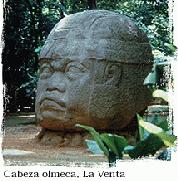
Revised: April 24, 2003. ...
[ More results from www.cwo.com ]
Ivan Van Sertima
Dr. Ivan Van Sertima. Buy books by Dr. Van Sertima. Reply to My Critics.
[ Home ] [ Up ] [ Na'im Akbar ] [ Marimba Ani ] [ Molefi Kete ...
Reply to My Critics
by Ivan Van Sertima
An attack on my thesis that Africans made contact with America before Columbus in two major pre-Christian
periods (circa 1200 b.c. and circa 800 b.c.) in addition to the Mandingo contact period (1310/1311 A.D.) has
been circulated in advance to hundreds of subscribers to a journal, Current Anthropology. Copies of this attack
by Bernard de Montellano, Warren Barbour and Gabriel Haslip-Viera were also sent out to African-American
scholars, some of whom were cited in the attack, dishonestly titled "Van Sertima's Afrocentricity and the
Olmecs." The title's emphasis is meant to suggest that all revisions of African history by so-called "Blacks"
belong to a common school, radiate from a common brain, and are cast in the same "racialist" hue and mode.
This circular, which precedes my new book, REPLY TO MY CRITICS (scheduled to appear in Sept), seeks to
highlight the brazen and malicious lies, slanders and misrepresentations that characterize this attack. Let it be
noted that I was invited to respond to this attack but was forced to withdraw. The editor, after verbally agreeing
that I could reprint my commentary, after the issue of the Journal appeared, did a dramatic about-turn when
pressed to sign a written agreement to back up his word. He wrote that I could only reprint my "commentary"
(15 pages) if I also reprinted the attack on me (50 pages) since "they form a unit." To feel the full absurdity of
this, just imagine the Jewish Defense League being forced to republish an extended Nazi-type attack on their
positions in order to republish a brief response to such a slanderous attack.
LIE ONE: - "Van Sertima's expedition allegedly sailed or drifted westward to the Gulf of Mexico where it came
in contact with inferior Olmecs. These individuals created Olmec civilization." - De Montellano, Barbour and
Haslip-Viera.
THE TRUTH: As far back as 1976, I made my position on this matter very clear. I never said that Africans
created or founded American civilization. I said they made contact and all significant contact between two
peoples lead to influences. "I think it is necessary to make it clear - since partisan and ethnocentric scholarship
seems to be the order of the day - that the emergence of the Negroid face, which the archeological and cultural
data overwhelmingly confirm, in no way presupposes the lack of a native originality, the absence of other
influences or the automatic eclipse of other faces"-p. 147 of "They Came Before Columbus." See also Journal
of African Civilizations, Vol 8, No. 2, 1986 "I cannot subscribe to the notion that civilization suddenly dropped
onto the American earth from the Egyptian heaven."
LIE TWO: None of the early Egyptians and Nubians looked like Negroes. "They have long, narrow noses..."
"Short, flat noses are confined to the West African ancestors of African-Americans." Again, "there is no
evidence that ancient Nubians ever braided their hair. This style comes from colonial and modern Ethiopia."
THE TRUTH: Narrow noses have been found among millions of pure-blooded Africans. We can see this
among the Elongated and Nilotic types. My critics know nothing about the variants of Africa, ancient or
modern. All the six main variants of the African have been found in the Egyptian and Nubian graves. For
examples of ancient braided Nubian hair, see Frank Snowden's "Before Color Prejudice," As for
Egypto-Nubians only having narrow noses, see Egyptian pharaohs in Vol 10 and 12 of the JAC and major
Nubian pharaohs in Peggy Bertram's essay (JAC, Vol.12) -Ushanaru, Plate 8, p 173; Taharka as the god Amun
from Kawa Temples, Plate 9, p. 173; Shabaka, Plate 12, p. 176. Tanwetamani, Plate 16, p. 180. To say that
these are narrow noses is to exhibit a colossal ignorance of African types in ancient Egypt and Nubia. The
agenda behind this is to bolster their case that they could not have been models for any of the Olmec stone
heads.
LIE THREE; Modern Egyptians look exactly as they did thousands of years ago. The composition of the
Egyptian has not changed over the last 5000 years. Invasions by the Assyrians, Persians, Greeks, Arabs and
Romans left them looking the same today as in the dawn of history.
THE TRUTH: This is a hasty misreading of the work of scholars like A.C. Berry, R. J. Berry and Ucko who point
out that there is a remarkable degree of homogeneity in this area for 5000 years. What a superficial reading of
this fails to note is that the period ends with the close of the native dynasties BEFORE the invasions of the
Assyrian, Persian, Greek, Roman and Arab foreigners
LIE FOUR: Faced with the startlingly Negroid features of some of the Olmec stone heads, my critics try 4 ways
out: (a) They are "spitting images of the native;" (b) they appear dark because some of them were carved out
of dark volcanic stone; (c) some were made of white basalt which turned dark over time; (d) ancient Egyptians
and Nubians were remote in physiognomy from sub-Saharan Negroes and none of them could have been
models for any of the "Negro-looking" heads. Having said all that, they then claim that "races are not linked to
specific physiognomic traits."
THE TRUTH: No need to shoot them down on this. They turned the gun on themselves.
LIE FIVE: Nothing African has been found in any archeological excavation in the New World.
THE TRUTH: In the drier centers of the Olmec world - at Tlatilco, Cerro de las Mesas and Monte Alban - the
Polish craniologist, Andrez Wiercinski, found indisputable evidence of an African presence. The many traits
analyzed in these Olmec sites indicated individuals with Negroid traits predominating but with an admixture of
other racial traits. This is what I have said. The work of A. Vargas Guadarrama is an important reinforcement of
Wiercinski's study. He found that the skulls he examined at Tlatilco, which Wiercinski had classified as Negroid,
were "radically different" from other skulls on the site, bearing indisputable similarities to skulls in West Africa
and Egypt.
LIE SIX: Van Sertima presents no evidence that a New World cotton (gossypium hirsutum var. punctatum) was
transferred from Guinea to the Cape Verde in 1462 by the Portuguese and there is no hard proof that West
Africans made a round trip to America before Columbus.
THE TRUTH: I cited evidence in 12 categories to establish Mandingo voyages to the New World
circa1310/1311 A.D. This included eyewitness reports from nearly a dozen Europeans, even Columbus
himself, metallurgical, linguistic, botanical, navigational, oceanographic, skeletal, epigraphic, cartographic, oral,
documented and iconographic evidence. With regard to New World cotton in Africa before 1462, Stephens
spoke in two tongues to pacify isolationist colleagues.
LIE SEVEN: My critics claim that I said the bottle gourd came in with Old World voyagers.
THE TRUTH: I was at pains to point out that this is ONE PLANT THAT COULD DRIFT TO AMERICA WITHOUT
THE LOSS OF SEED VIABILITY. "Bottle gourds got caught in the pull of currents from the African coast and
drifted to America across the Atlantic. Thomas Whitaker and G.F. Carter showed that these gourds are
capable of floating in seawater for 7 months without loss of seed viability" - "They Came Before Columbus,"
204. They indulge in an even more vicious dishonesty with regard to cotton, claiming that I said "Old World
cottons came into America with a fleet of Nubians circa 700 B.C." I never linked cotton transfer to Nubian
contact.
LIE EIGHT: My critics admit "we cannot unequivocally date the heads" but they single out one which they say
Ann Cyphers confidently dated about 1011 B.C. Note the date! This is 200 years AFTER the Egyptian contact
period c. 1200 B.C. Yet they claim that the dating of this one head proves "Negro-looking heads" were being
carved, mutilated, and buried prior to 1200 B.C.
THE TRUTH: The stone heads could not have been buried before they were carved.
LIE NINE: Egyptians stopped building pyramids "thousands of years" before 1200 B.C. No relationship
whatever exists between Old World/New World pyramids.
THE TRUTH: Enormous obelisks, calling for the same complex engineering skills of the pyramid age were built
at Karnak as late as 1295 B.C. A pyramid was also built as Dashur circa 1700 B.C. Bart Jordan, the
mathematical child prodigy, to whom Einstein granted special audience, established startling coincidences
between Old World and New World pyramids. He agrees with me that "The overwhelming incidence of
coincidence argues overwhelmingly against a mere coincidence."
LIE TEN: My critics claim that I have trampled upon the self-respect and self-esteem of native Americans and
they have come forward to champion their cause.
THE TRUTH: My people (for I am part Macusi and part African) would be horrified to have, as champions of our
cause, De Montellano, Barbour, and Haslip-Viera, who disgrace us with the charge that "native Americans
would have sacrificed and eaten the Africans if they came."
|
Books by Dr. Van Sertima... They Came Before Columbus. by Ivan Van Sertima
Price: $18.17 - Hardcover -
Random House; (December 1976). ... Ivan Van Sertima
|
 |

. Black Women in Antiquity. ...
[ More results from www.africawithin.com ]
Ivan Van Sertima
Dr. Ivan Van Sertima. Dr. Ivan Van Sertima is a literary critic, linguist,
anthropologist, and writer. In 1977 he wrote They Came ...
Ivan Van Sertima - Caribbean Hall of Fame
Ivan Van Sertima biography from Guyana including facts such as date of
birth etc. Ivan Van Sertima. Biography. Guyaneese Authors & Artists. ...
Ivan van Sertima
Ivan van Sertima. Journal of African Civilizations. ... IVAN VAN SERTIMA By RUNOKO RASHIDI
Ivan van Sertima, They Came before Columbus A review by Femi Akomolafe. ...
~najljune19/najldata1/ivs1.htm"BOOKS BY DR. IVAN VAN SERTIMA
... DR. IVAN VAN SERTIMA. A Series of Historical Classics. ... *Early America Revisited.
- - For this book only make check payable to "Ivan Van Sertima", $20.00, Qty?___. ...
|
The Journal of African Civilizations, founded in 1979, has gained a reputation for excellence and uniqueness among historical and anthropological journals. It is recognized as a valuable information source for both the layman and student. It has created a different historical perspective within which to view the ancestor of the African-American and the achievement and potential of black people the world over.
It is the only historical journal in the English-speaking world which focuses on the heartland rather than on the periphery of African civilizations. It therefore removes the "primitive" from the center stage it has occupied in Eurocentric histories and anthropologies of the African. The Journal of African Civilizations is dedicated to the celebration of black genius, to a revision of the role of the African in the world's great civilizations, the contribution of Africa to the achievement of man in the arts and sciences. It emphasizes what blacks have given to the world, not what they have lost.
St. Claire Drake, in his major two-volume work Black Folk Here and There, speaks of the Journal as "one of the most important events in the development of research and publication from the perspective of Pan-African scholarship." The Journal is now in the forefront of the struggle being waged to alter school curricula and to modify "Western" and "World" civilization courses in the United States.
1. AFRICAN PRESENCE in EARLY AMERICA (Van Sertima's address to the Smithsonian)
Eighteen years have passed since They Came Before Columbus appeared, in which Van Sertima presented most of the facts that were then known about the links between Africa and America before Columbus. But since then many more sculptures have emerged from the earth or from the back rooms of private collections. New stone heads have surfaced in recent excavations while a very old one with a seven-braided Ethiopian hairstyle has come out of a century of obscurity into sudden prominence. Far more sophisticated analyses may now be presented of ancient African astronomy, map-making, scripts, navigation, trade routes, pyramidal structures, linguistic connections, technological and ritual complexes. In this collective work, Ban Sertima is joined by half a dozen other colleagues. The work focuses largely on contact between African and American towards the close of the Bronze Age (circa 948-680 B.C.) and the Mandingo-Songhay trading voyages (from early fourteenth to late fifteenth century).
2. BLACK WOMEN in ANTIQUITY
This volume provides an overview of the black queens, madonnas and goddesses who dominated the history and imagination of ancient times. The authors have concentrated on Ethiopia and Egypt because the documents in the Nile Valley are voluminous compared to the sketchier record in other parts of Africa, but also because the imagination of the world, not just that of Africa, was haunted by these women. They are just as prominent a feature of European mythology as of African reality. The book is divided into three parts: Ethiopian and Egyptian Queens and Goddesses; Black Women in Ancient Art; Conquerors and Courtesans. There are also chapters on the diffusion into Europe of the African goddess, Isis, and on the great scientist Hypatia, whose African ancestry during the Greek-invader period is deduced not only by her lineage but by a comparative study of the rights of African and European women.
3.
THEY CAME BEFORE COLUMBUSA celebrated classic, They Came Before Columbus, deals with a number of contacts - both planned and accidental, between Africans and Americans in different historical periods. Evidence for a physical/cultural presence of Africans in Early America is methodically examined.
4. GOLDEN AGE of the MOOR
This work examines the debt owed by Europe to the Moors for the Renaissance and the significant role played by the African in the Muslim invasions of the Iberian peninsula. While it focuses mainly on Spain and Portugal, it will also examine the races and toots of the original North African before the later ethnic mix of the blackamoors and tawny Moors in the medieval period. The study ranges from the Moors in the literature of Cervantes and Shakespeare to his profound influence upon Europe's university system and the diffusion via this system of the ancient and medieval sciences. The Moors are shown to affect not only European mathematics and map-making, agriculture and architecture, but their markets, their music and their machines. The ethnicity of the Moor is re-examined, as is his unique contribution, both as creator and conduit, to the first seminal phase of the industrial revolution.
5. AFRICAN PRESENCE in EARLY EUROPE
This book places into perspective the role of the African in world civilization, in particular his little known contributions to the advancement of Europe. A major essay on the evolution of the Caucasoid discusses recent scientific discoveries of the African fatherhood of man and the shift towards albinism (dropping of pigmentation) in Europe. The debt owed to African and Arab Moors for certain inventions usually credited to the Renaissance is discussed, as well as the much earlier Afro-Egyptian influence on Greek science and philosophy. The book is divided into six parts: The First Europeans: African Presence in the Ancient Mediterranean Isles and Mainland Greece; Africans in the European Religious Hierarchy (madonnas, saints and popes); African Presence in Western Europe; African Presence in Northern Europe; African Presence in Easter Europe.
6. BLACKS in SCIENCE: Ancient and Modern
This book draws on the latest researches to show that Africa had an impressive scientific tradition in certain centers and historical periods. It highlights steel-smelting machines in Tanzania dating back 1,500 years ago, using semi-conductor technology and achieving temperatures 200 degrees higher than the best in Europe; an observatory in Kenya 300 B.C.; 13th century discoveries by West African astronomers of an invisible star, their accurate plotting of its orbit around its parent star as well as an orbit on its own axis, a fact unknown even to modern science, cultivation of crops and domestication of cattle 6,000-7,000 years before Asia or Europe; African first discoveries of tetracycline, vaccines, aspirin, as well as advances in operations like eye-cataract surgery and cesarean sections; African invention of half a dozen scripts before European colonization. The book also deals with African-American inventions, especially in the fields of telecommunication, space, and nuclear science.
7. AFRICAN PRESENCE in EARLY ASIA
This volume, co-edited with Runoko Rashidi, is divided into five sections. The first discusses the peopling of Asia from Africa and identifies African people with Asia's first hominid as well as modern human populations. The second section demonstrates the African elements underlying major early civilizations in Asia, an overview that includes India, Iraq and Iran, Phoenicia, Palestine, the Arabian peninsula, China, Japan and Cambodia. The third section discusses the African origin of the great religions of Asia-Judaism, Islam, Hinduism and Buddhism. The fourth section focuses on the historical and anthropological relationship between African people and Asia's Indo-European, Mongoloid and Semitic populations. The final section deals with African bondage in Asia and provides a fascinating glimpse of the Dalitis, the Black untouchables of India. Who are the Backs of Asia? What have they done? What are they doing now? This volume seeks to answer these questions and to reunite a family too long separated.
8. EGYPT: CHILD of AFRICA
This issue seeks to answer two questions: First, whether the ancient Egyptians were predominantly African or Africoid in a physical sense during the major native dynasties before< the late invasions of the Persian, Greek, Roman and Arab foreigners. Second, whether their language, writing, vision of god and the universe, their concept of the divine kingship, ritual ceremonies and practices, administrative and architectural symbols and structures and techno-complex, were quintessentially African and not in any major particular, projected from those in Europe or Asia in that or any previous time.
9. GREAT BLACK LEADERS: Ancient and modern
Any selection of leaders, whatever the criteria, is inherently subjective, and this collection does not pretend to be comprehensive. It does establish clear criteria for inclusion, focusing on outstanding individuals from America, Africa, and the Caribbean, who are clearly of global and not solely national significance. Leaders from a number of historical epochs were selected and the editor has also included material on outstanding women leaders (Queens Tiye, Hatshepsut, Nzingha). Leaders who had captured the world's imagination (Shaka) or who had profoundly affected the modern period (Kwame Nkrumah) are also represented. With one exception (Nelson Mandela) the individuals described are no longer living, to ensure that time warrants a consensus about their significance.
10. EGYPT REVISITED
This work is divided, with students and teachers in mind, into four sections. In the first section, two distinguished historians (Davidson and Diop) present the evidence which establishes the African claim to a physical and cultural predominance in the classical Egyptian dynasties. The second section is a review of the major Black dynasties (Bruce Williams, Chandler, Rashidi, Brunson, Clegg, Hilliard, Goldman) and includes a working chronology of the dynasties. In the third section, Obenga initiates a rewriting of the beginnings of philosophy, Karenga provides a fresh study of the world's oldest treatises on social order, Finch informs us of startling medical breakthroughs in his commentary on the Edwin Smith papyrus. The book closes with a bibliography of Black Women Scholars in Egyptology (Larry Williams) a guide to readings on Egypt for children (Lumpkin) and a glossary of Egyptian terms (Rashidi & Blackburn).
11. GREAT AFRICAN THINKERS
This book reviews the life and thought of an African who has left a major impact upon the world. He was the Senegalese physicist, historian and linguist, Dr. Cheikh Anta Diop, who was born in Diourbel, Senegal on Dec. 29, 1923, and died in Dakar on Feb. 7, 1986. No figure in the field of African civilization studies has been more highly regarded in the French and English-speaking world than Diop. In 1966 the First World Festival of Arts and Culture attributed jointly to the late W.E.B. Du Bois and Dr. Cheikh Anta Diop its "Award of the Scholar who has exerted the greatest influence on Negro thought in the 20th century." The book has the finest essays by, extended interviews with, and detailed analyses of Diop.
|
... Africa's Contribution to World Civilization: The Exact Sciences" in Ivan Van Sertima,
ed., Nile Valley Civilizations. ... Graves, Curtis, M. and Ivan Van Sertima. ...
Femi Akomolafe, Review of I. van Sertima, They Came before ...
... ANDYK@amadeus.cmi.no> Ivan van Sertima, They Came before Columbus.
A review by Femi Akomolafe 19 January 1995. History, as taught ...
Last but Not Least| Ivan Van Sertama With the contributions of individuals such as Zaryab. Spain flourished. But amidst the beauty and wealth,
a socio-political plague was spreading: "Jews who had ... been slaves now began trading in slaves."
According to T.B. Irving, between the years of 786 and 1009, "Franks and Jews traded Slavs and
Germans who had been taken prisoner ... on the Frankish territories. Thus "slav" and "slave" became interchangeable [terms] ... They [the Franks and Jews ] made young boys into eunuchs at Verdan ...
The slaves were driven from France to Spain in great herds like cattle. When they reached their destination, the men were purchased as servants or laborers, the women as household help or concubines ...
Many women were also imported from Galacia, for their blonde appearance attracted the Arab gentlemen.
Slaves were also traded from out the Adriatic. These captives too were Slavs, and their merchants chiefly Christians."
This slave trade changed the racial mix in Al-Andulus (Spain).
The use of European women as concubines gradually lightened the complexion of Moorish Spain ...
"Through these various processes [Moorish] Spain became more Caucasian in "‘blood' than is generally realized...
It was always blond women, weather Slavs, Germans ,or Galicians, who were in special demand".
This practice was not exclusive to Spain; W.E.B. DuBois notes that during the
16th century "the Mohammedan rulers of Egypt were buying white slaves by the tens of thousands in Europe ans Asia and bringing them to Syria, Palestine and the Valley of the Nile." White slavery became wide spread in Spain, Africa and the Mediterranean.
The Polygamous family structure common to many African cultures expedited the process of amalgamation and the consequences wrought havoc upon the inhabitants of Al-Andulus.]
+++++++++++++++++
Dr. Ivan Van Sertima ... Dr. Ivan Van Sertima's Reply to Criticism. Webpage design: Kenneth Ritchards Copyright © 1998 Kenneth Ritchards. All rights reserved. Revised: April 24, 2003. ... www.cwo.com/~lucumi/sertima.html -
[ More results from www.cwo.com ]
|